Helping design and engineering professionals discover, evaluate and specify technologies and processes that shorten the design cycle and enable success.


Alert!
Digital Engineering ceased publication on July 1, 2026. This website remains available as an archive of engineering content.
For inquiries or information, please email [email protected].

May 2026 Special Focus: Artificial Intelligence in Design and Simulation
In this Special Focus Issue, learn about the latest developments in the integration of artificial intelligence into engineering workflows.

Design & Simulation Software Guide 2025
In this Special Issue, Digital Engineering presents its second annual guide to design and simulation software vendors.
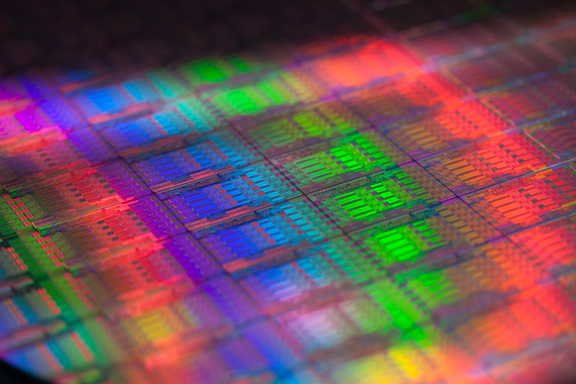
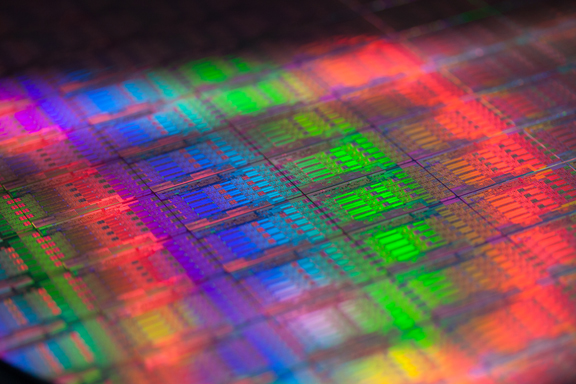 Close up of Intel Xeon E5-2600/1600 v3
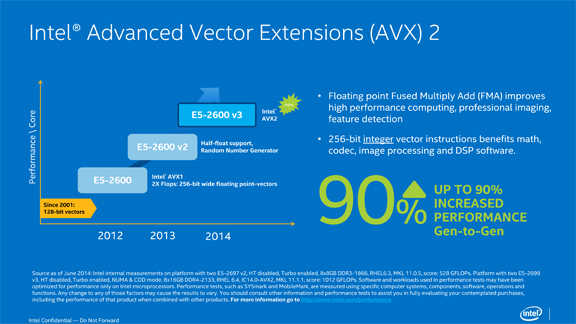 Intel AVX 2 is expected to offer significant performance gain in the new processors.
A week ago, Diane Bryant, senior VP and general manager, Intel Data Center Group, introduced the new processor lineup -- E5 2600/1600 v3 series -- at an event at the Terra Gallery in San Francisco, California. The processors, Intel says in its press release, are "central to enabling a software defined infrastructure," what Intel calls "the foundation for cloud computing."
Intel writes, "With up to 18 cores per socket and 45MB of last-level cache, the Intel Xeon E5-2600 v3 product family provides up to 50% more cores and cache compared to the previous generation processors."
In a presentation showcasing possible applications, Intel offers statistics showing that the E5-2600/1600 v3 processors give significantly better performance over their predecessors. LS-DYNA simulation software, for instance, shows up to 50% faster on E5-2697 v3 compared to E5-2697 v2. Furthermore, MSC Nastran Software shows up to 46% faster, and ANSYS Mechanical up to 38% faster on v3 compared to v2.
Intel singles out two components in the new processors to explain the performance boost. The Intel Advanced Vector Extension (AVX) 2; and DDR4 memory. According to Intel,"an extension to Intel AVX2 doubles the width of vector integer instructions to 256 bits per clock cycle for integer sensitive workloads and delivers up to 1.9x higher performance gains." Intel's presentation shows DDR4 yielding up to 44% increase in bandwidth, and up to 50% increase in power efficiency.
The company says, "The processors are built using Intel's industry-leading and energy-efficient 22nm, 3-D Tri-Gate technology, cutting power consumption while boosting performance of transistors. The new 'per-core' power states dynamically regulate and adjust power in each processor core for more power-efficient workload processing."
In data center environments, the cumulative energy consumption of the hardware can significantly affect the cost of ownership and operation over time. Therefore, power-efficient processors offer added appeal to data center operators, many of whom are expected to pay a role in the emerging cloud commerce and virtualization.
In the same week of Intel's announcement, hardware provider Supermicro releases new servers based on the processors. "Supermicro's X10 Green Computing solutions offer the most optimized DP/UP server and storage platforms on the market supporting advanced technologies and new Intel Xeon E5-2600/1600 v3 processors," said Charles Liang, president and CEO of Supermicro. "Leading the wave is our new 1U/2U Ultra SuperServers which integrate hot-swap NVMe SSDs and SAS3 storage with high bandwidth 10G/40G networking in a new thermal optimized architecture that minimizes fan count and fan power consumption to provide exactly the best platform for enterprise-class virtualization and hyper-scale computing applications."
Intel Xeon processor E5-1600 workstations will be offered in prices ranging from $295 to $1,723, according to Intel. Partners gearing to release E5-2600/1600 v3-based products include Dell, HP, IBM, Lenovo, Supermicro and others.


Kenneth Wong is Digital Engineering's resident blogger and senior editor. Email him at [email protected] or share your thoughts or suggestions at digitaleng.news/facebook.
Follow DE






About Us · Contact Us · Editorial Team · Advertising · Privacy Policy · Subscriber Services · © 2026 Digital Engineering 24/7 · Peerless Media