Helping design and engineering professionals discover, evaluate and specify technologies and processes that shorten the design cycle and enable success.



Digital Engineering April 2026
In the latest issue of Digital Engineering, we take a look at the latest innovations in design for additive manufacturing, including the use of natural language inputs, social media cosplayers, and AI integration. The issue also includes a feature…

January Special Focus Issue: Design for Additive
In this Special Focus Issue of Digital Engineering, learn about the latest advancements in design for additive manufacturing, including new software tools, additive in automotive, custom medical devices, and more.
3D printing has already come a long way from the days when it was primarily a plastic process. You can find AM systems that print in wood, ceramics, metal and much, much more. According to a patent filed with the US Patent & Trademark Office, Lockheed Martin may be developing a method that will add synthetic diamond to that list.
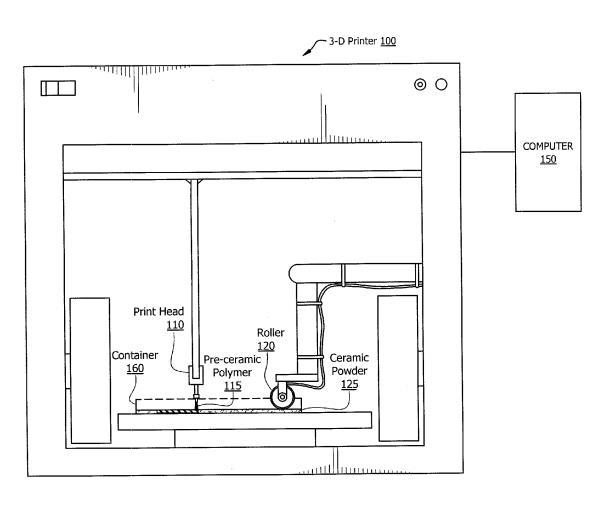
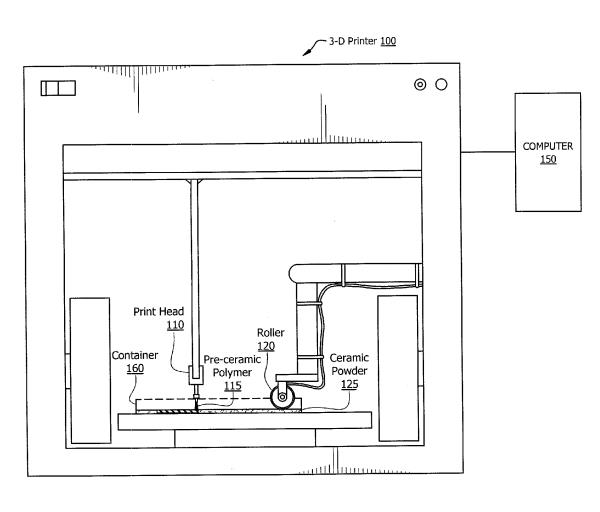 Overview of how Lockheed Martin's system would operate. Courtesy of the US Patent Office.
The patent in question is titled “3-D Diamond Printing Using a Pre-Ceramic Polymer with a Nanoparticle Filler” and the contents match the description. Very generally, Lockheed Martin’s system would use ceramic material in combination with a polymer binding agent to build up layers of an object. That object would then be subjected to heat in order to form the end result of a 3D printed synthetic diamond.
Like most good ideas, the patent builds on existing technology. You can already find 3D printers that build ceramic objects, and heat is an inevitable part of the procedure. Although also reliant on ceramic material, the process outlined by Lockheed Martin seems closer to some metal printing processes (loose material plus binder plus heat) than existing ceramic printing.
The most obvious application for the process is for building complex and highly durable drill bits, but the patent also outlines other possibilities. One manufacturing method describes a continuous manufacturing process that results in cloth-like material that could be used for body armor.
Not every patent results in an end design, so this could simply be an idea floating around Lockheed Martin that someone thought was at least worth locking down. Below you’ll find a video about synthetic diamonds.
Source: US Patent Office


John Newman is a Digital Engineering contributor who focuses on 3D printing. Contact him via [email protected] and read his posts on Rapid Ready Technology.
Follow DE
Join over 90,000 engineering professionals who get fresh engineering news as soon as it is published.






About Us · Contact Us · Editorial Team · Advertising · Privacy Policy · Subscriber Services · © 2026 Digital Engineering 24/7 · Peerless Media