Helping design and engineering professionals discover, evaluate and specify technologies and processes that shorten the design cycle and enable success.


Alert!
Digital Engineering ceased publication on July 1, 2026. This website remains available as an archive of engineering content.
For inquiries or information, please email [email protected].

Digital Engineering April 2026
In the latest issue of Digital Engineering, we take a look at the latest innovations in design for additive manufacturing, including the use of natural language inputs, social media cosplayers, and AI integration. The issue also includes a feature…

January Special Focus Issue: Design for Additive
In this Special Focus Issue of Digital Engineering, learn about the latest advancements in design for additive manufacturing, including new software tools, additive in automotive, custom medical devices, and more.
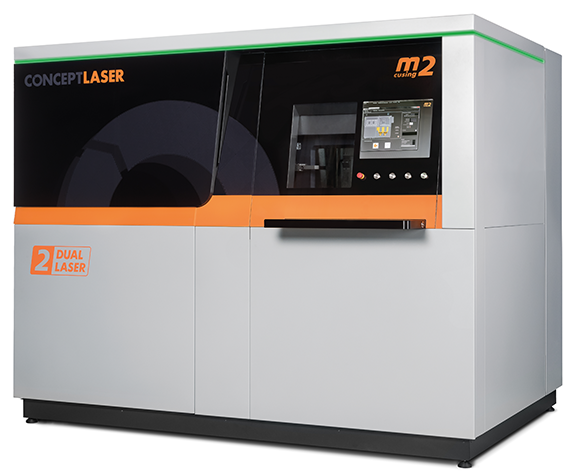
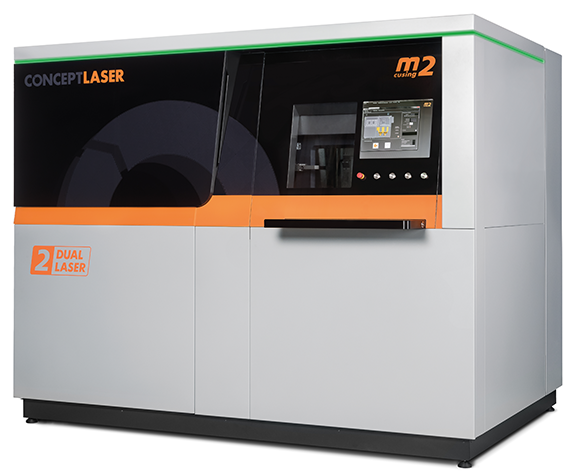 The M2 cusing Multilaser is available with two lasers and has a build envelope of 250x250x280 mm (x,y,z). Image courtesy of Concept Laser.
“We require a wide range of additive manufacturing (AM) capabilities, ranging from quality monitoring to process parameter development, and need an architecture conducive to that research and development effort,” said Dr. Charles Rohde, NRL Acoustics Division.
The NRL conducts research related to oceanic, atmospheric and space sciences. The lab will use the new M2 cusing machine to print stainless steel items. The M2 is available with 200W or 400W, single or dual laser options.
NRL will also use the QM Meltpool 3D inspection solution to monitor the quality of their metal applications, and the CL WRX Parameter 2.0 system to design and develop custom parameters. The QM Meltpool solution is integrated into the optical path and monitors the meltpool shape, size and intensity. The parameter software allows users to implement segmentation of complex geometries for parameter assignment.
“It is very exciting that the U.S. Naval Research Laboratory is bolstering their focus on metal additive manufacturing. There are so many advantages of 3D metal printing that our defense strategy could benefit from, including reduced lead time, less material waste and printing complex geometries with no required assembly. NRL has a history of over 90 years of innovation in naval power and we look forward to hearing how they will use 3D metal printing to break boundaries,” said John Murray, president and CEO of Concept Laser.
Earlier this year, Concept Laser teamed with Honeywell Aerospace and PADT to create an academic additive manufacturing center at Arizona State University. The 15,000-sq-ft. facility will hold more than $2 million in metal, plastic and polymer additive manufacturing equipment.
Source: Concept Laser


Brian Albright is the editorial director of Digital Engineering.
Contact him at [email protected].






About Us · Contact Us · Editorial Team · Advertising · Privacy Policy · Subscriber Services · © 2026 Digital Engineering 24/7 · Peerless Media