Helping design and engineering professionals discover, evaluate and specify technologies and processes that shorten the design cycle and enable success.


Alert!
Digital Engineering ceased publication on July 1, 2026. This website remains available as an archive of engineering content.
For inquiries or information, please email [email protected].


Sponsored

Artificial Intelligence for Design and Engineering Workflows
In this white paper, learn how artificial intelligence and machine learning can improve design and simulation.

Technology Focus: Designing for Optimization & Simulation
Simulation is pervasive, with people from different departments and backgrounds discovering new ways to put it to use, in all of its varied forms.
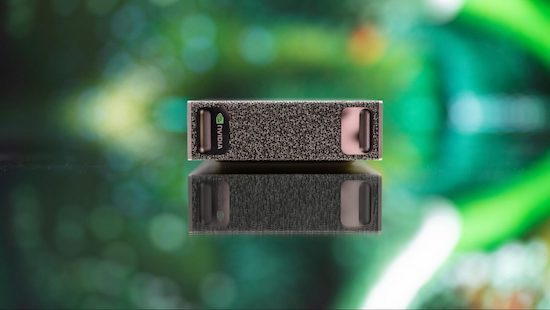
Early in October, NVIDIA CEO Jensen Huang traveled to the SpaceX facility in Texas and handed Elon Musk the world’s smallest supercomputer – the newly released DGX Spark.
Announced at the NVIDIA GTC event earlier this year, DGX Spark offers 128GB of unified memory and a petaflop of AI performance, enough to run models with 200 billion parameters locally. DGX Spark, which is roughly the size of a book, is an AI supercomputer that, in addition to a full NVIDIA software stack, includes:
NVIDIA GB10 Grace Blackwell Superchip — delivering up to 1 petaflop of AI performance at FP4 precision.
128GB of unified CPU-GPU memory — so developers can prototype, fine-tune and run inference locally without bouncing between machines or cloud instances.
NVIDIA ConnectX networking for clustering and NVIDIA NVLink-C2C for 5x PCIe bandwidth.
NVMe storage for speed and HDMI out for visuals.
Musk wasn’t the only lucky recipient of the hardware. NVIDIA also provided DGX Spark to Cadence, Anaconda, ComfyUI, Docker, Google, Hugging Face, JetBrains, LM Studio, Meta, Microsoft, Ollama and Roboflow, all of which are testing, validating and optimizing their tools, software and models for DGX Spark.
NVIDIA partner Dell Technologies has also released the Dell Pro Max with GB10, a desktop supercomputer that leverages the DGX Spark technology, and that provides data center-class AI features in a compact form factor.
“The combination of our Grace Blackwell chip, the ARM CPU, and the unified 128GB of memory drive the entire system,” says Allen Bourgoyne, director of product marketing at NVIDIA. “There is tight coupling of the CPU and GPU, and the memory can be allocated dynamically however you want. The system includes the preinstalled NVIDIA AI software stack to enable AI workloads right out of the box. The Dell Pro Max with GB10 takes advantage of all of the same technology.”
According to a blog post by Dell product management leader Charlie Walker, the Dell Pro Max with GB10 can benefit all types of creators: “The same power that drives enterprise AI is now available to independent developers, creators, and entrepreneurs. The Dell Pro Max with GB10 makes sophisticated AI development accessible to individual creators who once lacked computational resources to bring their ideas to life. Where hardware or cloud limitations once forced innovation to slow, Dell Pro Max with GB10 puts data center capability on the desktop. I’ve seen creators fine-tune vision models for client portfolios and game developers train custom AI characters—all from their own workspace, with no need for external infrastructure or added costs.”
According to NVIDIA, AI workloads are outgrowing the memory and software capabilities of the PCs, workstations and laptops that most developers use, forcing them to shift work to the cloud or local data centers.
According to the company, DGX Spark will allow developers to run inference on AI models with up to 200 billion parameters and fine-tune models of up to 120 billion parameters locally. In addition, DGX Spark lets developers create AI agents and run advanced software stacks locally.
“In 2016, we built DGX-1 to give AI researchers their own supercomputer. I hand-delivered the first system to Elon at a small startup called OpenAI — and from it came ChatGPT, kickstarting the AI revolution,” said Jensen Huang, founder and CEO of NVIDIA. “DGX-1 launched the era of AI supercomputers and unlocked the scaling laws that drive modern AI. With DGX Spark, we return to that mission — placing an AI computer in the hands of every developer to ignite the next wave of breakthroughs.”
The NVIDIA AI software stack is preinstalled and developers can access NVIDIA AI ecosystem tools including models, libraries, and NVIDIA NIM™ microservices, enabling local workflows such as customizing Black Forest Labs’ FLUX.1 models to refine image generation, creating a vision search and summarization agent using the NVIDIA Cosmos™ Reason vision language model, or building an AI chatbot using Qwen3 that is optimized for DGX Spark.
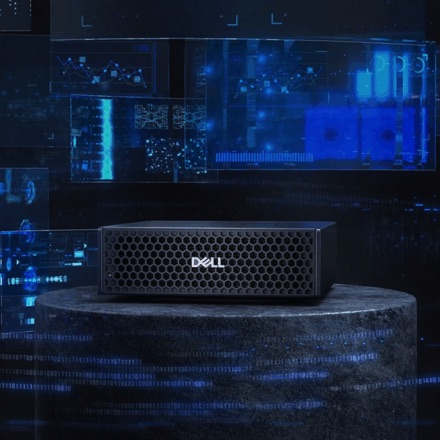
The Dell Pro Max with GB10 is powered by the NVIDIA Grace Blackwell architecture and runs the DGX operating system. According to Dell: “It features 128GB of unified memory to support models up to 200 billion parameters and can reach 1000 FP4 TOPS—a rare leap in local capability. With pre-installed tools like CUDA, JupyterLab, Docker and AI Workbench, teams can unbox and start building in minutes. For those needing even more power, connecting two Dell Pro Max with GB10 systems turns them into a single node capable of supporting 400 billion-parameter models, which is a clear demonstration of Dell’s approach to scalable AI infrastructure.”
NVIDIA has put together a resource page to help developers get started.
You can learn more in this video.


DE's editors contribute news and new product announcements to Digital Engineering. Press releases may be sent to them via [email protected].
Follow DE
Join over 90,000 engineering professionals who get fresh engineering news as soon as it is published.






About Us · Contact Us · Editorial Team · Advertising · Privacy Policy · Subscriber Services · © 2026 Digital Engineering 24/7 · Peerless Media