Helping design and engineering professionals discover, evaluate and specify technologies and processes that shorten the design cycle and enable success.


Alert!
Digital Engineering ceased publication on July 1, 2026. This website remains available as an archive of engineering content.
For inquiries or information, please email [email protected].


Digital Engineering April 2026
In the latest issue of Digital Engineering, we take a look at the latest innovations in design for additive manufacturing, including the use of natural language inputs, social media cosplayers, and AI integration. The issue also includes a feature…

January Special Focus Issue: Design for Additive
In this Special Focus Issue of Digital Engineering, learn about the latest advancements in design for additive manufacturing, including new software tools, additive in automotive, custom medical devices, and more.
Oventus, in partnership with CSIRO, hopes to ease the symptoms of sleep apnea and chronic snoring with its sleep aid, called the O2Vent. Designed by Dr. Chris Hart, who also suffers from sleep disorder, the O2Vent gained FDA approval in 2016, and will become available to US patients in 2017. The sleep aid is one of a quickly growing field of 3D printed medical devices.
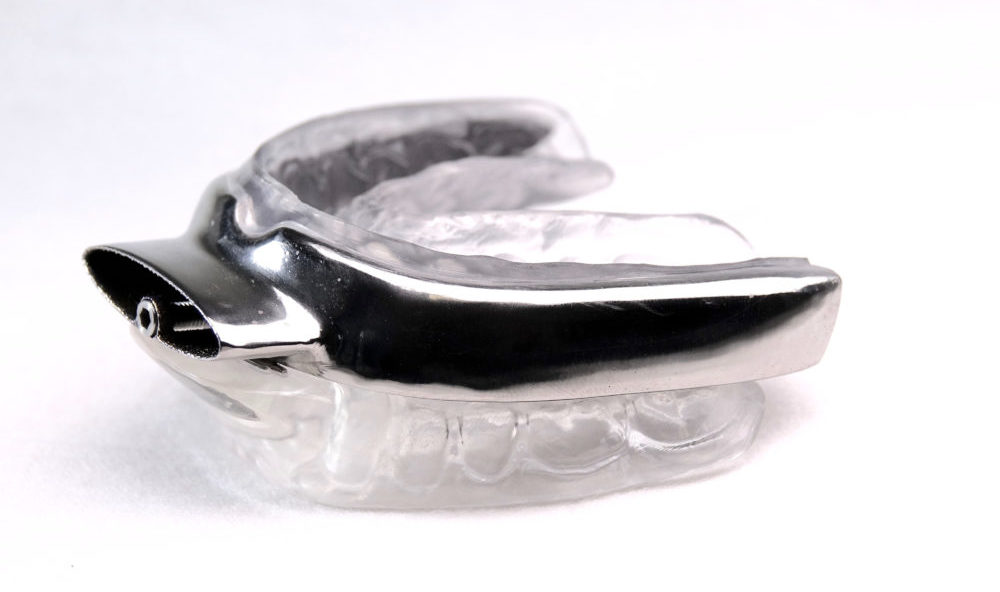 Oventus' new 3D printed sleep aid is meant to bring relief to those with chronic sleep problems. Courtesy of Oventus.
The basic design of the O2Vent is a mouthpiece which incorporates a patented breathing vent (it looks kind of like a whistle). The vent helps create a separate air flow to reduce periods of breathlessness while sleeping. In addition to helping the user sleep better, the O2Vent should also reduce snoring, meaning those around the user receive a higher quality of sleep as well.
Each O2Vent is bespoke, built using a CAD scan of the patient’s mouth and bite. That data is then used to 3D print a medical-grade, titanium piece that is fitted to a mouthpiece. While it might seem excessive to use titanium, a mouthpiece made from the metal is thin and light, while retaining the strength and durability for which titanium is noted.
As might be expected for a device printed from titanium, the O2Vent isn’t a cheap solution to your snoring problems. The total cost to be fitted for the O2Vent is estimated at between $2,000 and $2,500, which includes dental consults and various fitting procedures. Still, poor sleep is listed as one of the factors that leads to reduced life expectancy, and it’s hard to assign a dollar amount to a longer life.
Below you’ll find a video about the O2Vent.
Source: Oventus


John Newman is a Digital Engineering contributor who focuses on 3D printing. Contact him via [email protected] and read his posts on Rapid Ready Technology.
Follow DE






About Us · Contact Us · Editorial Team · Advertising · Privacy Policy · Subscriber Services · © 2026 Digital Engineering 24/7 · Peerless Media