Helping design and engineering professionals discover, evaluate and specify technologies and processes that shorten the design cycle and enable success.


Alert!
Digital Engineering ceased publication on July 1, 2026. This website remains available as an archive of engineering content.
For inquiries or information, please email [email protected].
Artificial Intelligence for Design and Engineering Workflows
In this white paper, learn how artificial intelligence and machine learning can improve design and simulation.

Technology Focus: Designing for Optimization & Simulation
Simulation is pervasive, with people from different departments and backgrounds discovering new ways to put it to use, in all of its varied forms.
 Simulation software has enabled major breakthroughs in engineering as more companies use it to test the effectiveness of their designs. In the world of shipping, computational fluid dynamics (CFD) software has helped organizations such as Nakashima Propeller in Japan create designs that are helping shipping companies save resources by propelling ships more efficiently while protecting the environment.
The central challenge for Nakashima Propeller is coming up with designs that increase propulsion efficiency. The propellers have to combat a phenomenon called cavitation, which is when air cavities form on the propeller surface, causing a drop in propulsion and an increase in vibrations.
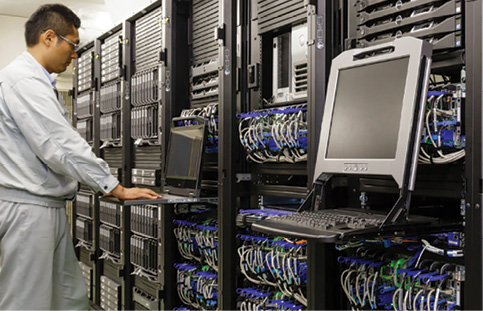 “Until recently, virtual water tank analysis of the system would take about two weeks, but with our 96 Dell PowerEdge M630 blade servers in place, the work can be done in about two days.”
With CFD, Nakashima Propeller staff can assess the quality of their designs by simulating flow conditions and measuring the level of cavitation. However, it is also necessary to complete the cavitation analysis of each propeller within two hours. This requires massive numbers of calculations, and with that in mind, Nakashima Propeller accepted a proposal from HPC Solutions to create a high performance computing infrastructure built on older Dell PowerEdge blade servers. The company created an HPC cluster for parallel computing with 32 Dell servers, offering a total of 256 cores, running Windows HPC Server.
Software Cradle provided its SC/Tetra thermo-fluid simulation software. With this solution, Nakashima Propeller was able to drive innovation while providing compute power during the design process.
Nakashima Propeller turned to Dell EMC once again to increase the performance of its HPC environment. The company added a number of the latest-generation Dell EMC PowerEdge servers with Intel® Xeon® Processor E5-2600 v3 for parallel processing, plus 96 Dell EMC PowerEdge M630 blade servers running Intel Xeon Processor E5-2600 v3. Dell EMC ProSupport was chosen to help maximize performance. At the same time, the company retired its original Dell PowerEdge servers. Today, the enhanced HPC cluster consists of 244 nodes with about 5,000 cores.
The company chose the Dell EMC PowerEdge M630 blade servers not least because of their reputation for successfully supporting a number of HPC infrastructures worldwide. In addition, the half-height blade server requires less cabling than other servers and generates less heat. They also save space and are a good value for money. Masanori Hirota, Deputy Manager, Propeller Design Department, Engineering Division at Nakashima Propeller, says, “Many sets of Dell PowerEdge servers with Intel Xeon processors have been used. They are stable and no major trouble has been encountered.”


DE's editors contribute news and new product announcements to Digital Engineering. Press releases may be sent to them via [email protected].
Follow DE






About Us · Contact Us · Editorial Team · Advertising · Privacy Policy · Subscriber Services · © 2026 Digital Engineering 24/7 · Peerless Media