Helping design and engineering professionals discover, evaluate and specify technologies and processes that shorten the design cycle and enable success.


Alert!
Digital Engineering ceased publication on July 1, 2026. This website remains available as an archive of engineering content.
For inquiries or information, please email [email protected].

Digital Engineering April 2026
In the latest issue of Digital Engineering, we take a look at the latest innovations in design for additive manufacturing, including the use of natural language inputs, social media cosplayers, and AI integration. The issue also includes a feature…

January Special Focus Issue: Design for Additive
In this Special Focus Issue of Digital Engineering, learn about the latest advancements in design for additive manufacturing, including new software tools, additive in automotive, custom medical devices, and more.
A new report from Market Research Reports seems to suggest the materials industry has taken the question seriously, and is working to ensure tomorrow’s 3D printers have a wealth of material options. According to the report, sales for AM materials will surpass 3D printer sales by 2023, reaching $8.3 billion in sales by 2025.
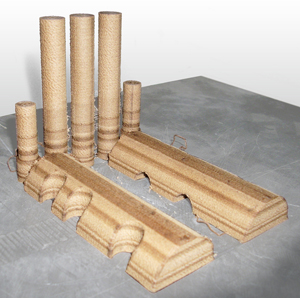
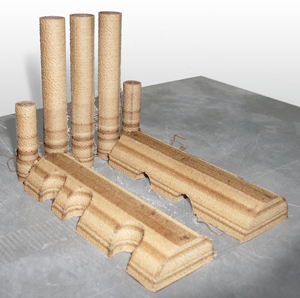 Wood is one material that has only recently become available for use in 3D printing. Courtesy of Kaipa.
Market Research Reports cites a number of factors that account for the boom in AM materials research, the first of which is patent expiration. When key AM patents were held by a small number of companies, growth in the industry proceeded at a slow and steady pace. As more patents expired, it opened the way for smaller (and perhaps more agile) companies, prices began to drop and consumer interest rose.
Even discounting interest in plastic filament driven in part by sales of home 3D printers, the use of AM has grown in a number of industries, including medical, aerospace and automotive. The interest shown in AM by large and cash rich industries is the second factor that has led to increased efforts at AM material development.
Not every material has the same potential for future growth. Some, such as metal powders, are already in high demand. The materials investigated in the report include:
Below you’ll find a video from Oak Ridge National Laboratory about the future of AM.
Source: Market Research Reports


John Newman is a Digital Engineering contributor who focuses on 3D printing. Contact him via [email protected] and read his posts on Rapid Ready Technology.
Follow DE






About Us · Contact Us · Editorial Team · Advertising · Privacy Policy · Subscriber Services · © 2026 Digital Engineering 24/7 · Peerless Media