Helping design and engineering professionals discover, evaluate and specify technologies and processes that shorten the design cycle and enable success.


Alert!
Digital Engineering ceased publication on July 1, 2026. This website remains available as an archive of engineering content.
For inquiries or information, please email [email protected].

Digital Engineering April 2026
In the latest issue of Digital Engineering, we take a look at the latest innovations in design for additive manufacturing, including the use of natural language inputs, social media cosplayers, and AI integration. The issue also includes a feature…

January Special Focus Issue: Design for Additive
In this Special Focus Issue of Digital Engineering, learn about the latest advancements in design for additive manufacturing, including new software tools, additive in automotive, custom medical devices, and more.
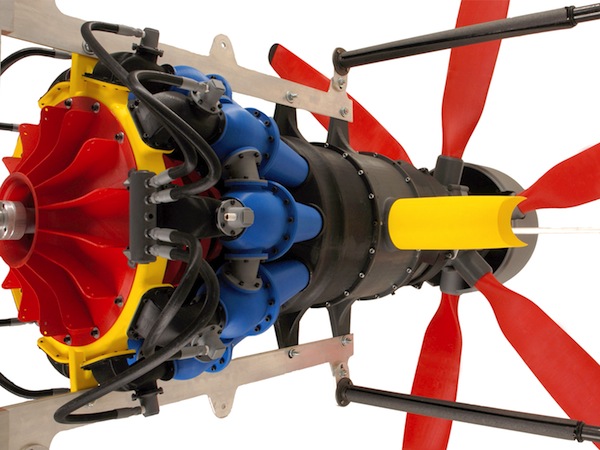
To help develop more of the materials aerospace needs, Ohio's University of Dayton Research Institute (UDRI) was awarded $3 million from the Ohio Third Frontier, as we mentioned in a previous post, but here are some additional details.
UDRI will work with program partners, Stratasys, PolyOne and Rapid Prototype Plus Manufacturing Inc. (RP+M) to develop aircraft-engine components for GE Aviation — who also collaborated on the program proposal — as well as parts and components for ATK Aerospace Structures, Boeing, Goodrich, Honda, Lockheed Martin and Northrop Grumman.
Additive manufacturing was named number one in Aviation Week & Space Technology magazine’s May list of “Top Technologies to Watch,” further proving that aerospace has taken notice of AM's benefits.
“Cost savings is a major benefit, because there are no molds or tooling needed to fabricate parts. With traditional manufacturing, every time you want to make even a slight change to the design of what you are making, you have to retool or make an entirely new mold, and that gets very expensive," said Brian Rice, head of UDRI’s Multi-Scale Composites and Polymers Division and program lead for the Third Frontier-funded Advanced Materials for Additive Manufacturing Maturation program. "With additive manufacturing, you can change your design as often as you want simply by changing the design on your computer file.
“You can’t make complex parts with injection molding,” Rice added. “And because you can print an entire part in one piece with additive manufacturing, instead of welding or attaching separate components together as in traditional manufacturing, the finished part is stronger.”
The ultimate long-term cost savings would come from 3D printing a lightweight, strong material that could replace heavier materials used in airplanes and the new private spacecraft industry.
Airbus, for example, used optimization technology from Altair to design a stronger, lighter wing rib that was then produced via additive manufacturing. The new ribs — 13 of which form the support of the wing structure — reduced the weight of each A380 passenger aircraft by more than 500 kg. Read more about it here and here.
UDRI's research will focus be on polymers, which is already a major manufacturing industry in Ohio, Rice said. “UDRI has developed a highly specialized nanomaterial that will reinforce the polymer feedstock, giving the finished product greater strength and stiffness than nonreinforced polymer. It will also make the polymer electrically conductive.”
PolyOne will scale-up the polymer feedstock needed for mass manufacturing, Stratasys will support the inclusion of new materials in their additive manufacturing systems, and RP+M will use its expertise in additive parts manufacturing to work with Stratasys to print and supply parts to end users, Rice said.
UDRI will use part of the Third Frontier award to purchase a 3D printer to demonstrate the technology, and UD’s School of Engineering, which recently purchased a similar machine, will provide hands-on opportunities for engineering students to become involved, Rice said. “They will focus on research into new materials and innovation in additive manufacturing. It’s a boost for our program, and it will also provide those students with skills that will help them secure high-tech manufacturing jobs after graduation.”
Below is a clip from Episode 3 of the “Brave New World with Stephen Hawking” series from Channel 4 in the UK, which features additive manufacturing and aerospace technology. It includes a look at a lightweight aircraft hinge designed by Altair's OptiStruct, and it introduces Cranfield University's research in merging welding with additive manufacturing to create very large aircraft parts.


Jamie Gooch is the former editorial director of Digital Engineering.
Follow DE






About Us · Contact Us · Editorial Team · Advertising · Privacy Policy · Subscriber Services · © 2026 Digital Engineering 24/7 · Peerless Media