Helping design and engineering professionals discover, evaluate and specify technologies and processes that shorten the design cycle and enable success.


Alert!
Digital Engineering ceased publication on July 1, 2026. This website remains available as an archive of engineering content.
For inquiries or information, please email [email protected].


Digital Engineering April 2026
In the latest issue of Digital Engineering, we take a look at the latest innovations in design for additive manufacturing, including the use of natural language inputs, social media cosplayers, and AI integration. The issue also includes a feature…

January Special Focus Issue: Design for Additive
In this Special Focus Issue of Digital Engineering, learn about the latest advancements in design for additive manufacturing, including new software tools, additive in automotive, custom medical devices, and more.
Sciaky’s Direct Manufacturing (DM) process has moved from being able to print large parts to printing out entire wing boxes of fighter jets. DM boasts a build area of 19 ft. x 4 ft. x 4 ft., and is flexible enough in design that the build area could be increased to tackle larger jobs.
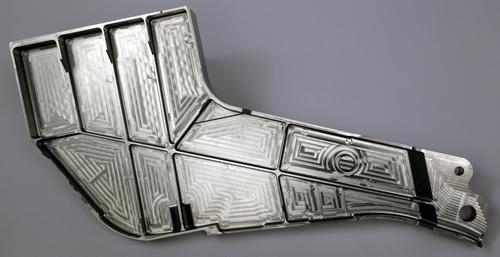
According to its site, Sciaky’s DM process works by:
Starting with a 3D model from a CAD program, Sciaky's fully-articulated, moving electron beam welding gun deposits metal, layer by layer, until the part is complete and ready for finish machining. Deposition rates typically range from 7 to 20 lbs/hr, depending upon part geometry and the material selected.
This process is good news for the aerospace industry, where highly complex parts have traditionally been manufactured using subtractive processes. AM reduces material waste, which can help save serious amounts of cash when working with materials such as titanium, tantalum and inconel. It’s no coincidence that Sciaky has partnered with Lockheed Martin, the US Air Force and DARPA to continue development.
Sciaky’s work was recently on display at the CIMP-3D Technology Showcase. In case you’ve been wondering what NAMII has been up to, CIMP-3D is the official Metals Node for NAMII, and is another Sciaky partner. All of the attention focused on Sciaky surely means the company has big plans for the future.
Of course, other companies, such as Aerosud, are also working on really large-scale AM systems, but none of them have any specifications or completed parts to show off to the public as of yet. The closest we’ve come to an AM-built aircraft so far is the AHRLAC, but that’s bound to change sooner, rather than later. Sciaky’s DM process has given us a wing, surely more is yet to come.
Check out Mark Clarkson's article in Desktop Engineering on large-format 3D printing.
Below you can find a video about the Direct Manufacturing process.
Sources: Sciaky, Lockheed Martin


John Newman is a Digital Engineering contributor who focuses on 3D printing. Contact him via [email protected] and read his posts on Rapid Ready Technology.
Follow DE






About Us · Contact Us · Editorial Team · Advertising · Privacy Policy · Subscriber Services · © 2026 Digital Engineering 24/7 · Peerless Media