Helping design and engineering professionals discover, evaluate and specify technologies and processes that shorten the design cycle and enable success.



Digital Engineering April 2026
In the latest issue of Digital Engineering, we take a look at the latest innovations in design for additive manufacturing, including the use of natural language inputs, social media cosplayers, and AI integration. The issue also includes a feature…

January Special Focus Issue: Design for Additive
In this Special Focus Issue of Digital Engineering, learn about the latest advancements in design for additive manufacturing, including new software tools, additive in automotive, custom medical devices, and more.
A team of researchers in Scotland have made a breakthrough in bioprinting by discovering a method of printing human embryonic stem cells (hESCs). This advance could enable 3D tissues and other organic structures to be built, allowing for faster drug testing, among other possible applications.
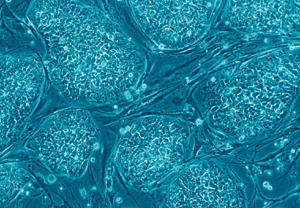
The study, which has been published under the title “Development of a valve-based cell printer for the formation of human embryonic stem cell spheroid aggregates” in Biofabrication, was conducted at Heriot-Watt University in partnership with Roslin Cellab, a stem cell technology company. The researchers used a valve-printing process that was specifically designed to account for the delicate nature of hESCs.
"Using this valve-based method, the printed cells are driven by pneumatic pressure and controlled by the opening and closing of a microvalve. The amount of cells dispensed can be precisely controlled by changing the nozzle diameter, the inlet air pressure or the opening time of the valve," said co-author, Dr. Will Wenmiao Shu.
"We found that the valve-based printing is gentle enough to maintain high stem cell viability, accurate enough to produce spheroids of uniform size, and, most importantly, the printed hESCs maintained their pluripotency — the ability to be differentiated into any other cell type," added Shu.
If approved, this particular breakthrough should thrill PETA, by eventually making animal testing obsolete. Other applications for hESC bioprinting include building new organs for needy patients from their own biological material. This has the potential to nearly eliminate the medical field’s current dependency on organ donors, as well as reduce the need for immune suppression, and would overcome transplant rejection.
Below you’ll find an interesting video that talks about stem cells.
Source: EurekaAlert


John Newman is a Digital Engineering contributor who focuses on 3D printing. Contact him via [email protected] and read his posts on Rapid Ready Technology.
Follow DE
Join over 90,000 engineering professionals who get fresh engineering news as soon as it is published.






About Us · Contact Us · Editorial Team · Advertising · Privacy Policy · Subscriber Services · © 2026 Digital Engineering 24/7 · Peerless Media