Helping design and engineering professionals discover, evaluate and specify technologies and processes that shorten the design cycle and enable success.



May 2026 Special Focus: Artificial Intelligence in Design and Simulation
In this Special Focus Issue, learn about the latest developments in the integration of artificial intelligence into engineering workflows.

Design & Simulation Software Guide 2025
In this Special Issue, Digital Engineering presents its second annual guide to design and simulation software vendors.
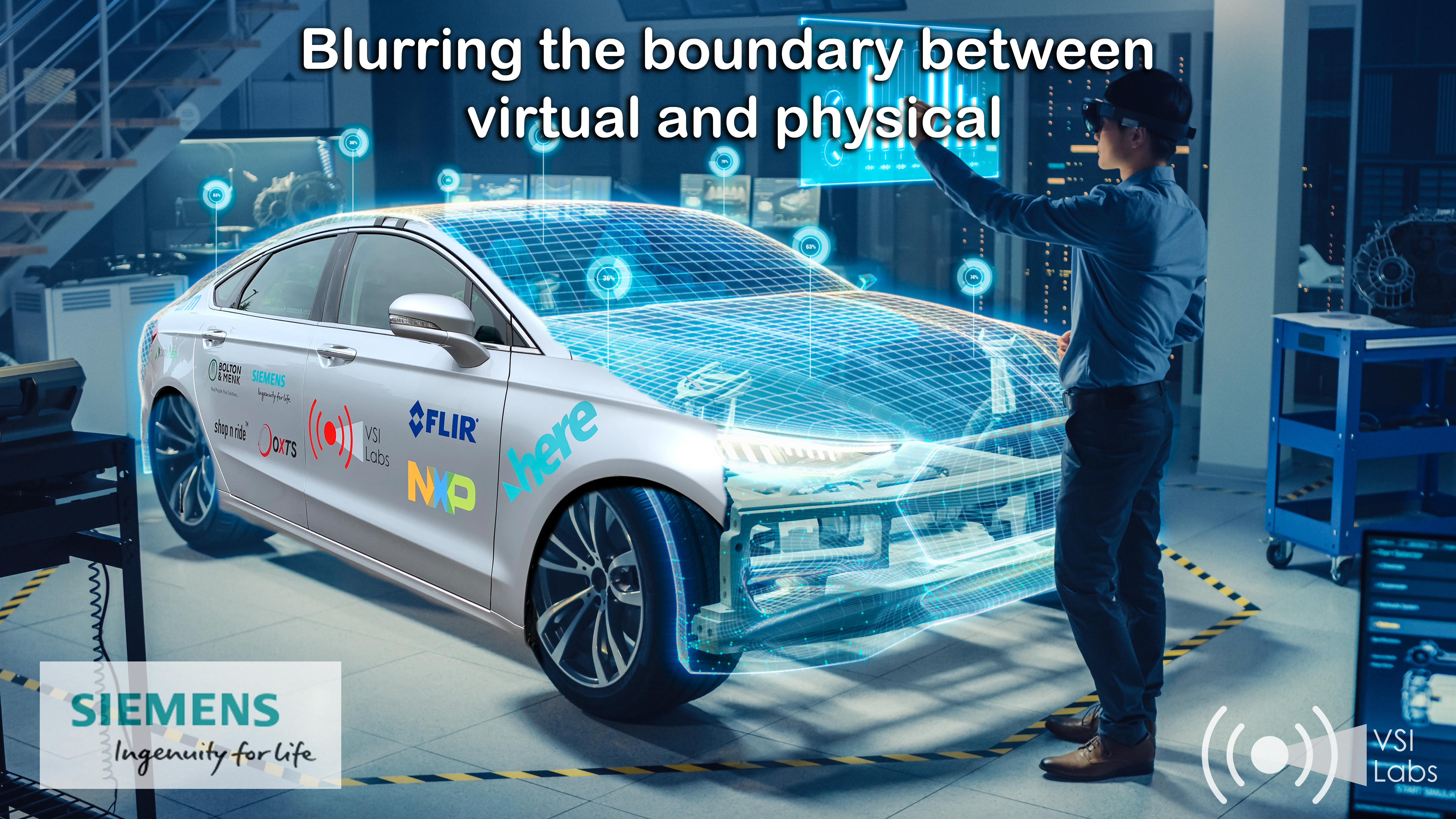
Given the vast complexity and scope of autonomous vehicle development, it’s going to take a village to get new, self-driving cars to market. VSI Labs, which already collaborates with a variety of leaders on its VSI Labs Capability Demonstrator, is striking yet another partnership, this time with Siemens Digital Industries Software to advance development using digital twins.
VSI Labs, which researches active safety and AV technologies, is partnering with Siemens, using its PAVE360 platform to create digital twin simulations for the validation and testing of all the processors, electronics, sensors, and systems that are powering the VSI Labs Capability Demonstrator. The latter is an advanced AV development vehicle equipped with components from best-in-class automotive technology leaders, including ARM for processors, NXP for the central compute platform, FLIR for thermal cameras, and Dataspeed for a by-wire control systems, among other functionalities.
“The Capability Demonstrator mirrors the behavior of VSI Labs’ physical vehicle so that corner cases can be tested that are too rare, too dangerous, or too difficult to test in actual driving conditions,” says David Frit, senior director, Autonomous and ADAS SoCs for Siemens.
The PAVE360 pre-silicon autonomous validation environments serves as a comprehensive platform for multi-supplier collaboration across the entire AV ecosystem. PAVE360 simulation capabilities go beyond processors to create digital twins that encompass everything from automotive hardware and software sub-systems, full vehicle models, and fusion of sensor data to traffic flows and the simulation of smart cities, which will eventually play host to AV traffic.
This high-fidelity twins are far more useful to on-going development compared to low-fidelity models and algorithms running on a PC farm, Frit claims. “It is well understood in engineering circles that assuming common behavior in a complex embedded environment often results in unexpected subtle, and deadly, situations that are difficult to find and debug in advance,” he explains. “High-fidelity digital twins such as those applied to PAVE360 do not exhibit substantially different behavior from the hardware … and therefore, complex validation scenarios can be performed with high confidence.”
Without PAVE360’s high-fidelity capabilities, there can be no correlation between the virtual and physical vehicles, thereby losing confidence that virtual testing is representative of what will happen in the real world, he adds.
VSI Labs officials say the Siemens collaboration and the addition of PAVE360 to the ecosystem is important because it substantially enhances the ability to analyze, test, and deploy advanced safety and automated driving systems. “By creating a digital twin of our demonstration vehicle, VSI developers can test applications long before physical deployment, which will save time and reduce development cycles,” notes Phil Magney, VSI Labs founder and president, in a press release.
Check out this video for a quick glimpse of the VSI Labs Capability Demonstrator.


Simcenter™ software, from Siemens Digital Industries Software, uniquely combines system simulation, 3D CAE and test to help you predict performance across all critical attributes earlier and throughout the entire product lifecycle. By combining…
Making the Case for Artificial Intelligence and Machine Learning in Engineering
In this paper, Siemens Digital Industries Software and Digital Engineering will provide an overview of how AI/ML-enabled software can improve design workflows, while also addressing common questions and concerns around implementing this technology in an engineering organization.

Beth Stackpole is a contributing editor to Digital Engineering. Send e-mail about this article to [email protected].
Follow DE
Join over 90,000 engineering professionals who get fresh engineering news as soon as it is published.






About Us · Contact Us · Editorial Team · Advertising · Privacy Policy · Subscriber Services · © 2026 Digital Engineering 24/7 · Peerless Media