Helping design and engineering professionals discover, evaluate and specify technologies and processes that shorten the design cycle and enable success.


Alert!
Digital Engineering ceased publication on July 1, 2026. This website remains available as an archive of engineering content.
For inquiries or information, please email [email protected].

Digital Engineering April 2026
In the latest issue of Digital Engineering, we take a look at the latest innovations in design for additive manufacturing, including the use of natural language inputs, social media cosplayers, and AI integration. The issue also includes a feature…

January Special Focus Issue: Design for Additive
In this Special Focus Issue of Digital Engineering, learn about the latest advancements in design for additive manufacturing, including new software tools, additive in automotive, custom medical devices, and more.
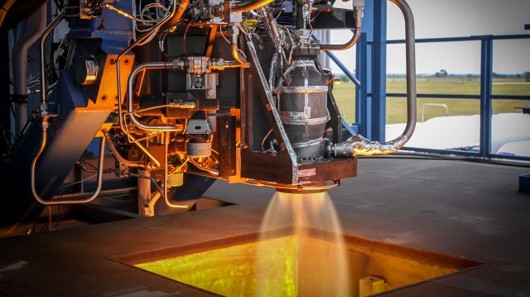 SpaceX has completed qualification testing of its new SuperDraco engine, which includes a 3D-printed combustion chamber. Image: SpaceX
The SuperDraco engine will replace the original Draco engines, and serve as the vehicle's launch emergency escape system. The company completed qualification testing of the engine earlier this year.
“Through 3D printing, robust and high-performing engine parts can be created at a fraction of the cost and time of traditional manufacturing methods,” says Elon Musk, chief designer and CEO at SpaceX. “SpaceX is pushing the boundaries of what additive manufacturing can do in the 21st century, ultimately making our vehicles more efficient, reliable and robust than ever before.”
The SuperDraco has roughly 200 times the power of its predecessor, and will provide attitude control for the Dragon capsule in orbit and during re-entry. It can also carry the capsule to safety during a launch accident. It can also help bring the Dragon capsule back to spaceport under its own power and provides precision landing capabilities. Each engine produces 16,000 lbs. of thrust, and can be restarted multiple times.
The Dragon will include eight SuperDracos built into its side walls that can produce up to 120,000 lbs. of total axial thrust.
Test firings of the engine were completed last month in Texas. The SuperDraco will undergo a pad abort test this year as part of NASA's Commercial Crew Integrated Capabilities initiative.
Source: SpaceX


Brian Albright is the editorial director of Digital Engineering.
Contact him at [email protected].






About Us · Contact Us · Editorial Team · Advertising · Privacy Policy · Subscriber Services · © 2026 Digital Engineering 24/7 · Peerless Media