Helping design and engineering professionals discover, evaluate and specify technologies and processes that shorten the design cycle and enable success.



Digital Engineering April 2026
In the latest issue of Digital Engineering, we take a look at the latest innovations in design for additive manufacturing, including the use of natural language inputs, social media cosplayers, and AI integration. The issue also includes a feature…

January Special Focus Issue: Design for Additive
In this Special Focus Issue of Digital Engineering, learn about the latest advancements in design for additive manufacturing, including new software tools, additive in automotive, custom medical devices, and more.
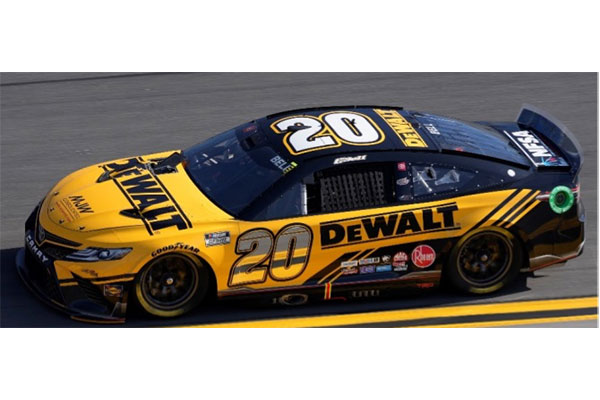
Stratasys has been named a NASCAR Competition Partner and has teamed with NASCAR to produce 3D printed production parts to be featured across all NASCAR Next Gen cars.
NASCAR teamed with Stratasys Direct Manufacturing to print a windshield air cockpit ventilation unit for the Next Gen car. The windshield air ducts were printed at Stratasys Direct Manufacturing in Belton, TX, on the SAF-powered Stratasys H350 3D printer, which is specifically designed for production consistency, a predictable cost per part, and production control for volumes up to thousands of parts. The parts were printed using Stratasys High Yield PA11, which is derived from sustainable castor oil. The parts were cleaned, finished, dyed and shot-blasted using DyeMansion post-processing equipment.
The team at NASCAR designed and 3D printed an underside NACA duct for engine cooling at their research and development facility in Concord, NC, with the Stratasys Fortus 450mc 3D printer.
“It is exciting to see the evolution of how NASCAR has used additive manufacturing across their vehicles. We’ve helped them move from 3D printed prototypes to end-use production parts on their high-performance race cars,” says Pat Carey, senior vice president, Strategic Growth for Stratasys. “We are honored to be named a NASCAR Competition Partner and to provide all teams with the first end-use production parts for their Next Gen cars.”
The new 3D printed parts provide NASCAR with enhanced performance, flexibility, cost savings and improved aerodynamics, and are being used by every team that competes in the NASCAR Cup Series, according to Stratasys. The parts encompass nearly three years of planning, design and development, as the Next Gen car underwent more than 37,000 miles of testing before its introduction at The Busch Light Clash in February.
“The Next Gen car could not have been completed without the collaboration with NASCAR Competition Partners like Stratasys and Stratasys Direct Manufacturing,” says John Probst, senior vice president, racing innovation, NASCAR. “During testing, we realized we needed an additive manufacturing solution that could withstand high temperatures and needed the parts delivered quickly. We approached Stratasys Direct, and they delivered not only as a supplier but as a consultant on this project. They provided us with strategic direction on design, materials, and the right additive manufacturing technologies to use to create the highest performance parts for the Next Gen cars.”
Stratasys has partnered with NASCAR teams for almost 20 years to support their endeavors to create highly competitive race cars, using 3D printing technology to support tooling, drill guides and now production parts.
“Having worked with Stratasys for more than 18 years, we’re continually impressed by the quality, speed, and flexibility that additive manufacturing offers,” said Joe Gibbs, founder and CEO, Joe Gibbs Racing Team. “Our work together has helped move the racing world forward through new technologies that improve the sport.”
Sources: Press materials received from the company and additional information gleaned from the company’s website.


Every day, our customers find simpler, smarter approaches to stubborn design problemsand greater confidence to confront towering human and technological challenges. Less hindered by the usual constraints, they can imagine, design, iterate and…
Rapid Prototyping in The Automotive Industry
Henry Ford may not have invented the automobile, but his pioneering spirit did transform the way cars were made. His assembly line process drastically reduced costs with standardized parts and greater efficiency which led to lower cost, higher quality and greater reliability.

DE's editors contribute news and new product announcements to Digital Engineering. Press releases may be sent to them via [email protected].
Follow DE
Join over 90,000 engineering professionals who get fresh engineering news as soon as it is published.






About Us · Contact Us · Editorial Team · Advertising · Privacy Policy · Subscriber Services · © 2026 Digital Engineering 24/7 · Peerless Media