Helping design and engineering professionals discover, evaluate and specify technologies and processes that shorten the design cycle and enable success.


Alert!
Digital Engineering ceased publication on July 1, 2026. This website remains available as an archive of engineering content.
For inquiries or information, please email [email protected].

May 2026 Special Focus: Artificial Intelligence in Design and Simulation
In this Special Focus Issue, learn about the latest developments in the integration of artificial intelligence into engineering workflows.

Design & Simulation Software Guide 2025
In this Special Issue, Digital Engineering presents its second annual guide to design and simulation software vendors.
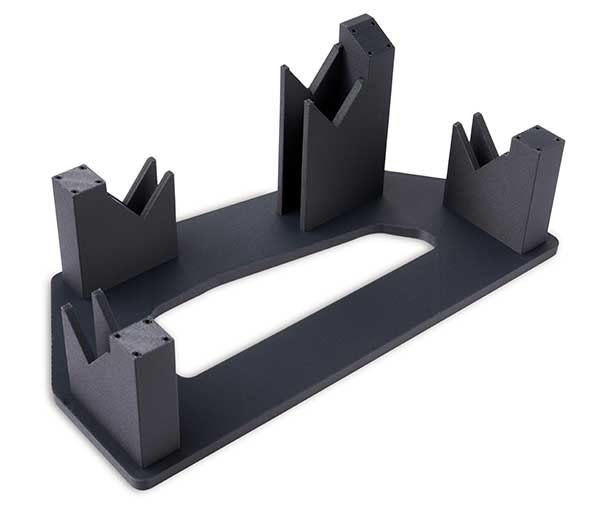
Stratasys Ltd. introduced an acrylonitrile butadiene styrene-based carbon fiber material for its line of F123 Series 3D printers, the first composite material for the platform. Carbon fiber materials have proven popular on Stratasys’ industrial-scale FDM (fused deposition modeling) 3D printers for various end-use applications such as jigs, fixtures and tooling, company says. With FDM ABS-CF10, Stratasys now makes carbon fiber more accessible to the engineering and manufacturing community with high-performance F170, F270 and F370 3D printers.
The material properties of FDM ABS-CF10, featuring 10% chopped carbon fiber, an alternative to metal parts. The material is said to be stronger and stiffer than standard ABS, without the weight of metal, and can be printed with accuracy, Stratasys notes. QSR Support water-soluble material enables ability to 3D print intricate and complex parts without manual support removal.
Stratasys’ internal analysis suggests the additive manufacturing market for polymer jigs and fixtures is expected to grow at a 14.2% annual rate between 2019 and 2023, to nearly $600 million, double the growth rate of the prior 4 years. With its FDM ABS-CF10 material, Stratasys is focused on addressing applications in the aerospace, automotive, industrial and recreational manufacturing industries. Parts applications include end effectors used with industrial robots, ergonomic aids such as lift assists and hand tools and alignment fixtures on assembly lines.
“There is a reason why manufacturers are increasingly turning to 3D-printed carbon fiber materials,” says Stratasys Senior Vice President of Manufacturing Dick Anderson. “It’s incredibly strong, versatile, and lightweight. We want to enable all our FDM customers to take advantage of those material characteristics. Introducing FDM ABS-CF10 is a significant step in growing 3D printing’s presence in the global manufacturing industry.”
The FDM ABS-CF10 material is scheduled to be available in April 2021, and orders are being taken now. Learn more about carbon fiber material for the F123 Series online.
Sources: Press materials received from the company and additional information gleaned from the company’s website.


Every day, our customers find simpler, smarter approaches to stubborn design problemsand greater confidence to confront towering human and technological challenges. Less hindered by the usual constraints, they can imagine, design, iterate and…
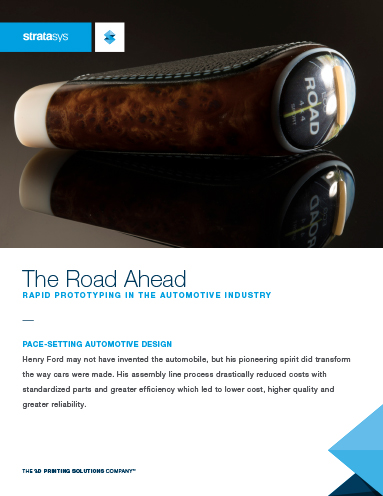
Rapid Prototyping in The Automotive Industry
Henry Ford may not have invented the automobile, but his pioneering spirit did transform the way cars were made. His assembly line process drastically reduced costs with standardized parts and greater efficiency which led to lower cost, higher quality and greater reliability.

DE's editors contribute news and new product announcements to Digital Engineering. Press releases may be sent to them via [email protected].
Follow DE






About Us · Contact Us · Editorial Team · Advertising · Privacy Policy · Subscriber Services · © 2026 Digital Engineering 24/7 · Peerless Media