Helping design and engineering professionals discover, evaluate and specify technologies and processes that shorten the design cycle and enable success.


Alert!
Digital Engineering ceased publication on July 1, 2026. This website remains available as an archive of engineering content.
For inquiries or information, please email [email protected].

Digital Engineering April 2026
In the latest issue of Digital Engineering, we take a look at the latest innovations in design for additive manufacturing, including the use of natural language inputs, social media cosplayers, and AI integration. The issue also includes a feature…

January Special Focus Issue: Design for Additive
In this Special Focus Issue of Digital Engineering, learn about the latest advancements in design for additive manufacturing, including new software tools, additive in automotive, custom medical devices, and more.
With Pennsylvania under a statewide stay-at-home order, Dr. Guha Manogharan, Assistant Professor of Mechanical Engineering, Penn State University, and his colleagues have had to migrate their classes to Zoom conferences.
Guha teaches a graduate lab course on metal additive manufacturing (AM) and design, which typically involves designing and producing parts in AM hardware. With everyone staying home and connecting via individual webcams from separate places, how can this class continue? Somehow, Guha and his students found a way.
"Before the [Coronavirus] outbreak, the class was divided into smaller groups. We had round-robin schedules, with one group working on reverse-engineering, one on manipulation of the point-cloud [scan] data, one group on setting up the build plate, and one group on process simulation," he recalled. "[Teaching on Zoom video conferencing] is a different environment. Given the environment they'd be working in after graduation, in companies with different sites in different locations, this is an opportunity for them to get better and working in remote teams via teleconferencing."
Guha now uses virtual machines (VMs) accessible to himself and the students, along with AM simulation software. The class uses, among others, 3DXpert from 3D Systems, which allows engineers to simulate and analyze the distortion that occurs during 3D printing.
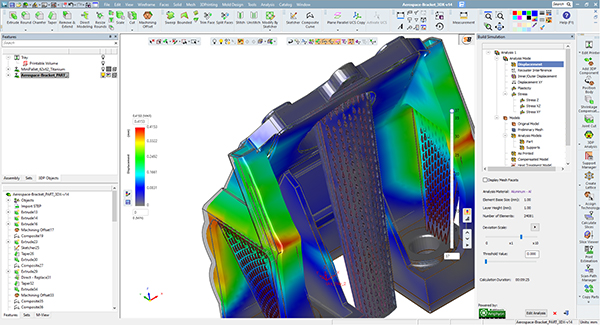
While the software allows the students to simulate the printing process and its effects, the historical data collected from the previous classes gives them confidence on what they can expect to happen in the real world.
"We have this data in our online repository ... Students study these as case studies to understand the build orientation and laser processing condition's impact ... So even though they're doing everything virtually, they can still understand the impact of laser strategies and support structures," Guha reasoned. "Students have now formed subgroups among themselves to complete the 3DXpert tutorials [available from 3D Systems] and apply the skills to the final project."
The class has originally planned to print their final project in mid-April, but that's no longer possible. "Depending on the [outbreak situation], we may print it later in the semester," Guha said.
Guha's department is also collaborating with other departments at Penn State University to contribute to the fight against COVID-19.
"My colleague Dr. Tim Simpson helped organized Penn State's response initiative, which leverages Penn State University's research enterprise to uncover potential solutions," Guha explained.
Dr. Timothy Simpson was a panelist for a previously produced DE webinar on AM design's pitfalls.
For more on what Dr Guha and his colleagues are doing in collaboration, visit MASC@PSU

About this podcast
Teaching Additive Manufacturing Under Lockdown
April 3, 2020 at 3:00 pm
11:38 hr/min/sec
Media file
Latest podcasts
Find us
Tune in to Digital Engineering 24/7's podcast and get engineering news, products and analysis from industry experts delivered in real time. Follow us on these popular platforms:
From digitization, design and simulation through manufacturing, inspection and management, our comprehensive portfolio of technologies provides a seamless, customizable workflow designed to optimize products and processes while accelerating…
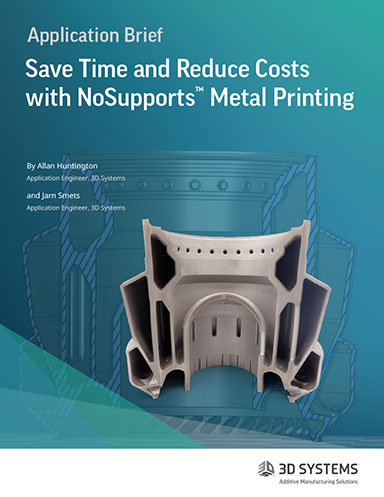
Save Time and Reduce Costs with NoSupports™ Metal Printing
Metal 3D printing is a high energy process in which it is possible for unmanaged heat and stress to build up and impact part quality, this guide presents a step-by-step methodology for how to apply NoSupports to a hot end section of a larger turbomachinery part.

Kenneth Wong is Digital Engineering's resident blogger and senior editor. Email him at [email protected] or share your thoughts or suggestions at digitaleng.news/facebook.
Follow DE






About Us · Contact Us · Editorial Team · Advertising · Privacy Policy · Subscriber Services · © 2026 Digital Engineering 24/7 · Peerless Media