Helping design and engineering professionals discover, evaluate and specify technologies and processes that shorten the design cycle and enable success.


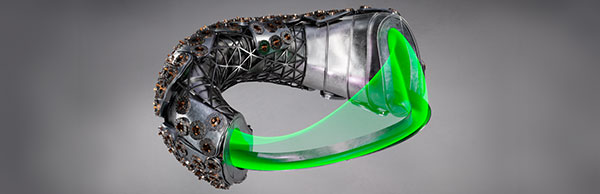
Thea Energy, Inc., a technology company advancing the stellarator for the commercialization of a source of baseload fusion power, shares collaborations to develop a digital twin model for its “Helios” fusion power plant. Using artificial intelligence (AI) and computational tools, Thea Energy will work with NVIDIA and Synopsys, as well as the U.S. Department of Energy (DOE)’s Argonne National Laboratory (ANL) and Princeton Plasma Physics Laboratory (PPPL) to analyze and scale vast datasets, enhance Thea Energy’s plant designs, and stress-test system operations.
“This is a critical public-private collaboration, where Thea Energy is leveraging AI to build systems on time and on budget, keeping us on track to delivering on-demand, abundant fusion power by 2035,” says David Gates, Ph.D., co-founder and chief technology officer of Thea Energy. “Our planar coil stellarator architecture also utilizes AI for its software controls to continuously reoptimize the system and correct for wear-and-tear.
"With this collaboration, we are expanding our AI applications to include multifaceted device modeling at the click of a button," Gates continues. "With the Helios digital twin, we can shorten development cycles and essentially run the system before we even put a shovel in the ground."
Through these collaborations:
Sources: Press materials received from the company and additional information gleaned from the company’s website.


DE's editors contribute news and new product announcements to Digital Engineering. Press releases may be sent to them via [email protected].
Follow DE
Join over 90,000 engineering professionals who get fresh engineering news as soon as it is published.






About Us · Contact Us · Editorial Team · Advertising · Privacy Policy · Subscriber Services · © 2026 Digital Engineering 24/7 · Peerless Media