Helping design and engineering professionals discover, evaluate and specify technologies and processes that shorten the design cycle and enable success.


Alert!
Digital Engineering ceased publication on July 1, 2026. This website remains available as an archive of engineering content.
For inquiries or information, please email [email protected].

Digital Engineering April 2026
In the latest issue of Digital Engineering, we take a look at the latest innovations in design for additive manufacturing, including the use of natural language inputs, social media cosplayers, and AI integration. The issue also includes a feature…

January Special Focus Issue: Design for Additive
In this Special Focus Issue of Digital Engineering, learn about the latest advancements in design for additive manufacturing, including new software tools, additive in automotive, custom medical devices, and more.
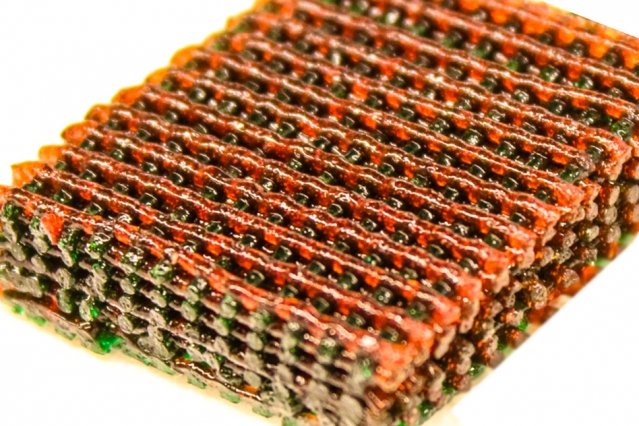
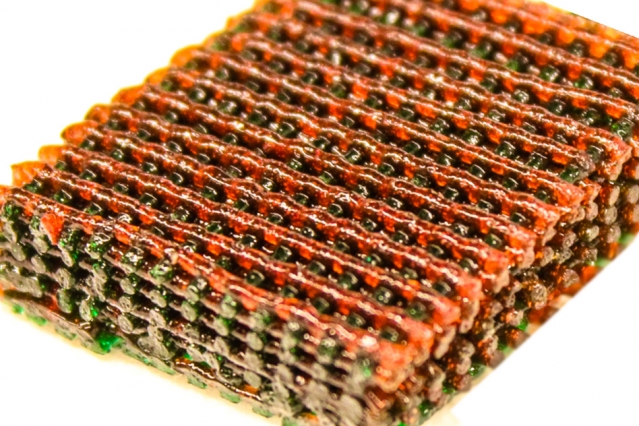
A new 3D printing technique developed at MIT can produce tough hydrogels that can encapsulate living cells and medications. The hydrogels can be printed into a wide array of structures, and are created with materials that are benign enough to synthesize with living cells like stem cells.
The process is outlined in "3D Printing of Highly Stretchable and Tough Hydrogels into Complex, Cellularized Structures" in the journal Advanced Materials.
The new material was created out of two other polymers, along with a biocompatible nanoclay that allows users to control the viscosity of the material. A printed shape can be compressed as much as 99% and then return to its original form. It can also stretch up to five times its original size.
"The innovation is really about the material — a new ink for 3D printing of biocompatible tough hydrogel,” said Xuanhe Zhao, MIT associate professor of mechanical engineering, who led the project along with colleagues at Duke and Columbia. “Each [material] individually is very weak and brittle, but once you put them together, it becomes very tough and strong. It’s like steel-reinforced concrete.”
Currently, the material can be printed with detail down to 500 micrometers, but the researchers plan to improve its resolution.
It could conceivably be used to print replacements for the cartilaginous tissues in the human ear, nose, or in the joints. The material could also be used to create durable implants to deliver new cells or drugs into the body. Another potential application: creating actuators for soft robotics systems.
Source: MIT


Brian Albright is the editorial director of Digital Engineering.
Contact him at [email protected].






About Us · Contact Us · Editorial Team · Advertising · Privacy Policy · Subscriber Services · © 2026 Digital Engineering 24/7 · Peerless Media