Helping design and engineering professionals discover, evaluate and specify technologies and processes that shorten the design cycle and enable success.


Alert!
Digital Engineering ceased publication on July 1, 2026. This website remains available as an archive of engineering content.
For inquiries or information, please email [email protected].

Digital Engineering April 2026
In the latest issue of Digital Engineering, we take a look at the latest innovations in design for additive manufacturing, including the use of natural language inputs, social media cosplayers, and AI integration. The issue also includes a feature…

January Special Focus Issue: Design for Additive
In this Special Focus Issue of Digital Engineering, learn about the latest advancements in design for additive manufacturing, including new software tools, additive in automotive, custom medical devices, and more.
The proof, if such is required, of the potential for AM to do good can be found in organizations that look for positive ways to leverage AM. WASP is one such organization. Among its goals is an effort at using the power of AM to look for alternative methods for creating low-cost housing.
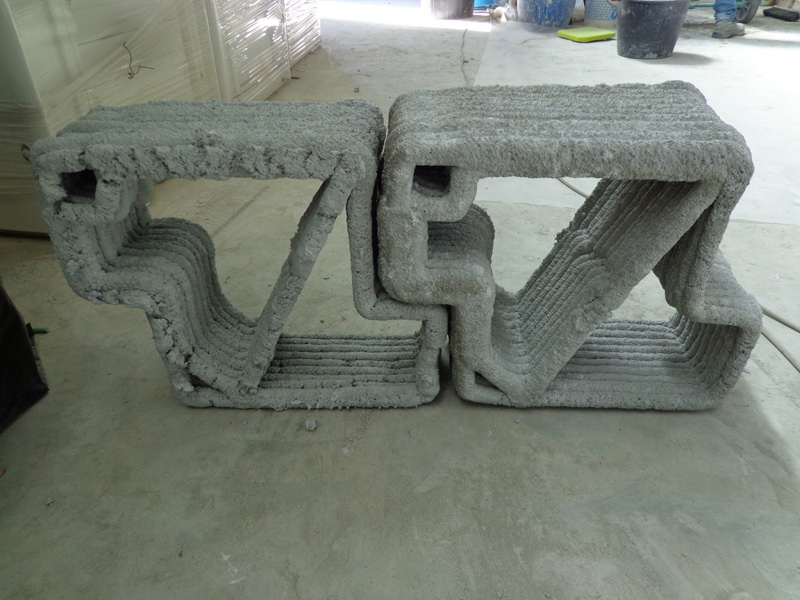
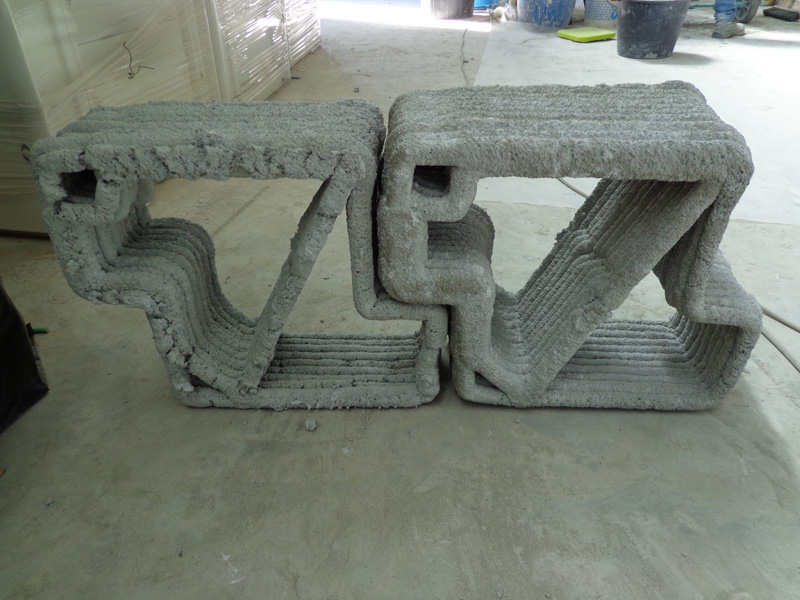 This beam was printed in specific patterns intended to provide the same level of structural support as a similarly sized solid concrete beam. Courtesy of WASP.
From the website:
WASP was born with the dream of printing houses with 100% natural materials, but wisdom teaches that extremism is never a good thing. While trying to find a way to print houses with natural materials and at zero km, there is an urge to plunge into the routine and make a contribution now.
Generally, the people at WASP look at concrete with something like disdain. They claim it is the source of massive amounts of CO2 entering the atmosphere as a result of both production and transportation. The material itself, however, is undeniably effective at building resilient structures quickly.
By creating materials on site, WASP claims it is possible to reduce emissions by up to 50%, which makes the use of concrete more palatable. Further, by applying standard AM practices to construction (lightweighting, freedom of design), it may be possible to use concrete in a way that even the most rabid environmentalists would accept.
With that in mind, WASP sent one of its large-scale 3D printers to the University Federico II of Naples. The printer was designed to use natural materials (such as mud) for production, but it wasn’t difficult to find a cement mix that worked with the device.
Rather than printing solid bricks of materials, the university team used the printer to create beams that are as much air as material. The 9-ft.-long beam was made using geometric shapes that have been designed to provide as much load-bearing strength as any pillar of cement, while using less than half the standard materials.
The structural capacity of the beams is currently being tested at the University Federico II of Naples, and success could usher in new ways of thinking about construction projects. Below you’ll find a video of the WASP printer at work.
Source: WASP


John Newman is a Digital Engineering contributor who focuses on 3D printing. Contact him via [email protected] and read his posts on Rapid Ready Technology.
Follow DE






About Us · Contact Us · Editorial Team · Advertising · Privacy Policy · Subscriber Services · © 2026 Digital Engineering 24/7 · Peerless Media