Helping design and engineering professionals discover, evaluate and specify technologies and processes that shorten the design cycle and enable success.


Alert!
Digital Engineering ceased publication on July 1, 2026. This website remains available as an archive of engineering content.
For inquiries or information, please email [email protected].

Digital Engineering April 2026
In the latest issue of Digital Engineering, we take a look at the latest innovations in design for additive manufacturing, including the use of natural language inputs, social media cosplayers, and AI integration. The issue also includes a feature…

January Special Focus Issue: Design for Additive
In this Special Focus Issue of Digital Engineering, learn about the latest advancements in design for additive manufacturing, including new software tools, additive in automotive, custom medical devices, and more.
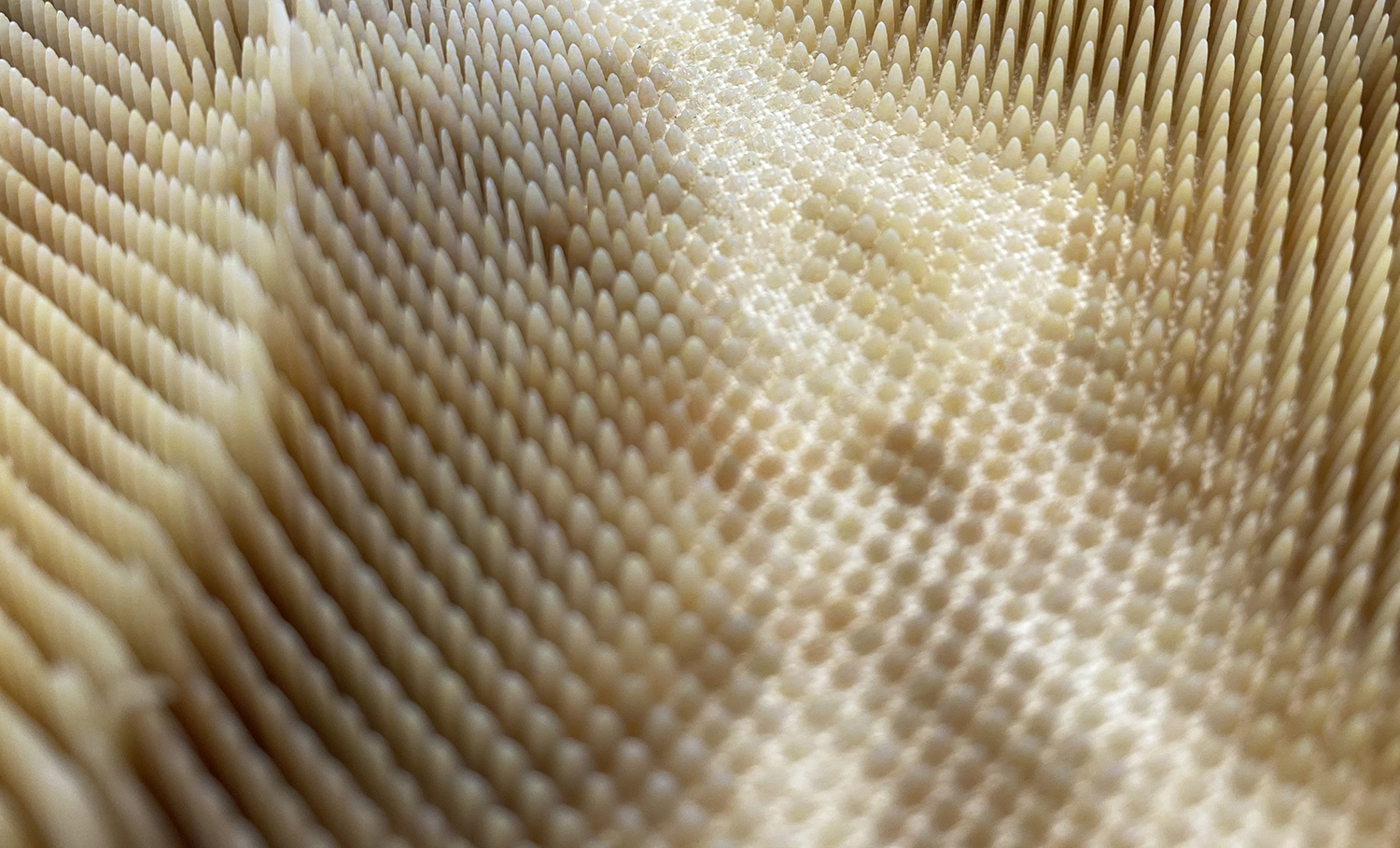
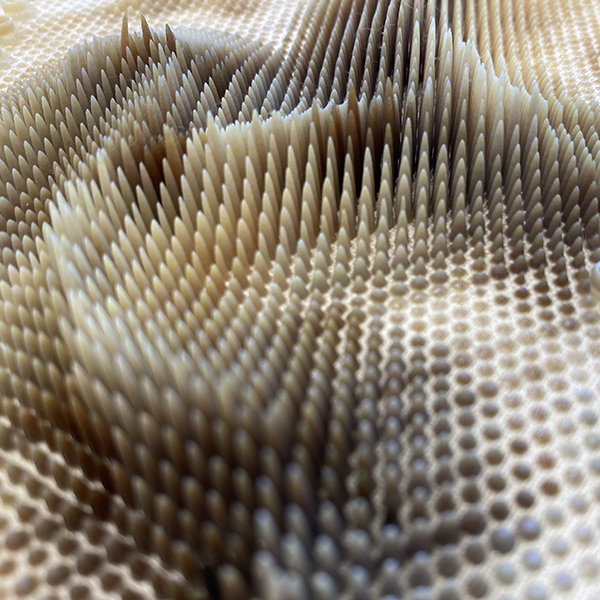
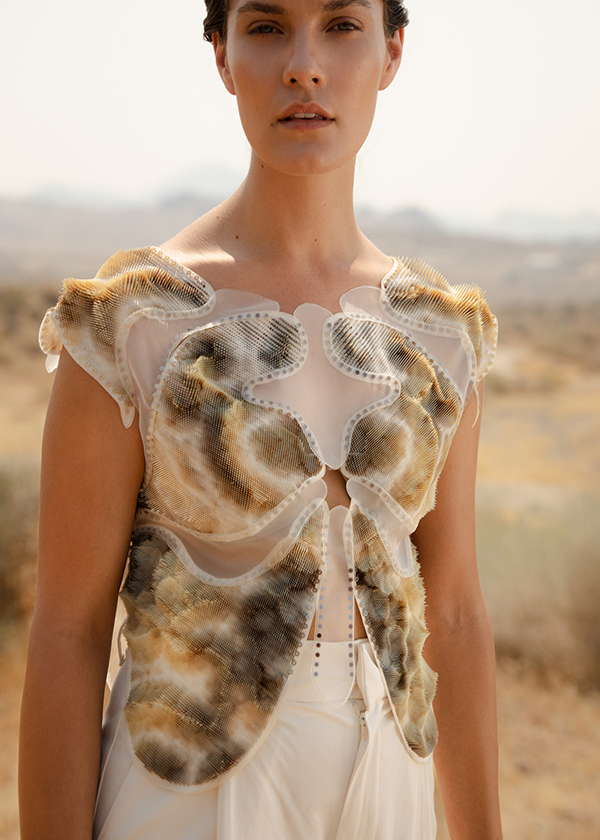
Fashion designer Julia Koerner's next collection, dubbed ARID, is not sewn but 3D printed.
All the seams in the ARID collection are connected using 3D-printed joints, changing how fabric is assembled into outfits.
In 2019, Koener worked with Stratasys to create her SETAE jacket, printed on the J850 3D Printer. The dress was featured in the Designs for Different Futures exhibit at the Philadelphia Museum of Arts.
"We are focusing on demonstration and development of application solutions for 3D printing on textile, with use of our Polyjet technology -- full color and multi materials. We have invited Julia Koerner, Ganit Goldstein, Three ASFOUR, Travis Fitch , Iris Van Herpen and more to work with us on demonstration of these capabilities. We believe strongly that the solutions which we demonstrate will not only be very relevant for the highly competitive high end fashion market as well as the future of automotive interior and sports. The future would mean integrating smart tech as well as a larger variety of material capabilities," said Naomi Kaempfer, Creative Director of Art Fashion Design, Stratasys.
The ARID collection debut this week at the virtual ARS Electronica Festival.

Ganit Goldstein, who also explored the use of 3D printing in fashion, said, “3D printing has always offered the potential to personalize design in ways not possible before, but to truly create a new way to manufacture requires a new kind of textile."
The collaborations are part of the Re-FREAM research project to infuse new methods and processes into fashion manufacturing. Just like in engineering, the use of simulation in fashion and apparel is also migrating from the early concept design phase to manufacturing.
"There are today many new software packages in fashion that illustrate both the draping and physical bounce and flow of the textiles when carried on the body. There are scanning solutions creating exact measures and extracting the 2D garment layout from the 3D scans. These packages are still ‘in the making’ in the sense that until now the applications have been mostly used for cinema and illustration and less for actual manufacturing. However, we believe that these will be brought soon much closer in their practical use to the future for everyday fashion," said Kaempfer.
3D-printed dresses and apparels are on the rise, hinting at a future where outfits may be purchased, downloaded over the web, and printed by the consumers themselves.
However, as pointed out by this Wired article, most 3D printing materials exhibit plastic-like characteristics. Therefore, they offer new possibilities in forms but don't typically come with the comfort and affordable price tag of common fabrics such as cotton and wool. At the current stage, they may be better suited for making special outfits, such as pressure-resistant military gear or thermal-regulated diving gear, than for everyday wear.


Every day, our customers find simpler, smarter approaches to stubborn design problemsand greater confidence to confront towering human and technological challenges. Less hindered by the usual constraints, they can imagine, design, iterate and…
Rapid Prototyping in The Automotive Industry
Henry Ford may not have invented the automobile, but his pioneering spirit did transform the way cars were made. His assembly line process drastically reduced costs with standardized parts and greater efficiency which led to lower cost, higher quality and greater reliability.

Kenneth Wong is Digital Engineering's resident blogger and senior editor. Email him at [email protected] or share your thoughts or suggestions at digitaleng.news/facebook.
Follow DE






About Us · Contact Us · Editorial Team · Advertising · Privacy Policy · Subscriber Services · © 2026 Digital Engineering 24/7 · Peerless Media