Helping design and engineering professionals discover, evaluate and specify technologies and processes that shorten the design cycle and enable success.


Sponsored

It's obvious to even the casual observer that the automotive industry is in the midst of a technological revolution. A new car buyer trading in their trusty 10-year-old vehicle will be surprised by all of the screens, connectivity options and advanced driver assistance systems in today’s new cars. But that’s just the tip of the iceberg.
The increased integration of electronics in vehicles is a significant engineering challenge all by itself. Behind the sophisticated entertainment and safety systems are more sensors, wiring, integrated circuits and software than ever before—all of which has to be designed, simulated and tested.
Couple the trend toward electronics with the move by more manufacturers toward electric powertrains, and those electronic engineering challenges are multiplied.
The advances in autonomous driving capture all the headlines. Here again, simulation is paramount to meet the industry’s goals. It’s simply not possible to physically test a self-driving car’s response to every situation it might encounter. Autonomous driving technologies add even more electronics and software integration challenges to every vehicle.
Automotive manufacturers are also focused on removing weight from vehicles, to use less materials and fuel, and to provide electric cars with longer ranges. And because every vehicle is a system of components, every change has a domino effect.
Thankfully, the technologies behind the scenes are keeping pace with the industry’s needs. In this special digital issue, we have compiled DE articles that cover those technologies: simulation; topology optimization; noise, vibration and harshness testing, automotive user interaction, computing, immersive design and more.

Proto Labs is the world's fastest source for custom prototype and low-volume parts. Our 3D printing, CNC machining and injection molding services utilize proprietary computing technology and automated systems to produce quality parts in a…
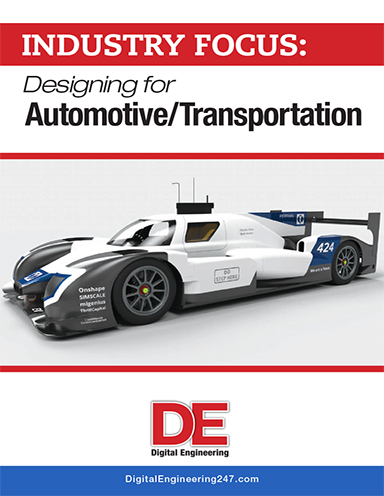
Designing for Automotive/Transportation
The automotive industry is past the point of talking about the disruption coming from demand for electric vehicle powertrains or the potential of autonomous vehicles, and well on its way to responding to those disruptions thanks to advanced engineering technologies. Download this special digital edition.




About Us · Contact Us · Editorial Team · Advertising · Privacy Policy · Subscriber Services · © 2026 Digital Engineering 24/7 · Peerless Media