Helping design and engineering professionals discover, evaluate and specify technologies and processes that shorten the design cycle and enable success.


Alert!
Digital Engineering ceased publication on July 1, 2026. This website remains available as an archive of engineering content.
For inquiries or information, please email [email protected].

Digital Engineering April 2026
In the latest issue of Digital Engineering, we take a look at the latest innovations in design for additive manufacturing, including the use of natural language inputs, social media cosplayers, and AI integration. The issue also includes a feature…

January Special Focus Issue: Design for Additive
In this Special Focus Issue of Digital Engineering, learn about the latest advancements in design for additive manufacturing, including new software tools, additive in automotive, custom medical devices, and more.
I keep hearing word that print is dead. From what I can tell, print is merely transitioning to a different medium. Some of that is electronic, and some is via a service arrangement called print-on-demand (POD). POD allows a customer to select a book they’d like to have a dead-tree version of and have it printed just for them. This saves book space and keeps overhead low.
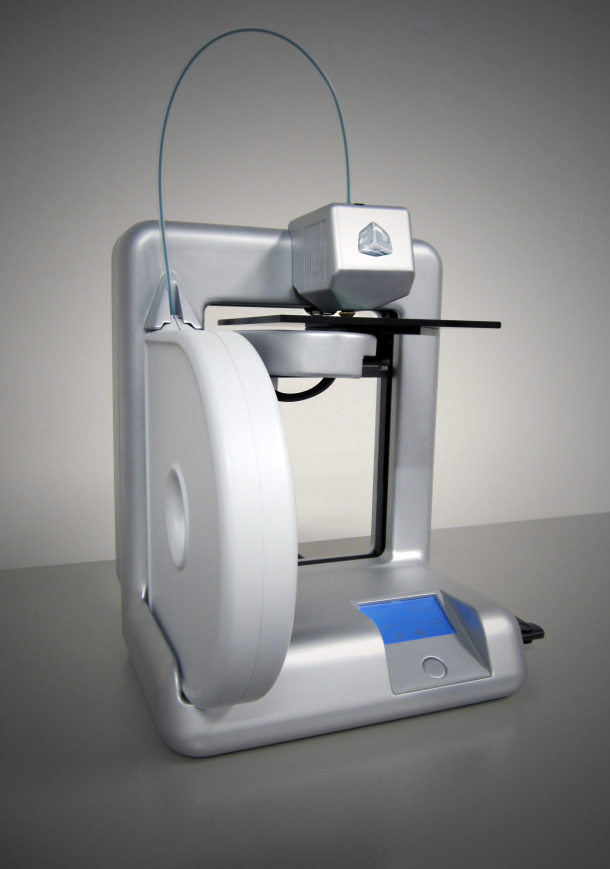
Additive manufacturing (AM) also offers a sort of POD, sometimes referred to as on-demand manufacturing. This aspect of AM offers unique products that can be one of a kind. It’s on-demand manufacturing that is driving Shapeways and other service bureaus that cater to individual customers rather than businesses. Fujifilm has a plan to bring this brand of service bureau into shopping centers.
The general plan is to create kiosks that offer customers customizable designs. A buyer will choose from a number of basic 3D designs, have them altered to fit their personal needs, and come back the next day to pick up the 3D printed product. This sort of exposure brings AM more into mainstream consciousness and gives people a chance to see what AM-created products look and feel like.
Moving from the individual consumer to mass production, DARPA is looking to create a new type of manufacturing plant. In place of the old model of defense manufacturing – in which one plant produces a single product – DARPA wants to create multi-functional facilities that are capable of producing different products based on need. This new idea is called the Instant Foundry Adaptive through Bits (iFAB) project.
The iFAB vision is to move away from wrapping a capital-intensive manufacturing facility around a single defense product, and toward the creation of a flexible, programmable, potentially distributed production capability able to accommodate a wide range of systems and system variants with extremely rapid reconfiguration timescales. – Kaigham J. Gabriel, DARPA Acting Director
The iFABs will use advanced manufacturing tools and crowd sourced designs to further defense projects, beginning with military vehicles as part of the Adaptive Vehicle Make program. Digital design and rapid prototyping are bound to be a driving force for the iFABs, which will compliment the government’s advanced manufacturing initiative.
Next up, a quick look at materials. Today we have a new material designed for electron beam melting from Arcam. Titanium Grade 2 has been developed for use in orthopedic implants. According to Arcam, “The material properties of EBM-manufactured Titanium Grade 2 comply fully with the exacting chemical and mechanical requirements in the ASTM F67 specification.” Arcam helps to build implants with osseointegration in mind, similar to the titanium jawbone created for an elderly patient in Belgium.
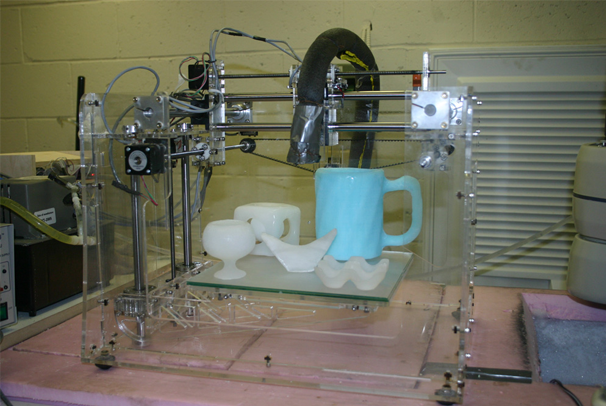
Finally, as advertised, we have proof that 3D printing is cool. Pieter Sijpkes and Jorge Angeles at McGill University are working on a 3D printer that uses ice as its medium. Other than creating really nifty ice sculptures or intricate ice cubes for that special party, the system is being looked at as a way to create metal copies from ice originals as part of a casting process.
Below you’ll find a video that touches on Fujifilm’s kiosk idea.
Sources: PCWorld, McGill University, Buy-n-Shoot, Triple Pundit, DARPA


John Newman is a Digital Engineering contributor who focuses on 3D printing. Contact him via [email protected] and read his posts on Rapid Ready Technology.
Follow DE






About Us · Contact Us · Editorial Team · Advertising · Privacy Policy · Subscriber Services · © 2026 Digital Engineering 24/7 · Peerless Media