Helping design and engineering professionals discover, evaluate and specify technologies and processes that shorten the design cycle and enable success.



Digital Engineering April 2026
In the latest issue of Digital Engineering, we take a look at the latest innovations in design for additive manufacturing, including the use of natural language inputs, social media cosplayers, and AI integration. The issue also includes a feature…

January Special Focus Issue: Design for Additive
In this Special Focus Issue of Digital Engineering, learn about the latest advancements in design for additive manufacturing, including new software tools, additive in automotive, custom medical devices, and more.
A couple months ago, I wrote about a somewhat disconcerting development in additive manufacturing (AM) that arose in the form of people tinkering around with printing out firearms (or parts for firearms). As was the case then, and is still the case now, a serious cause for alarm is the idea that this kind of experimentation could result in serious regulation of an industry that is really just getting started.
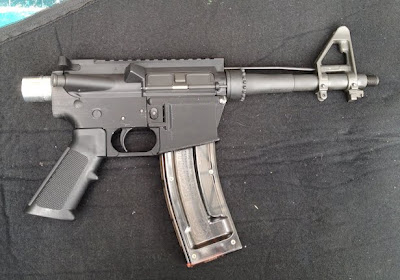
Additive manufacturing companies sell 3D printers to the weapons industry, where the main use is the same for nearly any company that invests in AM: creation of prototypes. I don’t see this as a problem. Firearm manufacturers are just another industry that benefits from the rapid turnaround time of AM.
The potential problem comes when people attempt to use 3D printers at home to recreate guns. Legal issues aside, unless you happen to be an experienced gunsmith that also owns a 3D printer, you are just as likely to create a weapon that will explode in your hands than one that functions as intended. Add in the existence of file sharing sites and suddenly you have people that may have never even touched a firearm before attempting to build one.
Stratasys has recently taken a stand against unlicensed hobbyists using its 3D printers to build firearms. A member of an online group stated his intention to design a plastic pistol that could be constructed using AM, and further, to freely distribute those plans. The man in question was leasing a Stratasys 3D printer, and the company sent him requests to provide documentation proving he had the legal right to develop, build and distribute firearms.
No such documentation was forthcoming, so Stratasys yanked his lease. While some people might question Stratasys’ actions, I applaud the effort. Constructing and distributing plastic firearms would likely violate several laws in place that regulate firearms. Stratasys released a statement about its decision:
“It is the policy of Stratasys not to knowingly allow its printers to be used for illegal purposes.”
Unfortunately, I doubt this will be the end of the issue, particularly with continuing improvements in AM technology. For that matter, printing firearms is hardly the only potential legal snafu surround 3D printing.
Below you’ll find a video that demonstrates how a legal firearms manufacturer can use 3D printing to create a prototype.
Source: Wired


John Newman is a Digital Engineering contributor who focuses on 3D printing. Contact him via [email protected] and read his posts on Rapid Ready Technology.
Follow DE
Join over 90,000 engineering professionals who get fresh engineering news as soon as it is published.






About Us · Contact Us · Editorial Team · Advertising · Privacy Policy · Subscriber Services · © 2026 Digital Engineering 24/7 · Peerless Media