Helping design and engineering professionals discover, evaluate and specify technologies and processes that shorten the design cycle and enable success.


Alert!
Digital Engineering ceased publication on July 1, 2026. This website remains available as an archive of engineering content.
For inquiries or information, please email [email protected].
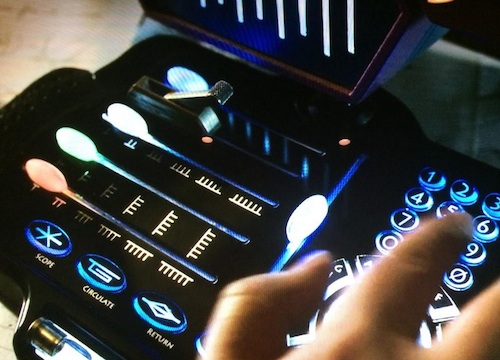

Digital Engineering April 2026
In the latest issue of Digital Engineering, we take a look at the latest innovations in design for additive manufacturing, including the use of natural language inputs, social media cosplayers, and AI integration. The issue also includes a feature…

January Special Focus Issue: Design for Additive
In this Special Focus Issue of Digital Engineering, learn about the latest advancements in design for additive manufacturing, including new software tools, additive in automotive, custom medical devices, and more.
"The Zero Theorem," which opened in theaters last month, is the latest movie from acclaimed director Terry Gilliam, whose credits include "Twelve Monkeys," "Fear and Loathing in Las Vegas," and "Brazil." This latest picture tells the tale of a computer hacker who is tasked with figuring out the reason for human existence, taking viewers on an existential journey as he fulfills his assigned task.
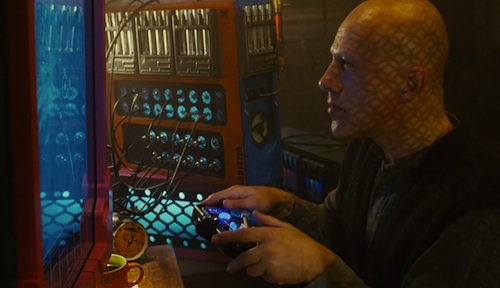 The Zero Theorem is about a hacker tasked to uncover the real reason for human existence. Image Courtesy of FATHOM
Played by Christoph Waltz, the hacker's lifeline to his work and pretty much all communication is a futuristic device, which doesn't quite resemble a mouse or a smart phone. North Design Labs LLC, brought in to create the device for the movie set, needed to concept and produce the prop within an extremely tight lead time, thus it turned to 3D printing with the help of FATHOM, a specialist in 3D printing and additive manufacturing.
There were three core challenges to this project, according to Tony Slavik, production manager at FATHOM. First there was the timeline—taking something from a real basic concept sketch to a final product in two weeks. Then there was the matter of functionality, since the device needed to respond to feedback when in use by actors and the production crew. Finally, the design team had to build something that was robust and could survive weeks of handling on set.
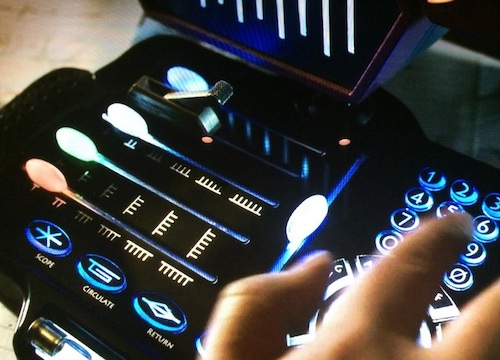 The 3D printed device houses a Samsung Galaxy tablet and features movable tabs and buttons that activate the touch screen to trigger lights and other graphics. Image Courtesy of FATHOM
3D printing the device enabled the team to address each of those unique obstacles, Slavik says. "Traditional manufacturing wouldn't give us enough time to produce something in a matter of days," he explained. "Moreover, 3D printing helped us avoid many of the design limitations of traditional manufacturing practices."
For example, he said the internal geometries of undercuts are more difficult to manage with CNC milling or injection molded applications. "3D printing let us move quickly and think outside the box," he said.
Not only did the prop have to look futuristic, it had to function like it was from another era. The case was designed to house a Samsung Galaxy tablet in such a way that movable tabs and buttons could be used to activate the touch screen to trigger different lights and graphics.
FATHOM output the final design on a Stratasys Objet500 Connex multi-material 3D printer using the VeroClear rigid and TangoBlackPlus rubber-like materials. The team provided post-processing and production assembly on the project, including a critical step that adhered conductive foam to the underside of the keypad.
Another central character in the initiative was GradCAD Workbench, a cloud-based PDM capability that is part of the GrabCAD community. Using GrabCAD, FATHOM, North Design Labs, and a production team in Romania were able to easily share files and collaborate on designs, which was critical to the their ability to meet the aggressive deadline targets.
"GrabCAD was our conduit to communication," Slavik said. "It let us do real-time reviews of changes and we didn't have to wait to pass things around. Everyone was looking at the same lens as to what was going on, which was really helpful."
Check out this video to see "The Zero Theorem" device in action.


Beth Stackpole is a contributing editor to Digital Engineering. Send e-mail about this article to [email protected].
Follow DE






About Us · Contact Us · Editorial Team · Advertising · Privacy Policy · Subscriber Services · © 2026 Digital Engineering 24/7 · Peerless Media