Helping design and engineering professionals discover, evaluate and specify technologies and processes that shorten the design cycle and enable success.


Alert!
Digital Engineering ceased publication on July 1, 2026. This website remains available as an archive of engineering content.
For inquiries or information, please email [email protected].

Digital Engineering April 2026
In the latest issue of Digital Engineering, we take a look at the latest innovations in design for additive manufacturing, including the use of natural language inputs, social media cosplayers, and AI integration. The issue also includes a feature…

January Special Focus Issue: Design for Additive
In this Special Focus Issue of Digital Engineering, learn about the latest advancements in design for additive manufacturing, including new software tools, additive in automotive, custom medical devices, and more.
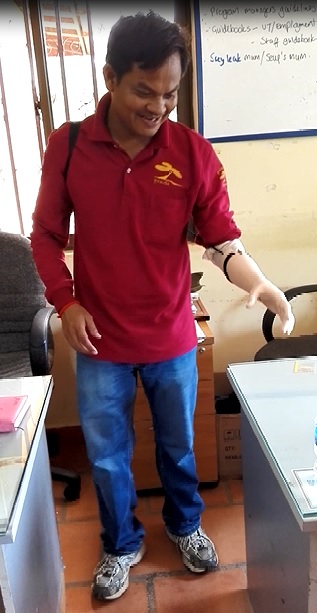 A patient in South East Asia fitted with a LifeArm from 3D LifePrints and Refugee Open Ware. Image courtesy 3D LifePrints
The recent post 3D Printing Prosthetics (Part 1): Ways to Get Involved described a number of 3D-printing projects in which makers of all sorts can get involved hands-on. In the larger field of healthcare, two other programs addressing prosthetics (and more) also welcome participants and support: the international organization Refugee Open Ware (ROW), founded in 2014, and 3DHEALS, a community-building effort begun in the same year, holding its inaugural conference next month.
One such project is a joint effort with 3D LifePrints (UK/Kenya), a 3D technology company that provides innovative solutions in emerging and expanding markets. In the UK, 3D LifePrints supplies 3D printing services for the medical sector including bespoke 3D-printed anatomical models. Elsewhere, 3D LifePrints concentrates on humanitarian projects that include its Mine Risk Education (MRE) effort and development of a low cost, functional upper-body prosthetic known as the LifeArm which can be tailored to the patient for skin tone and size.
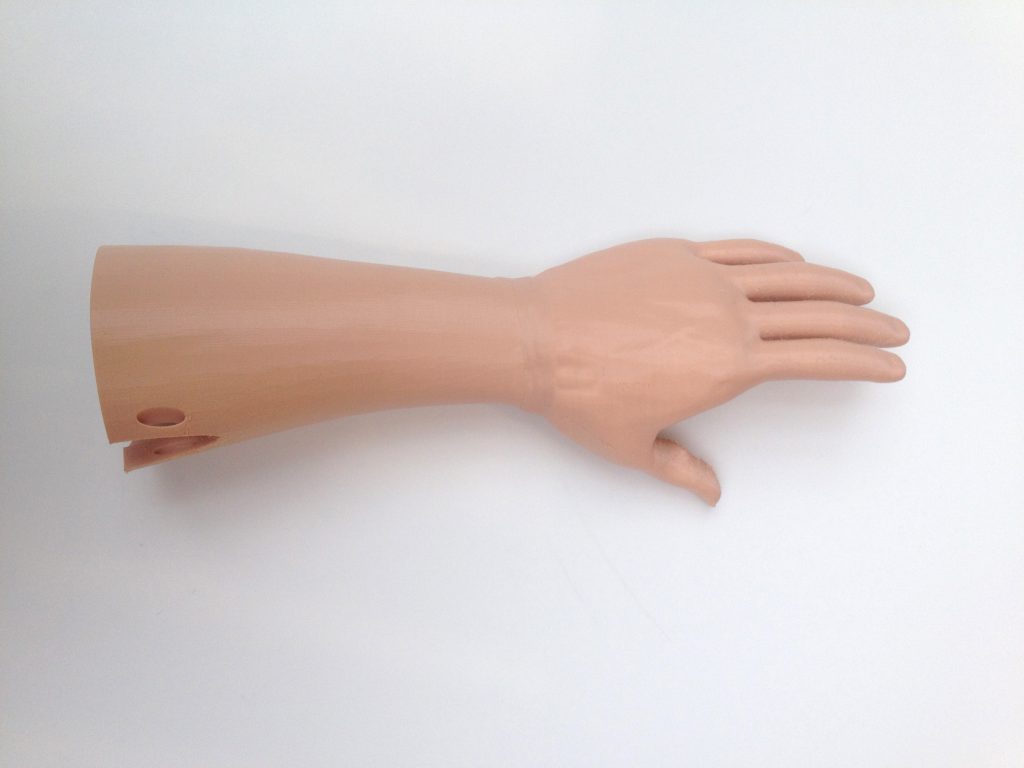 The LifeArm, 3D LifePrints' low-cost, functional upper-body prosthetic, customized from client scan-data. Image courtesy 3D LifePrints
3D LifePrints is also helping set up local 3D manufacturing hubs and training programs. The goal is ultimately to manufacture and properly fit a wide variety of prosthetic devices anywhere, improving both medical treatment and the larger economic infrastructure. For anyone who wants to get involved — individuals, academic groups, corporations and non-government groups — contact ROW or 3D LifePrints.
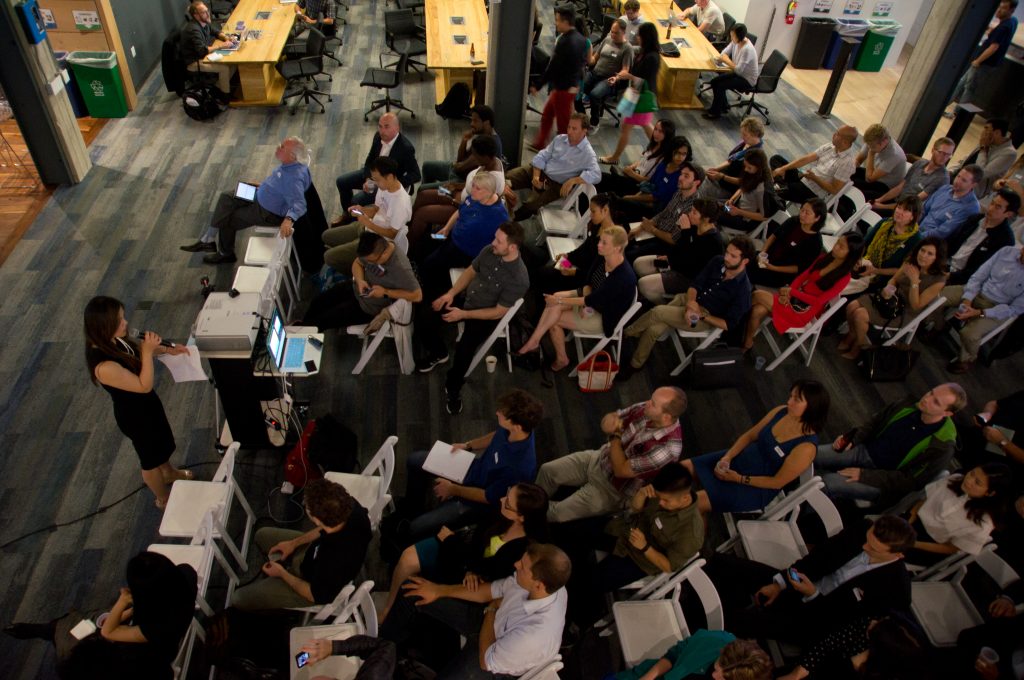 3DHEALS meeting on 3D Printing in Hospitals: Technology vs. ROI (Image courtesy 3DHEALS)
Chen wants to help clinicians across the board apply technology to such challenges as visualizing diseases, learning anatomy, designing prosthetics and planning patient-specific surgeries. The evolving tools include simulation software, augmented reality and 3D printing. “We don’t yet have a reliable source of education on these subjects, or how to convert this to usable results,” she points out. So, Chen started a local group that would meet and learn together, including people from outside healthcare.
The first events — local after-dinner meetings — addressed single topics such as 3D-printing in orthopedics. “But there are so many more applications such as prosthetics, implants and bioprinting,” notes Chen, “and I want to accelerate their adoption. People in orthopedics may have information for people in the dental world; for example, both need surgical guides. Now we are combining all these subjects into one big global conference, bringing together technologists and healthcare providers.”
Working on a limited budget, Chen has modest initial goals for the 3DHEALS event but lists off big plans for the future. “We want to create a community to solve fundamental problems in healthcare; we’ve already held a dental workshop and now want to create a medical one, and we’re in conversations with Materialise (developers of multiple software tools with specific application to medical 3D printing, and a conference sponsor),” she says.
Co-hosted with the department of orthopaedic surgery at UCSF, 3DHEALS 2017 already includes 500+ attendees, 80+ companies and more than 40 speakers representing hospitals, 3D printing manufacturers, computer-aided design (CAD) designers, medical and dental schools, patent lawyers, humanitarian groups and the U.S. Department of Veterans Affairs. Speakers include Keith Murphy, co-founder and CEO of Organovo (3D printing functional human tissues), Yan Chow, medical director of Amgen (biologic medicines ), Jeff Huber, founder/CEO of Standard Cyborg (CAD/CAM for orthotics and prosthetics) and Jon Schull, founder of e-NABLE (maker movement for 3D-printed prostheses).
Chen praises the group Voices for Africa which provides pro bono technology consulting services and is attending the conference. “For one of their many innovative projects, they are recycling plastic bottles (through the TechforTrade organization) to create 3D printing filament,” she explains. “Then they use that filament to print out things like umbilical cord clips and fetoscopes.
Watch the video below to see how the ReFabDar program in Tanzania, with support from the World Bank, is building the Retread e-Waste 3D printer (its own design) and converting waste plastic into filament with its Thunderhead filament extruder.


Pamela Waterman worked as Digital Engineering's contributing editor for two decades. Contact her via DE-Editors@ digitaleng.news.
Follow DE






About Us · Contact Us · Editorial Team · Advertising · Privacy Policy · Subscriber Services · © 2026 Digital Engineering 24/7 · Peerless Media