Helping design and engineering professionals discover, evaluate and specify technologies and processes that shorten the design cycle and enable success.



Digital Engineering April 2026
In the latest issue of Digital Engineering, we take a look at the latest innovations in design for additive manufacturing, including the use of natural language inputs, social media cosplayers, and AI integration. The issue also includes a feature…

January Special Focus Issue: Design for Additive
In this Special Focus Issue of Digital Engineering, learn about the latest advancements in design for additive manufacturing, including new software tools, additive in automotive, custom medical devices, and more.
By most analyst’s reckoning, the first big boom in desktop 3D printers came as a result of the expiration of key patents pertaining to Stratasys’ Fused Deposition Modeling (FDM) process. The expirations galvanized the open source community, resulting in the RepRap, which in turn gave birth to companies like MakerBot. For a while it seemed as though Stratasys gave its blessing to these developments by not attempting to halt open source development with claims of patent infringement. That time now appears to have passed.
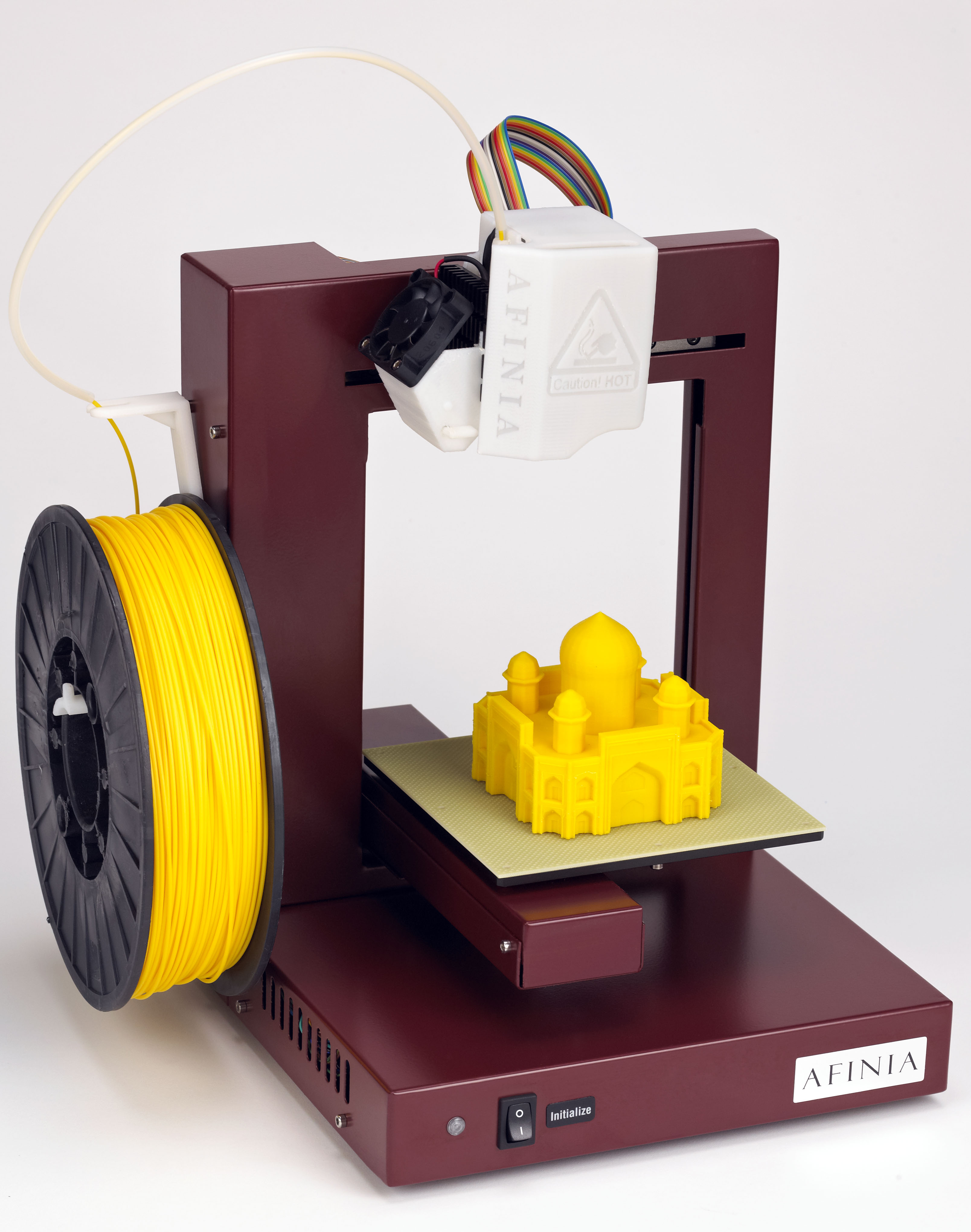
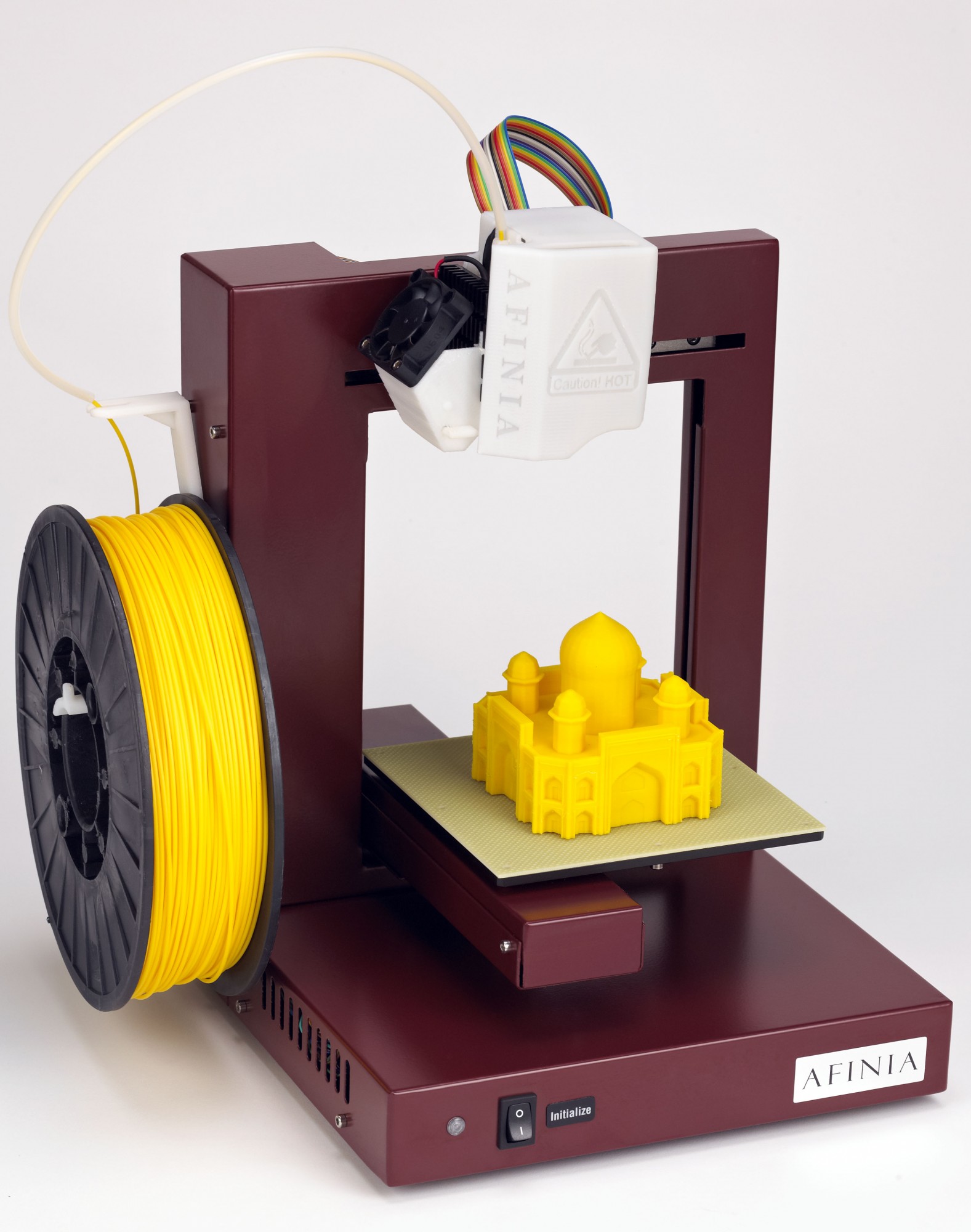
In November of last year, Stratasys launched a patent suit against Afinia, alleging the smaller company had infringed on at least four of its FDM patents. The claim specifically calls out Afinia over the design of its heated platform, extruder, strata management technique, and infill rate and pattern. While the lawsuit specifically targets Afinia, the claim notes that Afinia is the reseller for the Chinese company, Tiertime.
"IP infringement discourages companies from investing in innovation," said David Reis, Stratasys Ltd. CEO. "Stratasys pioneered 3D printing, and invests millions of dollars each year to develop our technologies. In 2012 alone, Stratasys Ltd. invested $33.3 million or 9.3% of its revenues in R&D. We intend to protect that investment."
Afinia, for its part, has now officially denied the patent infringement claims. While it admits it is essentially a reseller for Tiertime, specifically the rebranded UP! AM system, it states the patents in question were never infringed upon or have expired. The company has also threatened a counter-suit.
“Afinia has included affirmative defenses of patent misuse and will be investigating a potential claim for antitrust (by patent) given the significant differences between the asserted claims and the Afinia H Series,” said attorney William J. Cass, of Cantor Colburn.
To me the most interesting question about this lawsuit is the timing. Why has Stratasys suddenly decided to mount an aggressive patent defense? The easy answer is that with the acquisition of MakerBot, Stratasys is moving to reduce competition in the desktop arena. That doesn’t make a lot of sense, however, unless Stratasys intends to use the court decision to drive the hundreds of other small 3D printer manufacturers out of business as well. Material extrusion printers that essentially use FDM technology are the most common systems on the market.
It seems more likely that this is a warning shot over the bow of Chinese companies looking to expand into the US market. Plenty of Chinese AM systems would never pass an infringement examination, being almost bolt-for-bolt copies of the original designs. But make a few alterations, sign a reseller partner in the US, and suddenly the picture changes. With the manufacturing capabilities of China combined with their indifference to patent law, cheap 3D printer clones built in China could become a serious threat to established US companies.
Below you’ll find a video about the AM system in question, the Afinia H-Series.


John Newman is a Digital Engineering contributor who focuses on 3D printing. Contact him via [email protected] and read his posts on Rapid Ready Technology.
Follow DE
Join over 90,000 engineering professionals who get fresh engineering news as soon as it is published.






About Us · Contact Us · Editorial Team · Advertising · Privacy Policy · Subscriber Services · © 2026 Digital Engineering 24/7 · Peerless Media