Helping design and engineering professionals discover, evaluate and specify technologies and processes that shorten the design cycle and enable success.



Cut Retrieval-Augmented Generation (RAG) Hallucinations by 50%
Most teams hit the same wall with enterprise AI: LLMs that hallucinate, pipelines that don’t scale, and infrastructure that’s harder to design than the models themselves.

What Is Intelligent BOM Management? A Guide to Smarter Product Development
Learn how intelligent Bill of Materials (BOM) management helps teams collaborate, reduce errors, and bring innovative products to market faster with cloud-based PLM tools.
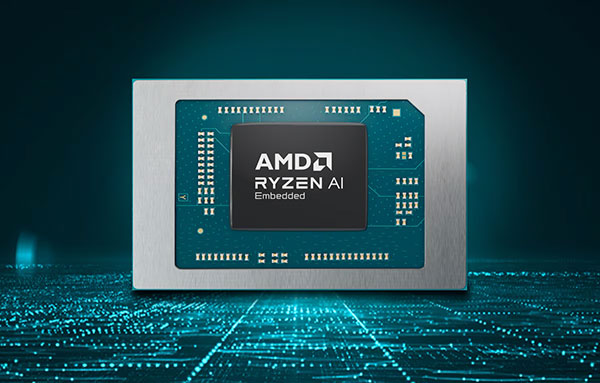
AMD unveils the AMD Ryzen AI Embedded processors, a new portfolio of embedded x86 processors designed to power AI-driven applications at the edge. From automotive digital cockpits and smart healthcare to physical AI for autonomous systems, including humanoid robotics, the new P100 and X100 Series processors provide AI compute in a compact BGA (ball grid array) package for constrained embedded systems.
The processors integrate the high-performance “Zen 5” core architecture for scalable x86 performance and deterministic control, an RDNA 3.5 GPU for real-time visualization and graphics, and an XDNA 2 NPU for low-latency, low-power AI acceleration—all in a single chip.
“As industries push for more immersive AI experiences and faster on-device intelligence, they need high performance without added system complexity,” says Salil Raje, senior vice president and general manager, AMD Embedded. “The Ryzen AI Embedded portfolio brings leadership CPU, GPU and NPU capabilities together in a single device, enabling smarter, more responsive automotive, industrial, and autonomous systems.”
The portfolio includes the P100 Series processors, targeting in-vehicle experiences and industrial automation, and the X100 Series processors featuring higher CPU core counts and AI TOPS performance for physical AI and autonomous systems.
P100 Series processors featuring 4-6 cores are optimized for next-generation digital cockpits and HMI (human-machine interfaces), enabling real-time graphics for in-vehicle infotainment displays, AI-driven interactions, and multi-domain responsiveness. They deliver a multi-thread and single-thread performance boost over the previous generation, ensuring deterministic control in a compact 25×40 mm BGA package. With a 15–54-watt operating range and support for –40°C to +105°C environments, it is built for harsh, power- and space-constrained edge systems and 10-year lifecycles.
The P100 Series processors integrate an RDNA 3.5 GPU, delivering a faster rendering to power up to four 4K (or two 8K) digital displays simultaneously at 120 frames per second. The AMD video codec engine enables high-fidelity, low latency streaming and responsive playback without burdening the CPU.
The next-generation AMD XDNA 2 NPU delivers up to 50 TOPS. XDNA 2 architecture combines understanding of voice, gestures and environmental cues using supported AI models including vision transformers, compact LLMs and CNNs.
Ryzen AI Embedded processors provide a development environment with a unified software stack that spans the CPU, GPU, and NPU. At the runtime layer, developers benefit from optimized CPU libraries, open-standard GPU APIs, and a native XDNA architecture AI runtime enabled through Ryzen AI Software.
The software stack is built on the open-source, Xen hypervisor-based virtualization framework that isolates multiple operating system domains. This enables Yocto or Ubuntu to power the HMI, FreeRTOS to manage real-time control, and Android or Windows to support richer applications, all running safely in parallel. It features an open-source foundation, long-term OS support, and an ASIL-B capable architecture.
AMD Ryzen AI Embedded P100 processors featuring 4-6 cores are sampling with early access customers. Tools and documentation are available with production shipments expected in the second quarter. P100 Series processors featuring 8-12 cores targeting industrial automation applications are expected to begin sampling in the first quarter. Sampling of X100 Series processors, which offer up to 16 cores, is expected to begin in the first half of this year.
Sources: Press materials received from the company and additional information gleaned from the company’s website.


AMD, or Advanced Micro Devices, has driven innovation in high-performance computing, graphics and visualization technologies. They develop high-performance computing and visualization products to solve some of the world’s toughest and most…
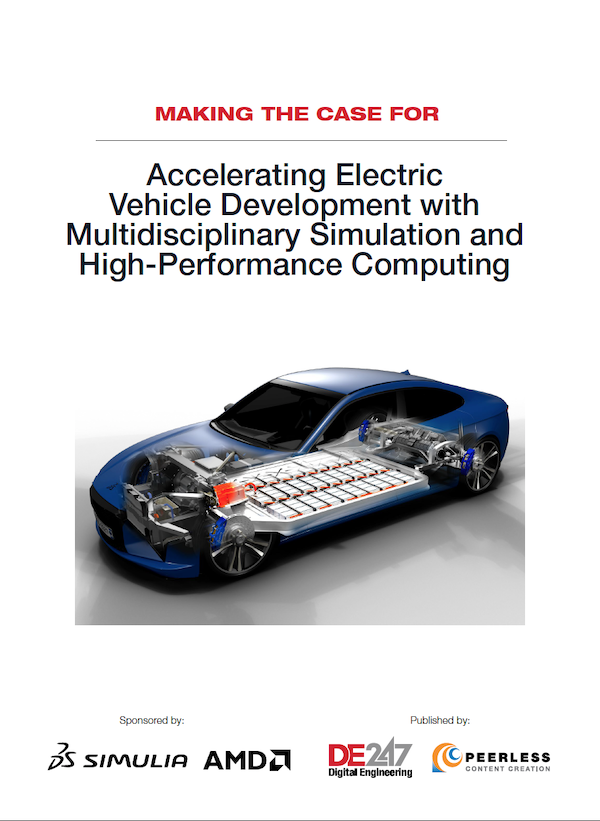
Accelerating Electric Vehicle Development with Multidisciplinary Simulation and High-Performance Computing
In this new Making the Case guide, learn how a unified approach to design and multidisciplinary simulation from Dassault Systèmes, combined with high-performance computing powered by AMD EPYC™ processors, can accelerate EV design.

DE's editors contribute news and new product announcements to Digital Engineering. Press releases may be sent to them via [email protected].
Follow DE
Join over 90,000 engineering professionals who get fresh engineering news as soon as it is published.






About Us · Contact Us · Editorial Team · Advertising · Privacy Policy · Subscriber Services · © 2026 Digital Engineering 24/7 · Peerless Media