Helping design and engineering professionals discover, evaluate and specify technologies and processes that shorten the design cycle and enable success.


Alert!
Digital Engineering ceased publication on July 1, 2026. This website remains available as an archive of engineering content.
For inquiries or information, please email [email protected].


Digital Engineering September 2025
In the September issue of Digital Engineering, we look at trends in engineering education, how engineering schools are handling DfAM, the limitations of ROMs, VR engineering workflows, reports from the Paris Air Show and Hexagon LIVE, and more.
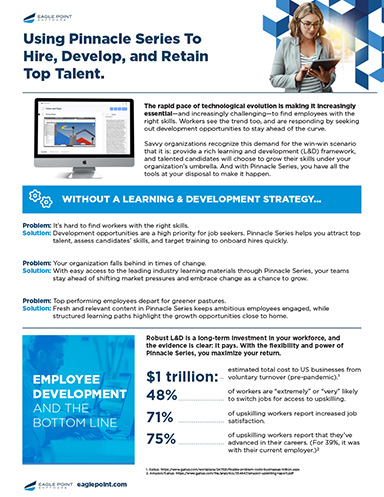
How Pinnacle Series Helps AEC Firms Attract, Train, and Retain Top Talent
Discover how AEC firms use Pinnacle Series to solve hiring challenges, upskill employees, and reduce turnover with personalized learning, skill assessments, and role-based training.
A new white paper from the American Society of Mechanical Engineers (ASME) highlights how community colleges can help address the nation’s engineering workforce shortage while expanding access to high‑demand careers. The report, Bridging the Gap: Accelerating Engineering Pathways through Community College Engagement and Work‑Based Learning, documents outcomes from ASME’s Accelerating Engineering Pathways (AEP) initiative, funded by ECMC Foundation and implemented through ASME’s Community College Engineering Pathways (CCEP) program with support from the ASME Foundation.
By aligning education with workforce needs, ASME’s AEP demonstrates how two‑year institutions can strengthen the engineering pipeline while supporting students historically underrepresented in STEM.
“Community colleges are essential to the future of the engineering workforce,” says Kathleen Kosmoski, ASME’s director of workforce development. “This research shows that when students are connected to industry‑aligned learning and real work experiences, they persist, succeed, and enter the workforce with confidence.”
Over its two‑year implementation period, AEP engaged nearly 400 students and faculty across 15 community colleges nationwide, more than 60% of which were minority‑serving institutions. Partner colleges experienced a 37% increase in engineering‑related enrollment, with women comprising more than half of participating students,exceeding national engineering averages.
Building on AEP’s success and system‑level partnerships, ASME aims to engage more than 80 community colleges and over 3,000 students nationwide by FY28, positioning CCEP as a national model for workforce‑aligned engineering education.
Central to this effort is the ASME EMPOWER work‑based learning model, which integrates project‑based work, mentorship, and structured career readiness support for experiential learning at scale.
In addition to ECMC Foundation-supported initiative, ASME is implementing the white paper’s recommended next steps, including expanded asynchronous learning resources, strengthened employer‑faculty networks, and improved long‑term outcome tracking.
“The engineering workforce challenge requires collective action,” Kosmoski said. “By working with community colleges, employers, and partner societies, ASME is helping lead a national effort to build a more inclusive, industry‑ready engineering workforce.”
Founded in 1880 as the American Society of Mechanical Engineers, ASME is a not-for-profit professional organization that enables collaboration, knowledge sharing, and skill development across all engineering disciplines.
The ASME Foundation is the philanthropic arm of the American Society of Mechanical Engineers, supporting programs in three core pillars: engineering education, career engagement, and global development.
Sources: Press materials received from the company and additional information gleaned from the company’s website.


DE's editors contribute news and new product announcements to Digital Engineering. Press releases may be sent to them via [email protected].
Follow DE






About Us · Contact Us · Editorial Team · Advertising · Privacy Policy · Subscriber Services · © 2026 Digital Engineering 24/7 · Peerless Media