Helping design and engineering professionals discover, evaluate and specify technologies and processes that shorten the design cycle and enable success.



May 2026 Special Focus: Artificial Intelligence in Design and Simulation
In this Special Focus Issue, learn about the latest developments in the integration of artificial intelligence into engineering workflows.

Design & Simulation Software Guide 2025
In this Special Issue, Digital Engineering presents its second annual guide to design and simulation software vendors.
Autodesk's latest release, Netfabb 2019, updates two signature Netfabb features: simulation and latticing, in addition to offering new features for improved productivity—from new support actions, to machine workspaces and new cloud viewing.
Cloud based, multi-scale, metal powder bed process simulation is now available for Netfabb subscribers beginning at the Premium tier.
Netfabb simulation uses a multi-scale modeling approach. For accuracy, input machine parameters and material properties to develop your PRM file. Simulate large complex parts with a fully predictive part-scale simulation that captures the complex thermal and mechanical interaction between parts during the build process. The cloud credit cost for a PRM file is fixed, but part-scale simulation is dependent upon the complexity of your parts. When you submit a simulation, you will receive a price for the simulation cloud credit cost and have the ability to proceed or stop.
In addition to cloud-based simulation now being available, the PRM library has been redesigned to give visibility into process parameters to edit PRM files directly from the library.
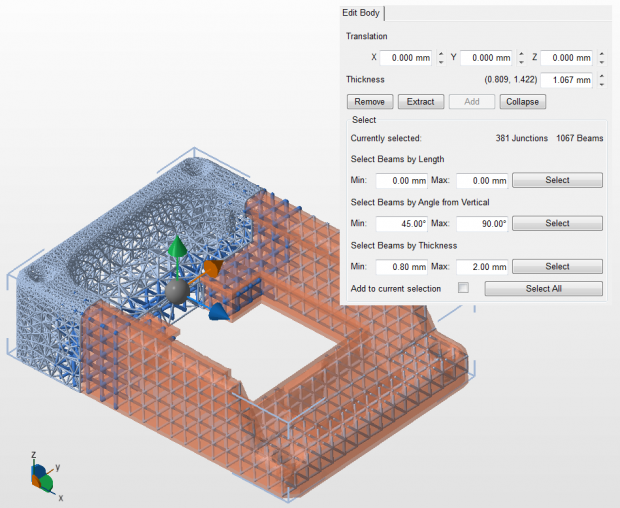
Latticing is another advanced functionality of Netfabb with a new improved ease of use. Also manual latticing is available to customers subscribing at the Premium tier. Now all Netfabb lattice functionality is accessible from a single location.
Netfabb 2019 comes with a few key productivity-related features:
In addition, Netfabb 2019 includes a new workspace for the DMG Mori Lasertec 30 and features updated Form2 integration, giving direct access to Form2 from Netfabb.
Sources: Press materials received from the company.


Autodesk is a world leader in 3D design, engineering, and entertainment software. They produce software for the architecture, engineering, construction, manufacturing, media, and entertainment industries.

DE's editors contribute news and new product announcements to Digital Engineering. Press releases may be sent to them via [email protected].
Follow DE
Join over 90,000 engineering professionals who get fresh engineering news as soon as it is published.






About Us · Contact Us · Editorial Team · Advertising · Privacy Policy · Subscriber Services · © 2026 Digital Engineering 24/7 · Peerless Media