Helping design and engineering professionals discover, evaluate and specify technologies and processes that shorten the design cycle and enable success.


Alert!
Digital Engineering ceased publication on July 1, 2026. This website remains available as an archive of engineering content.
For inquiries or information, please email [email protected].


Digital Engineering September 2025
In the September issue of Digital Engineering, we look at trends in engineering education, how engineering schools are handling DfAM, the limitations of ROMs, VR engineering workflows, reports from the Paris Air Show and Hexagon LIVE, and more.
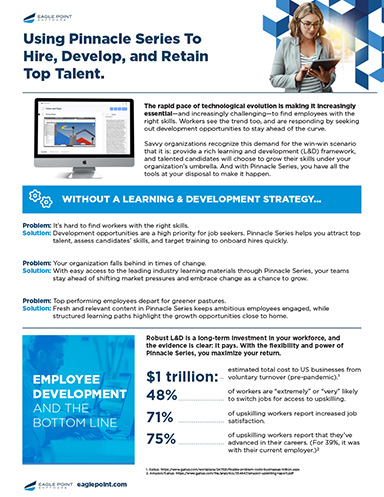
How Pinnacle Series Helps AEC Firms Attract, Train, and Retain Top Talent
Discover how AEC firms use Pinnacle Series to solve hiring challenges, upskill employees, and reduce turnover with personalized learning, skill assessments, and role-based training.
Companies throughout the United States, especially in the manufacturing sector, are battling to recruit engineering talent as demand is far exceeding supply, according to findings of a new report from RS, provider of product/service solutions for industry.
The report states that the talent shortage could slow growth of key industries, costing the U.S. economy trillions in the next 10 years.
The research found that there is an estimated 5.38 million people working in the U.S. engineering sector. This number of employees has been rising about 3.5% year on year. Even so, about a million (966,000) engineering roles were advertised nationwide in August. This equals about 13% of all available, advertised roles (7.7 million) in the United States, putting engineering in the top 10 most in-demand professions.
There are about 141,000 engineering graduates in the United States annually. The data suggests a maximum of 15% of "open" roles could be filled by new talent annually, but that leaves 85% (825,000) employee deficit, which incidentally does not account for anyone retiring.
Software developers comprise the biggest chunk of the current engineering workforce (around 9%); next up are civil engineers (6%); but it's electrical engineers who are the most in-demand in 2024.
An estimated 161,000 electrical engineers are employed in the United States, but an additional 148,000 advertised roles are available for these professionals, which equals 15% of all "open" engineering positions.
Mechanical (84,683) and manufacturing engineers (76,400) are also in high demand, accounting for 9% and 8% of advertised engineering roles, respectively, the report finds.
Though graduates with majors in mechanical engineering and electrical engineering are higher in volume than other specialties—representing 25% and 21% of all engineering graduates in the last year—the volume of new talent on the horizon makes up less than 1/4 of those needed by businesses.
The average advertised wage for engineering workers is currently around $103,000 per year, which is about 72% higher than the U.S. average ($60,000). Engineers have experienced wage increases of around 8% in the last year alone.
Attracting more women into engineering was noted as a critical area to support the sector's growth. Currently, just a quarter of the U.S. engineering workforce is female.
Reportedly, Northeastern University in Boston and Georgia Institute of Technology in Atlanta presently have the greatest percentage of female engineering students (34%) in the United States. And, across all graduates, California gives out the most engineering degrees, around 11% of the U.S. total, followed by Texas and New York (each 7%).
At the institutional level, Georgia Institute of Technology in Atlanta awards the most engineering degrees—about 3,400 per year, or 1.84% of the U.S. total. Purdue University in West Lafayette, IN, gives the second-most bachelor's degrees in engineering (1.82% of the U.S. total), followed by Texas A&M University (1.80%).
"Our clients in the industrial manufacturing, automation, and electronics sectors are reporting resource shortages to us in two key places," says Jim Davis, director of Technical Solutions at RS. "The first is general staff shortages, with the impact of limited employee resources being that some customers are struggling to complete all their projects within expected timeframes. The second is skill shortages. Our customers are reporting that they simply don't have the skillsets required to complete certain projects.
"While there is no overnight solution for these challenges, we've encouraged our clients to seek out opportunities to advance their manufacturing & engineering processes to help ease their resourcing pressure points," he continues. "The growth of digital factories creates potential to both improve processes and to broaden the range of skills required from the industrial sector workforce."
To find out more about this report, visit: https://us.rs-online.com/expert/EngineeringTalentShortage.
Sources: Press materials received from the company and additional information gleaned from the company’s website.


DE's editors contribute news and new product announcements to Digital Engineering. Press releases may be sent to them via [email protected].
Follow DE






About Us · Contact Us · Editorial Team · Advertising · Privacy Policy · Subscriber Services · © 2026 Digital Engineering 24/7 · Peerless Media