Helping design and engineering professionals discover, evaluate and specify technologies and processes that shorten the design cycle and enable success.


Alert!
Digital Engineering ceased publication on July 1, 2026. This website remains available as an archive of engineering content.
For inquiries or information, please email [email protected].

May 2026 Special Focus: Artificial Intelligence in Design and Simulation
In this Special Focus Issue, learn about the latest developments in the integration of artificial intelligence into engineering workflows.

Design & Simulation Software Guide 2025
In this Special Issue, Digital Engineering presents its second annual guide to design and simulation software vendors.
Compal Electronics is using Ansys to automate simulation data processing to accelerate research and development (R&D) cycles for its 5G laptops. Eliminating the gap between simulation and data analysis through automation, Compal and Ansys are minimizing reporting time required for certifications to bring 5G laptops to consumers.
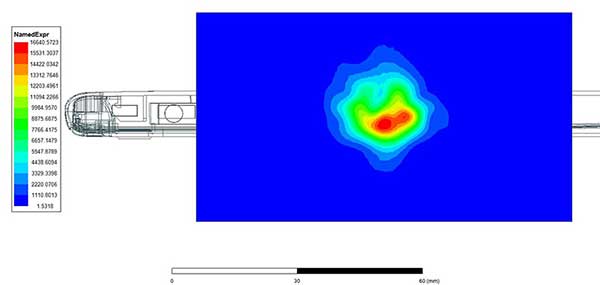
Compal, an original design manufacturer, is bringing 5G millimeter wave antenna modules to its computer products. Before the products are available for consumers, manufacturers must provide analysis reports that meet stringent international compliance requirements. Compal is using Ansys to expedite this process—adopting its automated simulation and analysis process to access, analyze and understand information required for reporting in mere days, such as electromagnetic field distributions.
Ansys empowered Compal to obtain a certification from the Federal Communications Commission for its 5G millimeter-wave laptop this year. The certification enables clients of Compal to market and sell its laptop in the U.S.
"Working with novel technology, such as 5G, presents new engineering challenges," say Andy Lee, senior vice president of PC R&D and Jerry Pan, head of R&D and engineering at Compal Electronics in a joint statement. "It also presents new opportunities to refine processes. Our collaboration with Ansys enables our engineers to dedicate their time to bringing the best possible 5G laptop to consumers faster than our peers."
Compal also leverages Ansys' flagship HFSS 3D electromagnetic simulation software to design and simulate 5G antennas within a device, where package interactions can change the radiated emissions. This allows Compal engineers to conduct extensive multiphysics analysis for pre-compliance testing, leading to reduced product testing time and faster validations and certifications.
"Access to the most advanced solutions is imperative for shortening the R&D process and time-to-market," says Shane Emswiler, senior vice president and general manager at Ansys. "From developing 5G antennas to expediting regulatory compliance to reducing data processing time, Ansys simulation solutions are critical to ushering in the 5G era."
Sources: Press materials received from the company and additional information gleaned from the company’s website.

Engineering simulation is our sole focus. For more than 45 years, we have consistently advanced this technology to meet evolving customer needs.ANSYS develops, markets and supports engineering simulation software used to predict how product…

Study on HPC and Cloud Computing for Engineering Simulation
This new research report explores how companies are using HPC and simulation on the cloud.

DE's editors contribute news and new product announcements to Digital Engineering. Press releases may be sent to them via [email protected].
Follow DE






About Us · Contact Us · Editorial Team · Advertising · Privacy Policy · Subscriber Services · © 2026 Digital Engineering 24/7 · Peerless Media