Helping design and engineering professionals discover, evaluate and specify technologies and processes that shorten the design cycle and enable success.



May 2026 Special Focus: Artificial Intelligence in Design and Simulation
In this Special Focus Issue, learn about the latest developments in the integration of artificial intelligence into engineering workflows.

Design & Simulation Software Guide 2025
In this Special Issue, Digital Engineering presents its second annual guide to design and simulation software vendors.
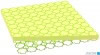 | Model of a metamaterial structure produced with Vector Fields' Concerto package, with structured outer layers separated by a dielectric core, providing a frequency selective surface implementing a stop band filter. |
Vector Fields (Aurora, IL), a part of Cobham plc, released practical design tools to help RF designers exploit the properties of metamaterials, as part of its work for the AMULET research project. Metamaterials provide a means to enhance the performance and size of wireless components — for example, by making antennas multifunctional, and reducing the size and cost of front-end filtering.
AMULET (Advanced Materials for Ubiquitous Leading-edge Electromagnetic Technologies) is researching artificial materials and their application in the design and manufacture of next generation broadband, multifunctional, adaptive and conformal antennas for aerospace systems. Vector Fields' role in AMULET is providing antenna developers with enhanced design tools to simulate metamaterial structures. The first phase of this support is currently being released to the market in the new version of Vector Fields’ high-frequency electromagnetic design tool, Concerto.
Antennas are a major application for metamaterials. A typical example might be to use metamaterials to tailor the effective impedance of a substrate or ground plane, to improve an antenna’s radiation pattern and efficiency. Metamaterial structures could also be used to integrate common filtering requirements such as band pass filters into the 2D PCB structure, to reduce the cost and size of a wireless product's electronic bill of materials (BOM). Phase shifting is another function that is easily achieved by metamaterials, providing further design possibilities for wireless equipment.
For details, contact Vector Fields, Inc.
Sources: Press materials received from the company and additional information gleaned from the company's website.


DE's editors contribute news and new product announcements to Digital Engineering. Press releases may be sent to them via [email protected].
Follow DE
Join over 90,000 engineering professionals who get fresh engineering news as soon as it is published.






About Us · Contact Us · Editorial Team · Advertising · Privacy Policy · Subscriber Services · © 2026 Digital Engineering 24/7 · Peerless Media