Helping design and engineering professionals discover, evaluate and specify technologies and processes that shorten the design cycle and enable success.


Sponsored

Digital Engineering April 2026
In the latest issue of Digital Engineering, we take a look at the latest innovations in design for additive manufacturing, including the use of natural language inputs, social media cosplayers, and AI integration. The issue also includes a feature…

January Special Focus Issue: Design for Additive
In this Special Focus Issue of Digital Engineering, learn about the latest advancements in design for additive manufacturing, including new software tools, additive in automotive, custom medical devices, and more.
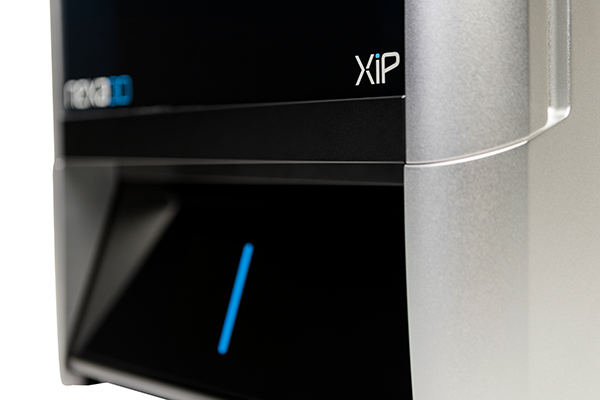
Nexa3D introduces the XiP, a resin 3D printer for desktop use. The XiP combines a small, compact footprint with a 4.8L build volume for creating prototypes and production-grade components.
The XiP uses the same proprietary technology as the company’s larger NXE 200: Lubricant Sublayer Photocuring (LSPc) for the printing and self-lubricating, resilient Everlast-2 Membrane to minimize separation forces. This is designed to allow the XiP to lay down material as fast as 18 cm per hour. With this mSLA 3D printer users can easily replace the modular 4K LCD screen with an advanced UV Light Engine to offer strong exposure and ensure that parts remain consistent and uniform.
The XiP is 6x faster than the fast draft mode of professional desktop SLA 3D printers, Nexa3D reports. For context, the XiP is 6x faster for one print; 14x faster for 10 prints; and 48x faster than FDM for 10 prints.
The XiP is designed with a modular structure that is intended for frequent use. The use of industrial-grade components and an intuitive workflow are meant to provide optimized usability, serviceability and upgradability.
Target markets for the XiP include engineering, dental, medical, education and other industries where resin materials make sense for prototyping or design review.

The XiP is an open materials platform. This type of platform is intended to allow users to have “ultimate flexibility and access” to materials needed for a wide range of jobs, according to the company. The XiP’s resin cartridges can be used to load or unload materials on the fly—even during live print jobs. When a new cartridge is inserted, the printer automatically begins resin authentication, conducting a round of compatibility checks with the current build requirements.
The build volume is 195x115x210 mm. It can print at 50 µm, 100 µm, or 200 µm (0.002 in./ 0.004 in. / 0.008 in.) Build materials are from Henkel, BASF and Keystone, combined with special in-house resins.
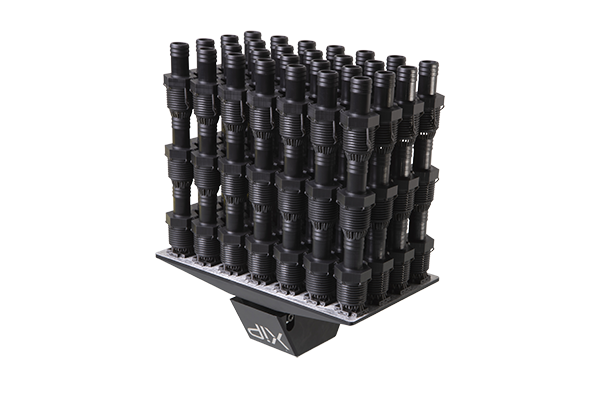
The first XiP units are shipping at the end of this month to the United States and Canada with a lead time of 6 to 8 weeks.
The XiP's design is built with the entire life cycle of the printer in mind. The XiP features recyclable packaging and parts options, such as a recyclable all-aluminum body. The modular 3D printer handles upgrades over time as well, ending the need to replace an entire printer over one component failure.
The XiP desktop 3D printer is easy to self-service and upgrade, thanks to the modular design. Users can generate consistent, quality parts and prototypes in a reliable and repeatable fashion.
Sources: Press materials received from the company and additional information gleaned from the company’s website.


We are a team of passionate additive manufacturing practitioners that are committed to digitizing the world’s supply chain sustainably. We make the world’s fastest polymer 3D printers accessible to professionals and businesses of all sizes.…

DE's editors contribute news and new product announcements to Digital Engineering. Press releases may be sent to them via [email protected].
Follow DE
Join over 90,000 engineering professionals who get fresh engineering news as soon as it is published.






About Us · Contact Us · Editorial Team · Advertising · Privacy Policy · Subscriber Services · © 2026 Digital Engineering 24/7 · Peerless Media