Helping design and engineering professionals discover, evaluate and specify technologies and processes that shorten the design cycle and enable success.


Alert!
Digital Engineering ceased publication on July 1, 2026. This website remains available as an archive of engineering content.
For inquiries or information, please email [email protected].

May 2026 Special Focus: Artificial Intelligence in Design and Simulation
In this Special Focus Issue, learn about the latest developments in the integration of artificial intelligence into engineering workflows.

April 2026 Special Focus Issue: Generative Design
In this Special Focus Issue, Digital Engineering takes a look at how generative design solutions can be used across different types of design problems and with a variety of manufacturing approaches to accelerate design space exploration, and…
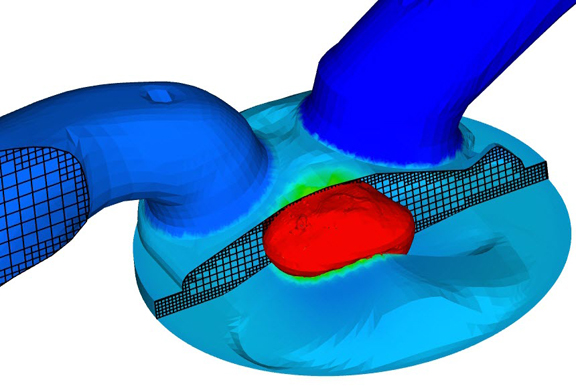
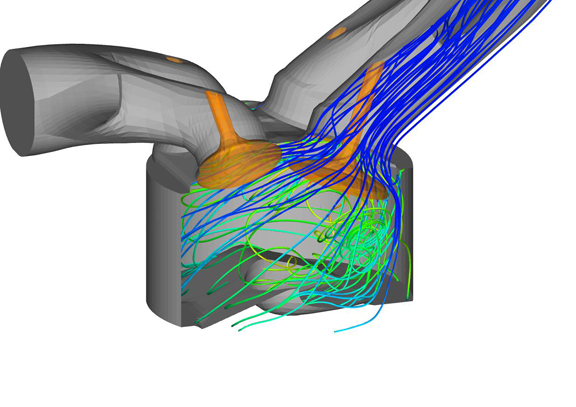
Are the upcoming Corporate Average Fuel Economy (CAFE) standards realistic or achievable? It's something EPA has to first find out for itself. To do that, the Agency is using ANSYS FORTÉ, a package for simulating combustion engine activities.
According to the announcement released by ANSYS today, EPA plans to use FORTÉ software "to model in-cylinder combustion to develop an advanced test engine that will demonstrate fuel-saving and emissions-reducing technologies."
ANSYS FORTÉ used to be a product of Reaction Design, based on San Diego, California. The product became part of the ANSYS portfolio when Reaction Design was acquired by ANSYS this January.
CAFE was signed into law in 1975 by the Congress. The pressure is now on, since NHTSA has set standards to increase CAFE levels rapidly over the next several years.
Bernie Rosenthal, formerly CEO of Reaction Design, now GM of ANSYS, said, "What [EPA] is trying to do is to put together a virtual prototype engine. The [tests and simulations] will prove to the automotive manufacturers that [the CAFE] standards are achievable. Their selection of FORTÉ is based on the software's capabilities in [allowing users] to select the type of injectors, the timing, and the type of fuels used, to see how that fuel is mixed inside the engine." The simulation exercise allows automakers to determine the expected tailpipe emission from an engine before they manufacture the engine; therefore, it serves as one of the ways to avoid costly design flaws that would prevent them from meeting the CAFE standards.
Matthew Spears, Heavy-Duty Onroad and Nonroad Center Director of EPA’s Office of Transportation and Air Quality, said, "Using ANSYS solutions to generate realistic 3D simulations of internal combustion engines, we can gain visibility into critical engine behaviors in a timely, cost-effective manner and obtain accurate and predictive results to guide the development of our test engine.”
Rosenthal clarified EPA's selection of FORTÉ doesn't meant EPA will require automakers to use the same software in their own engine design development and tests to meet the CAFE standards. An automaker can potentially use FORTÉ or one of the many CFD codes currently available in the market. Nevertheless, the Agency's choice of software will like be a signal to many other car makers that FORTÉ is a good choice for the type of simulation necessary to pass the CAFE standards.
ANSYS says, "In addition to gaining a better understanding of combustion dynamics through CFD modeling, the EPA intends to use ANSYS’ detailed soot modeling capabilities to more accurately predict soot mass and particle size distribution, important metrics in the standards."


Kenneth Wong is Digital Engineering's resident blogger and senior editor. Email him at [email protected] or share your thoughts or suggestions at digitaleng.news/facebook.
Follow DE






About Us · Contact Us · Editorial Team · Advertising · Privacy Policy · Subscriber Services · © 2026 Digital Engineering 24/7 · Peerless Media