Helping design and engineering professionals discover, evaluate and specify technologies and processes that shorten the design cycle and enable success.



May 2026 Special Focus: Artificial Intelligence in Design and Simulation
In this Special Focus Issue, learn about the latest developments in the integration of artificial intelligence into engineering workflows.

Design & Simulation Software Guide 2025
In this Special Issue, Digital Engineering presents its second annual guide to design and simulation software vendors.
In Grand View Research’s “Simulation Software Market Size, Share & Trends Analysis Report” (published April 2022), the analyst predicted, “The global simulation software market size is estimated to reach USD $39.74 billion by 2030, registering a compound annual growth rate of 13.5% over the forecast period.” It also pointed out, “The cloud-based segment is expected to register the fastest CAGR over the forecast period owing to benefits such as easy and low-cost implementation.”
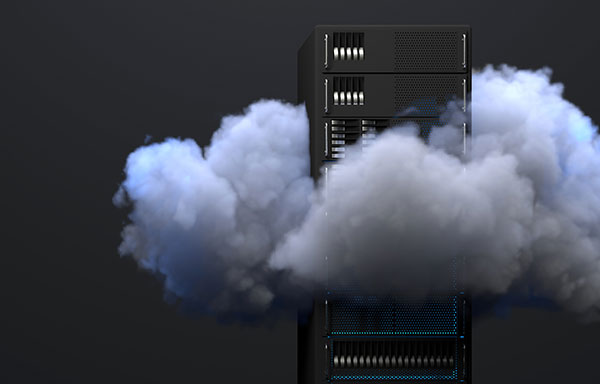
In engineering and manufacturing, cloud-hosted simulation encompasses a range of products, from cloud-native browser-based apps (for example, SimulationHub) and full-fledged general simulation programs available from the browser (such as Ansys Discovery, Ansys OnScale, SimScale) to thick-client simulation programs augmented by on-demand cloud services (such as Autodesk Fusion 360, Dassault Systèmes’ 3DEXPERIENCE Works, Siemens Simcenter Cloud HPC).
While browser-based apps and software-as-a-service (SaaS) style software are easy to run, adding on-demand cloud to long-established workstation-based environments still requires significant initial setup and IT management for enterprise-wide deployments. Hence, the birth of specialized vendors such as Rescale, UberCloud and NZO Cloud.
Rescale offers high-performance computing (HPC) under the SaaS model. It’s also a partner of Ansys, Siemens, Hexagon, Dassault Systèmes and other household names in design and simulation software.
“Until recently, the specialized computing architecture required for HPC were not that commonly available from the cloud providers, and just because you have the hardware and the software that can be deployed in the cloud, doesn’t mean that HPC and IT organizations are going to be very proficient at operating simulation workloads in dynamic cloud environments,” says Edward Hsu, chief product officer at Rescale.
Christopher Hegarty, business development manager at UberCloud, adds, “We don’t sell computing services; we certainly don’t sell [independent software vendor (ISV)] applications. What we provide is an application infrastructure that allows you to deploy your applications into any cloud environment, be it on premise or a cloud service provider. We provide you the insights and analysis you need from the end-to-end workflow that we have containerized, so you understand all the costs involved, and the knobs you can turn to get whatever desired results you want to get.”
PSSC Labs offers cloud-hosted private HPC systems. “Using the cloud resources can be incredibly complex. You have to spin up and spin down instances; you have to move data in and out from one to another. This can result in very costly overruns,” Alex Lesser, VP of sales and marketing, NZO Cloud, says.
For new users of HPC-powered simulation, estimating the cost of a particular job may not be so simple. The cost formula varies based on the software maker’s licensing policy and the amount of cores devoted to the job.
“At Rescale, we spent a good amount of time with our customers looking at this. If a piece of hardware runs twice as fast but costs three times as much, the use case probably is not a good idea, unless it can drive up significant savings in software costs. In some verticals like in the [electronic design automation] space, for example, the software costs can be dramatically more than the hardware costs, so perhaps it does make sense to pay more for that hardware, because your software licensing will be dramatically less as a result,” says Hsu.
In November, Rescale collaborated with NVIDIA to develop an AI-Based Compute Recommendation Engine. “With every job that runs on Rescale, we have a sense of the cost and how long it takes,” Hsu adds. “So we took all that data and trained our machine learning model to create this recommendation. When you tell us you’re going to run Ansys CFD, for example, we can tell you with a reasonable amount of confidence which architecture to use.”
Hegarty adds, “No two jobs are going to be identical. There’s going to be some tweaking in terms of the complexity of the job. No applications are going to run the same. You may have memory-intensive simulations; you may have compute-intensive CFD codes. These kinds of codes have different requirements.”
NZO Cloud offers tiered subscriptions; the higher the tier, the more core hours available.
“If our existing subscription models don’t fit your needs, we will work with you to design the right cloud instance for your specific needs and budget. We’re engineers talking to engineers so we can design exactly the right cloud instance for what you need,” says Lesser.
He adds, “NZO Cloud gives you a 100 percent dedicated, 100 percent private cloud environment. Each NZO Cloud is delivered as a single-tenant environment with no shared resources at all.”
There are additional components that come with specialized vendors offering on-demand cloud infrastructure, such as compliance and security. “How do you make sure that, as you’re operating the cloud, you are keeping the data in the right place and you’re meeting your compliance obligations? We spent many of our resources making sure that we have FedRAMP Moderate status,” Hsu says.
The Federal Risk and Authorization Management Program, or FedRAMP, is an application for the use of cloud services and infrastructures in certain government works. In April 2022 Rescale announced it received FedRAMP Moderate Authority to Operate.
HPC users tend to divide solutions into two camps: on-premises HPC or cloud HPC. But Hegarty pointed out the hybrid model is becoming the new standard. The so-called “bursting” model is a setup where users have the option to instantly purchase and deploy more compute power for certain deadline-driven jobs or computation-intense jobs that on-premises HPC resources cannot handle.
“If your data is in the cloud, then your computing is probably in the cloud. If your data is on premise, your computing tends to be on premise too. But how do you really get to that hybrid model where your data is local, but your compute might be in the cloud, or the reserve? You can solve bandwidth issues with money, but latency is a different problem—it’s physics,” Hegarty says.
What the specialized infrastructure providers offer is simplicity, removing the need to create a shared setup for hardware, software and reporting mechanisms.
“As engineers, you want to focus on running your simulation job. That’s what you want to focus on. You’re not a cloud architect, and you shouldn’t be a cloud architect,” Lesser says.
To watch the recorded episode, visit DE 24/7’s webinar archive (digitalengineering247.com/topic/category/webinars) and select “FEA in the Age of Cloud.”


Rescale empowers engineers and scientists to automate and optimize their workflows on the latest specialized HPC infrastructure available. Governed by best in class security and reliability, the Rescale platform was built to enable global teams to…

Rescale’s Spotlight on Engineering Excellence
Leading organizations are turning to Rescale’s digital engineering platform to modernize, reduce costs, and accelerate development. This interactive eBook highlights how global enterprises and high-growth innovators are transforming simulation, harnessing AI, and optimizing HPC to drive better outcomes.

Kenneth Wong is Digital Engineering's resident blogger and senior editor. Email him at [email protected] or share your thoughts or suggestions at digitaleng.news/facebook.
Follow DE
Join over 90,000 engineering professionals who get fresh engineering news as soon as it is published.






About Us · Contact Us · Editorial Team · Advertising · Privacy Policy · Subscriber Services · © 2026 Digital Engineering 24/7 · Peerless Media