Helping design and engineering professionals discover, evaluate and specify technologies and processes that shorten the design cycle and enable success.


Alert!
Digital Engineering ceased publication on July 1, 2026. This website remains available as an archive of engineering content.
For inquiries or information, please email [email protected].

Digital Engineering April 2026
In the latest issue of Digital Engineering, we take a look at the latest innovations in design for additive manufacturing, including the use of natural language inputs, social media cosplayers, and AI integration. The issue also includes a feature…

January Special Focus Issue: Design for Additive
In this Special Focus Issue of Digital Engineering, learn about the latest advancements in design for additive manufacturing, including new software tools, additive in automotive, custom medical devices, and more.
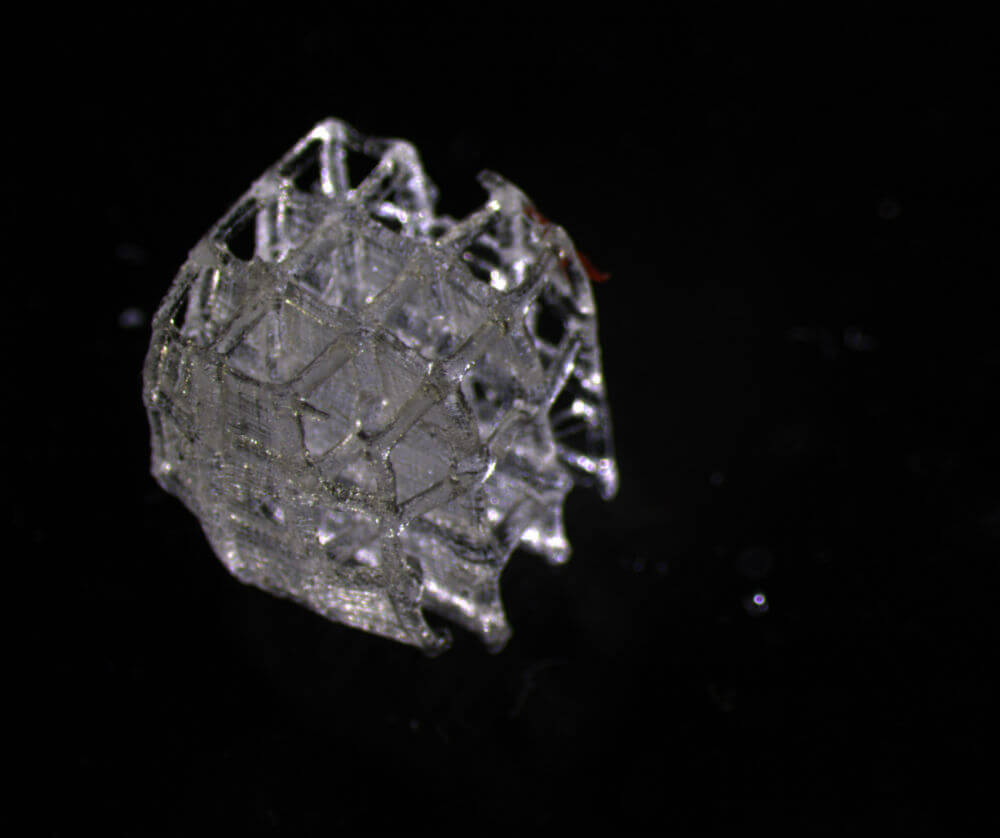
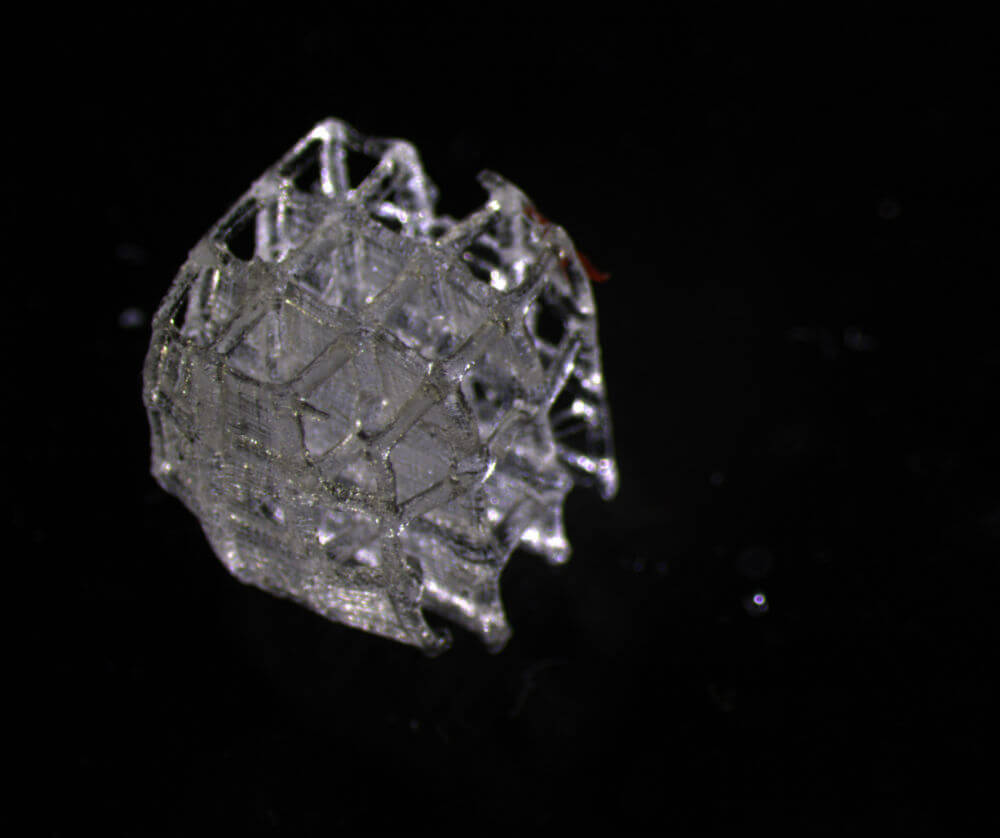
Lawrence Livermore National Laboratory scientists have developed a way to use lasers and a fast-drying photosensitive resin to create several layers of each print simultaneously.
The researchers published a report on their work in Science Advances.
The system uses three weak lasers to avoid curing the resin during the print process. The printer follows a pattern from a 3D laser model and forms the object inside a tank full of the liquid resin. At points where the three lasers join together in a stronger beam, the resin hardens.
Once the pattern is finished printing, the lasers can harden the resin in a few seconds. The unused resin is drained from the tank.
A similar process ca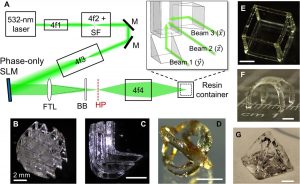 n be used to create metal objects with a tank full of powder that is solidified using a laser or electron beam.
"The fact that you can do fully 3D parts all in one step really does overcome an important problem in additive manufacturing,” said Maxim Shusteff, who led the study.
The technique is fast and eliminates the need for structural supports in the printing process. It can be used to form complex objects with moving parts, and can print multiple objects at once.
According to Shusteff, future iterations of the technology may use LEDs in order to reduce costs and avoid “laser speckle” defects in the printed objects. The team has made some shapes on the millimeter scale, but the amount of power needed would make the system impractical for commercial deployment right now.
Possible applications could include the production of biomedical implants or bioprinting living tissue.
“We’ve taken a really good first shot at this,” Shusteff said, “but we’ve not yet taken it to the limit of its performance, so the space is wide open for us and others to demonstrate what this approach is capable of.”
A start-up called Daqri created a similar system that projects holograms into a light-activated monomer.
Source: Science Advances, Big Think


Brian Albright is the editorial director of Digital Engineering.
Contact him at [email protected].






About Us · Contact Us · Editorial Team · Advertising · Privacy Policy · Subscriber Services · © 2026 Digital Engineering 24/7 · Peerless Media