Helping design and engineering professionals discover, evaluate and specify technologies and processes that shorten the design cycle and enable success.


Alert!
Digital Engineering ceased publication on July 1, 2026. This website remains available as an archive of engineering content.
For inquiries or information, please email [email protected].

Digital Engineering April 2026
In the latest issue of Digital Engineering, we take a look at the latest innovations in design for additive manufacturing, including the use of natural language inputs, social media cosplayers, and AI integration. The issue also includes a feature…

January Special Focus Issue: Design for Additive
In this Special Focus Issue of Digital Engineering, learn about the latest advancements in design for additive manufacturing, including new software tools, additive in automotive, custom medical devices, and more.
According to the announcement, the combination of the two technologies will allow users to "access a rich palette of sophisticated tools such as constraint-based design to create and produce output with many types of materials and properties at once."
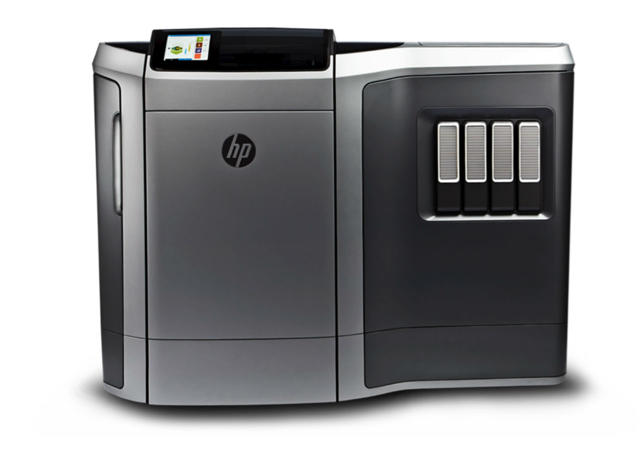
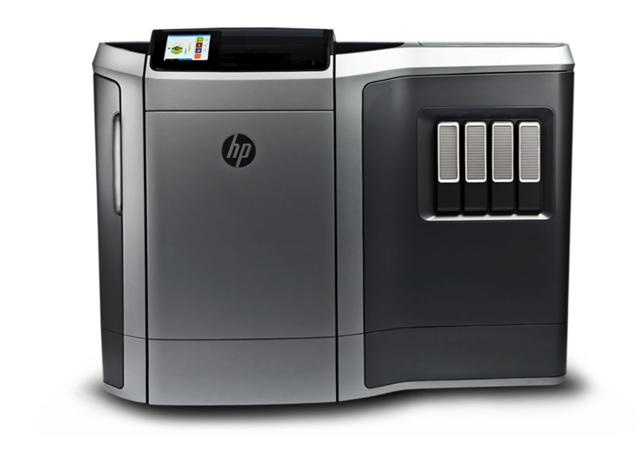 HP has touted Multi Jet as being able to print 10 times faster than other 3D technologies. Spark is an open software solution that could potentially provide a unified platform for all types of 3D printers, from consumer up to large industrial systems.
Autodesk says that Spark can help optimize design prior to production, and improve information exchange between design software and the printer.
According to the companies:
Autodesk and HP have worked together for a long time. We share a vision to drive technology innovation and provide the best products and experiences to our customers. Today, Autodesk and HP expand the alignment of our offerings to push 3D printing forward and drive toward a new industrial revolution that changes the way we design and manufacture things. We have a common goal to unlock 3D printing's full promise such as higher speeds, higher quality, and improved reliability.
HP's printers won't be available until 2016, but the entrance of such a large player into the market is expected to have a disruptive impact. Announced earlier this year, the HP printers (which leverage the company's Thermal Inkjet arrays) will use a multi-chemistry process that combines a layer of powder, a fusing agent, and a detailing agent to provide better definition and reducing fusion on the boundaries of the printed object. The jetting system can produce 350 million droplets per second, and print with 20-micron precision, using less energy than selective laser sintering. The system can print in a variety of colors, textures and elasticities, and can print electronic devices.
Spark partners include HP, who will leverage it in its multi-jet fusion #3Dprinting technology. #AU2014 pic.twitter.com/HnDFt8lUQy— Desktop Engineering (@DEeditor) December 3, 2014
Below is a video from Autodesk about its Spark platform and Ember 3D printer, promoting its Explorer program for early adopters.
Source: Juniper Research


Brian Albright is the editorial director of Digital Engineering.
Contact him at [email protected].






About Us · Contact Us · Editorial Team · Advertising · Privacy Policy · Subscriber Services · © 2026 Digital Engineering 24/7 · Peerless Media