Helping design and engineering professionals discover, evaluate and specify technologies and processes that shorten the design cycle and enable success.


Alert!
Digital Engineering ceased publication on July 1, 2026. This website remains available as an archive of engineering content.
For inquiries or information, please email [email protected].
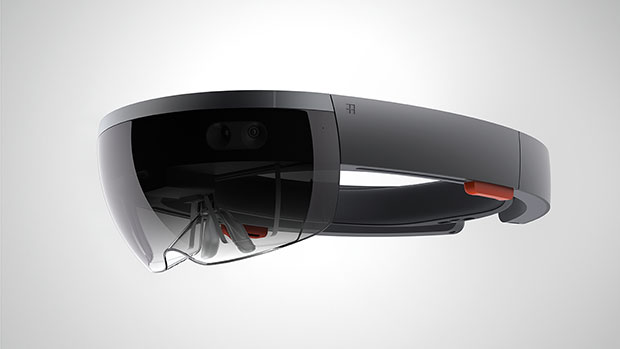 The Microsoft HoloLens is pictured.
Main features of the device include a transparent lens and sensors for interaction and visibility, spacial sound for hearing holograms and no wires or cords. To move and interact with holograms, users simply gesture to create, shape and size models. Voice recognition is also available.
For professional applications, holograms can be anchored, enabling users to size and scale in real time, Microsoft states. With the HoloStudio platform, models can be turned into physical objects with 3D printing compatibility.
The HoloLens is also able to connect with Skype, which allows users to stream their surroundings to others. With HoloNote, users can remotely draw on a tablet or PC and project holograms into the wearer's environment.
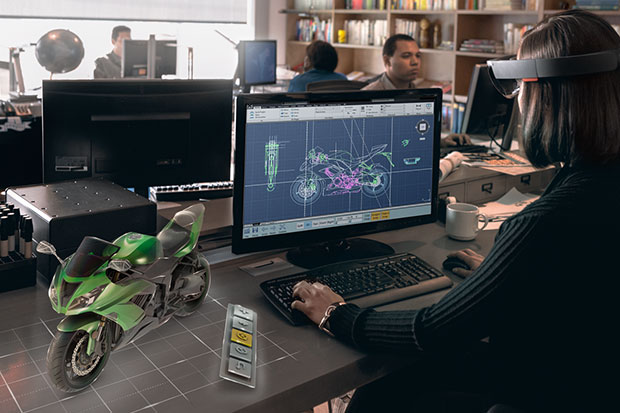 The HoloLens offers advances in prototyping and professional design applications.
The technology is currently being used by NASA's Jet Propulsion Laboratory to explore holograms of Mars Rover images. With the 3D renderings, researchers can gather data and knowledge in a more interactive manner.
According to Microsoft, the HoloLens "brings high-definition holograms to life in your world, where they integrate with your physical places, spaces and things."
The technology is to be showcased at Build 2015, the company's developer conference in April.
For more information, visit Microsoft.
Read about the HoloLens' potential for design processes on Rapid Ready Technology.
Sources: Press materials received from the company and additional information gleaned from the company’s website.


DE's editors contribute news and new product announcements to Digital Engineering. Press releases may be sent to them via [email protected].
Follow DE
Join over 90,000 engineering professionals who get fresh engineering news as soon as it is published.






About Us · Contact Us · Editorial Team · Advertising · Privacy Policy · Subscriber Services · © 2026 Digital Engineering 24/7 · Peerless Media