Helping design and engineering professionals discover, evaluate and specify technologies and processes that shorten the design cycle and enable success.


Alert!
Digital Engineering ceased publication on July 1, 2026. This website remains available as an archive of engineering content.
For inquiries or information, please email [email protected].

Digital Engineering September 2025
In the September issue of Digital Engineering, we look at trends in engineering education, how engineering schools are handling DfAM, the limitations of ROMs, VR engineering workflows, reports from the Paris Air Show and Hexagon LIVE, and more.
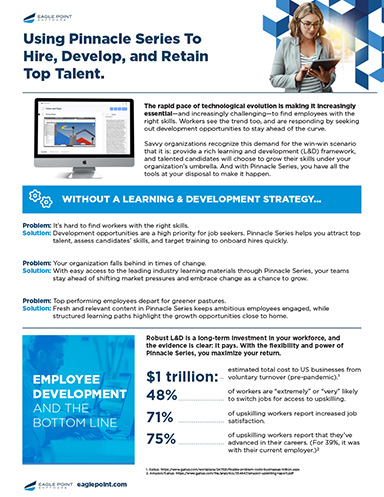
How Pinnacle Series Helps AEC Firms Attract, Train, and Retain Top Talent
Discover how AEC firms use Pinnacle Series to solve hiring challenges, upskill employees, and reduce turnover with personalized learning, skill assessments, and role-based training.
The U.S. Department of Commerce’s National Institute of Standards and Technology (NIST) has made five awards for a total of approximately $373,000 to support standards education in undergraduate and graduate level curricula. Since the program began in 2012, NIST’s Standards Services Curricula Development Cooperative Agreement Program has received 214 applications and made 41 awards totaling over $2.57 million.
“The Standards Services Curricula Development Cooperative Agreement Program and its awardees are building a standards-capable workforce who recognize that the bridge between innovation and manufacturing and the global marketplace is standards,” says Gordon Gillerman, director of NIST’s Standards Coordination Office. “The diversity of the funded programs reflects the diverse areas of our lives that benefit from standards, including manufacturing, medical applications, engineering and marine vehicles.”
Projects awarded under this program support curricula development to integrate content on documentary standards and standardization processes into courses, modules, seminars and learning resources, including sustainable approaches, methods and models that can be replicated and/or built upon by other educational programs into undergraduate and graduate curricula at U.S. colleges and universities.
The latest recipients are:
To develop standards education modules centered on case studies involving quality systems, software development and cybersecurity for medical devices. The content will include lesson plans, tutorials, case studies, videos, homework assignments and a moot court exercise that can be integrated into introductory engineering courses, senior design capstone courses, and the BioDesign curriculum.
To create a systematic framework focused on robotics and additive manufacturing standards for engineering students from first-year through graduate that will include lectures, lab projects, industrial internships, case studies, virtual plants tours and webinars with industry experts.
To incorporate standards and standardization into first-year through graduate-level course modules in the Mechanical and Industrial Engineering and Civil and Architectural Engineering Departments. A certificate program on standards for material testing and characterization for polymers and polymer composites will also be created.
To develop four e-learning modules with 36 hours of active-learning content focused on additive manufacturing (AM) standards. The modules will cover the use of standards in the design-for-additive-manufacturing process, additive manufacturing process development, and testing and evaluation for additively manufactured parts and will be incorporated into the curriculum of three AM courses in the College of Engineering.
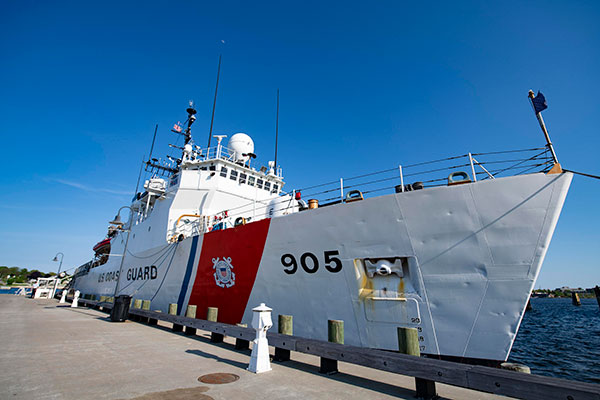
To create, in collaboration with the U.S. Coast Guard Academy and the American Bureau of Shipping, a 10-hour course on multiple topics related to marine industry standards, such as standards for the design, construction and operation of commercial and military marine vehicles; why and how standards are developed in the maritime industry; national and international maritime regulations; standards for emerging technologies; and more.
Information on future and previous awards can be found on the NIST Standards Coordination Office website.
Sources: Press materials received from the company and additional information gleaned from the company’s website.


DE's editors contribute news and new product announcements to Digital Engineering. Press releases may be sent to them via [email protected].
Follow DE






About Us · Contact Us · Editorial Team · Advertising · Privacy Policy · Subscriber Services · © 2026 Digital Engineering 24/7 · Peerless Media