Helping design and engineering professionals discover, evaluate and specify technologies and processes that shorten the design cycle and enable success.


Alert!
Digital Engineering ceased publication on July 1, 2026. This website remains available as an archive of engineering content.
For inquiries or information, please email [email protected].

Digital Engineering September 2025
In the September issue of Digital Engineering, we look at trends in engineering education, how engineering schools are handling DfAM, the limitations of ROMs, VR engineering workflows, reports from the Paris Air Show and Hexagon LIVE, and more.
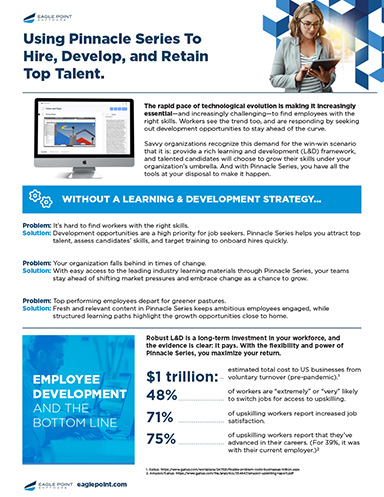
How Pinnacle Series Helps AEC Firms Attract, Train, and Retain Top Talent
Discover how AEC firms use Pinnacle Series to solve hiring challenges, upskill employees, and reduce turnover with personalized learning, skill assessments, and role-based training.
The past two months I have gone to more conferences than I have in the past two and a half years. When I took the helm of Digital Engineering in 2019, I had anticipated a hectic travel schedule. A few months later the COVID-19 pandemic began, and everything ground to a halt. As a result, I did not get to meet many of you at conferences, and I wasn’t able to get a first-hand look at some of the technology innovations that the software and hardware vendors in our industry have announced.
Thankfully, that has started to change. I have now been to the Additive Manufacturing Users Group (AMUG) conference, the ASSESS Congress, and to my second RAPID + TCT show (this one in Detroit in May).

As this issue focuses on simulation democratization, my time at ASSESS is a good place to start. The ASSESS organization is focused on expanding the use of simulation throughout the design cycle, and on helping to define the parameters of and nomenclature around some of the tools.
While there, I heard a lot of interesting use cases around modeling and simulation in industries like medical device design, and the increasing adoption of systems engineering approaches.
I also heard about some of the limits of what the industry and end users are trying to do. Interoperability remains a hot-button issue as more companies embrace multiphysics and systems-level approaches, but find that it can be challenging to work across the multiple tools they have adopted, and then to share those results efficiently.
That echoed some of what I heard at AMUG relative to adopting more open additive manufacturing ecosystems so that manufacturing execution system solutions, CAD and 3D printing software can work together more seamlessly.
That also ties into a lengthy conversation I had with the folks at Dyndrite, an additive software company that is working furiously with other partners to eliminate some of the software hurdles that have stymied the adoption of 3D printing.
Also at the RAPID + TCT event, I got to take a closer look at another interesting integrated system. Before the show, Desktop Metal announced that it was working with computing tomography (CT) scanning specialist Lumafield on a solution that combined the latter’s lower-cost push-button CT scanner, cloud-based meshing software and Desktop Metal’s 3D printers. In effect, the combined system essentially functions like a 3D copy machine. These types of partnerships could revolutionize reverse engineering and enable new types of additive applications. I saw a lot of interesting innovations on the show floor.
There are more shows to come, including the NAFEMS Americas Conference this month in Indianapolis. I am looking forward to seeing what else our readers and vendors have been up to these past two years.


Brian Albright is the editorial director of Digital Engineering.
Contact him at [email protected].

Join over 90,000 engineering professionals who get fresh engineering news as soon as it is published.






About Us · Contact Us · Editorial Team · Advertising · Privacy Policy · Subscriber Services · © 2026 Digital Engineering 24/7 · Peerless Media