Helping design and engineering professionals discover, evaluate and specify technologies and processes that shorten the design cycle and enable success.


Alert!
Digital Engineering ceased publication on July 1, 2026. This website remains available as an archive of engineering content.
For inquiries or information, please email [email protected].

Digital Engineering April 2026
In the latest issue of Digital Engineering, we take a look at the latest innovations in design for additive manufacturing, including the use of natural language inputs, social media cosplayers, and AI integration. The issue also includes a feature…

January Special Focus Issue: Design for Additive
In this Special Focus Issue of Digital Engineering, learn about the latest advancements in design for additive manufacturing, including new software tools, additive in automotive, custom medical devices, and more.
The US Air Force has awarded Optomec a $1.5 million contract to develop a metal additive manufacturing system and process that enables the repair of oversized titanium components used in aircraft engines. The initial target, called integrally bladed rotors (IBRs, aka “blisks”), are single-piece compressor rotors made of lightweight titanium alloy routinely worn or damaged in normal use and can cost more than $500,000 each to replace with a newly made part.
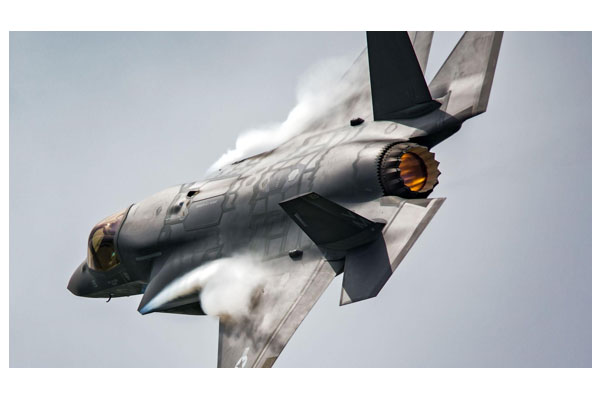
The implementation of an additive repair process for these parts is projected to result in greater than 80% in cost savings, which could save the Air Force tens of millions of dollars per year in maintenance costs and shorten the supply chain for these components, used on aircraft such as the F22 Raptor and F35 Lightning II. Optomec’s solution will also benefit the commercial aviation market as engine OEMs continue to integrate larger titanium components into their fuel-efficient designs.
The contract deliverables include the commissioning of a large-format five-axis LENS/DED metal printer with a work envelope of 1500x1500x1000 mm (5x5x3 ft), capable of handling IBR/Blisks up to 46 inches in diameter. The system will be equipped with a gas purification system that maintains an oxygen and moisture free environment (<10 ppm), which is necessary to ensure metallurgical and mechanical properties when depositing titanium, especially for flight-critical componentry. The project will investigate the efficacy of various process monitoring techniques that track key variables as a validation and quality assurance measure.
The project will employ the capabilities above to develop and demonstrate viable repairs for large blisks, including restoration of representative wear and foreign object damage (FOD) across critical areas of the individual blades. In a final step, Optomec will repair various sections of a large-scale blisk for evaluation in a spin pit test as an initial step to qualification.
Optomec’s additive manufacturing (AM) repair processes are currently used in high-volume production for other turbine engine parts worldwide, having repaired more than 10 million components over the last 20 years. This project will scale up Optomec’s solution for use on larger parts, with diameters greater than 1 m. Optomec will integrate its oxygen-free processing solution for titanium alloys—a capability for defect-free, high-strength titanium processing.
“As OEMs lightweight and simplify their commercial and military aircraft engine designs, the industry is faced with larger, more complex titanium parts to maintain on the MRO side,” says Jamie Hanson, Optomec’s VP of Business Development, “Optomec is best positioned to deliver production solutions to this growing need, based on its proprietary machine, software and process capabilities, combined with its existing position as the market leader delivering machines for production repair of individual turbine blades.”
Optomec’s LENS Metal Additive Manufacturing machines use a process called Directed Energy Deposition (DED) to build 3D metal parts by depositing powdered metal into a precisely controlled pool of melted metal. Fiberoptic lasers supply the thermal power while advanced motion control systems manipulate the deposition system and part to produce the required geometries.
Sources: Press materials received from the company and additional information gleaned from the company’s website.

Optomec printers offer unique advantages over traditional approaches to 3D printing. Most industrial 3D Printers on the market today print plastic parts used as a visual mock-up for the real end-user part. In some cases, 3D Printers will deposit…

DE's editors contribute news and new product announcements to Digital Engineering. Press releases may be sent to them via [email protected].
Follow DE






About Us · Contact Us · Editorial Team · Advertising · Privacy Policy · Subscriber Services · © 2026 Digital Engineering 24/7 · Peerless Media