Helping design and engineering professionals discover, evaluate and specify technologies and processes that shorten the design cycle and enable success.


Alert!
Digital Engineering ceased publication on July 1, 2026. This website remains available as an archive of engineering content.
For inquiries or information, please email [email protected].
Sponsored
Artificial Intelligence for Design and Engineering Workflows
In this white paper, learn how artificial intelligence and machine learning can improve design and simulation.

Technology Focus: Designing for Optimization & Simulation
Simulation is pervasive, with people from different departments and backgrounds discovering new ways to put it to use, in all of its varied forms.
 MIT Lincoln Laboratory supports research and development aimed at solutions to problems that are critical to the United States. The research spans diverse fields such as space observations, robotic vehicles, communications, cyber security, machine learning, sensor processing, electronic devices, bioinformatics, and air traffic control. Lincoln Laboratory takes projects from the initial concept stage, through simulation and analysis, to designing and building working prototype.
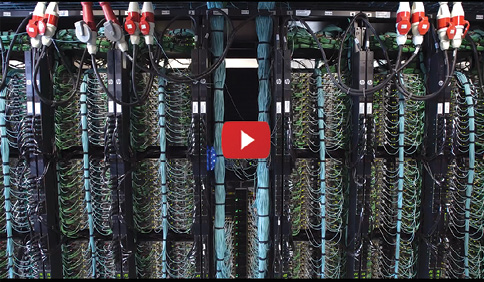
The MIT Lincoln Laboratory Supercomputing Center (LLSC) addresses the supercomputing needs of thousands of MIT scientists and engineers by providing interactive, on-demand supercomputing and big data capabilities with zero carbon footprint. The LLSC mission is to address supercomputing needs across all Lincoln Laboratory missions, develop new supercomputing capabilities and technologies, and foster close collaborations with MIT campus supercomputing initiatives.
The LLSC manages a portfolio of supercomputing resources that includes servers, GPUs, field-programmable gate arrays (FPGAs), and now many-core systems. These supercomputing resources are integrated with large parallel files systems, big data file systems, such as the Apache™ Hadoop® platform, and high-speed data networks.
At an application level, the LLSC focuses on providing interactive development environments for rapid prototyping, such as Python, MATLAB, GNU Octave, Mathematica, R, and Julia. In addition, the LLSC has had extensive success with merging supercomputing hardware with big data tools, such as map reduce, and high performance databases, such as Apache Accumulo and SciDB.
When they set out to build their latest supercomputer, the LLSC team members focused on creating a petascale system, which equates to performance greater than one petaflops, or one quadrillion floating point operations per second.
The technology and vendor selection process led the LLSC to Dell EMC and systems based on Intel® Xeon Phi™ processors and the Intel® Omni-Path Architecture network fabric. The team felt that the Dell EMC solution offered the robust combination of compute performance, network bandwidth and software support needed for the project to meet its long-term objectives of enabling computationally intensive research in the areas of autonomous systems, device physics, and machine learning.
Learn how LLSC reached its goals by getting its supercomputer online in less than a month and running at 1.032 petaflops using the High Performance Linpack (HPL) Benchmark.
The MIT Lincoln Laboratory Supercomputing Center (LLSC) needed a next-generation supercomputer to power the work of thousands of scientists and engineers.


DE's editors contribute news and new product announcements to Digital Engineering. Press releases may be sent to them via [email protected].
Follow DE






About Us · Contact Us · Editorial Team · Advertising · Privacy Policy · Subscriber Services · © 2026 Digital Engineering 24/7 · Peerless Media