Helping design and engineering professionals discover, evaluate and specify technologies and processes that shorten the design cycle and enable success.


Alert!
Digital Engineering ceased publication on July 1, 2026. This website remains available as an archive of engineering content.
For inquiries or information, please email [email protected].

Digital Engineering April 2026
In the latest issue of Digital Engineering, we take a look at the latest innovations in design for additive manufacturing, including the use of natural language inputs, social media cosplayers, and AI integration. The issue also includes a feature…

January Special Focus Issue: Design for Additive
In this Special Focus Issue of Digital Engineering, learn about the latest advancements in design for additive manufacturing, including new software tools, additive in automotive, custom medical devices, and more.
Every product or part that is produced will eventually need to be inspected. While companies have an array of different metrology and inspection tools available to them (laser scanning, micrometers, gauges, etc.), the traditional way to analyze materials or see inside a complex part is to break it open. That can be costly, time consuming, and isn’t even entirely reliable.
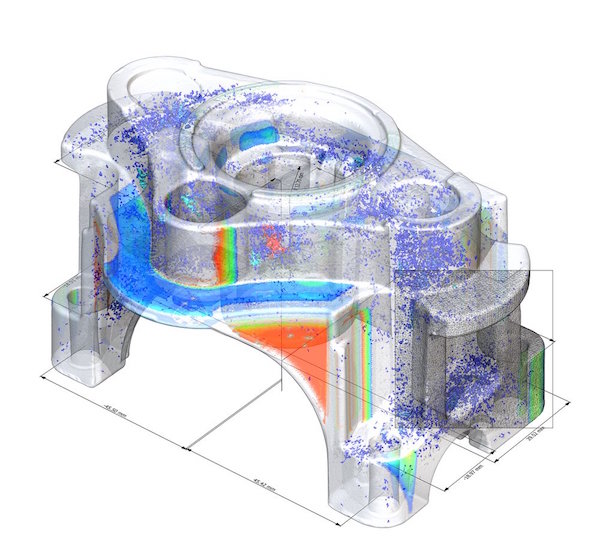
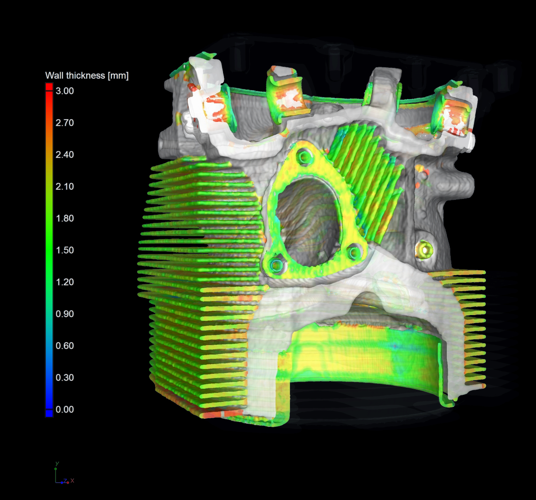
Enter CT scanning, which allows companies to create a dimensionally accurate 3D model of a scanned object, both inside and out. Combined with advanced software that provides data analysis and visualization capabilities, CT scanning can provide significant cost and time savings, while improving inspection results.
In our latest DE 24/7 Podcast, Ashley Bray, Sales Engineer at Volume Graphics, talks about the benefits of using CT scanning for quality control and analysis, and how his company’s software can be combined with CT-generated images to provide highly accurate, non-destructive evaluation of parts and products. In addition, he also talks about the role of CT scanning in bridging the gap between simulation and reality, as well as its increasing importance in evaluating the results of generative design and additive manufacturing processes.
After listening to the podcast, download the white paper, “The Connection between Smarter Scanning and Product Quality," to learn more.
Intro and end music by Ben Sound.

About this podcast
Podcast: CT Scanning Improves Product Quality
July 21, 2020 at 10:00 am
12:57 hr/min/sec
Media file
Latest podcasts
Find us
Tune in to Digital Engineering 24/7's podcast and get engineering news, products and analysis from industry experts delivered in real time. Follow us on these popular platforms:

Brian Albright is the editorial director of Digital Engineering.
Contact him at [email protected].






About Us · Contact Us · Editorial Team · Advertising · Privacy Policy · Subscriber Services · © 2026 Digital Engineering 24/7 · Peerless Media