Helping design and engineering professionals discover, evaluate and specify technologies and processes that shorten the design cycle and enable success.


Alert!
Digital Engineering ceased publication on July 1, 2026. This website remains available as an archive of engineering content.
For inquiries or information, please email [email protected].

Digital Engineering April 2026
In the latest issue of Digital Engineering, we take a look at the latest innovations in design for additive manufacturing, including the use of natural language inputs, social media cosplayers, and AI integration. The issue also includes a feature…

January Special Focus Issue: Design for Additive
In this Special Focus Issue of Digital Engineering, learn about the latest advancements in design for additive manufacturing, including new software tools, additive in automotive, custom medical devices, and more.
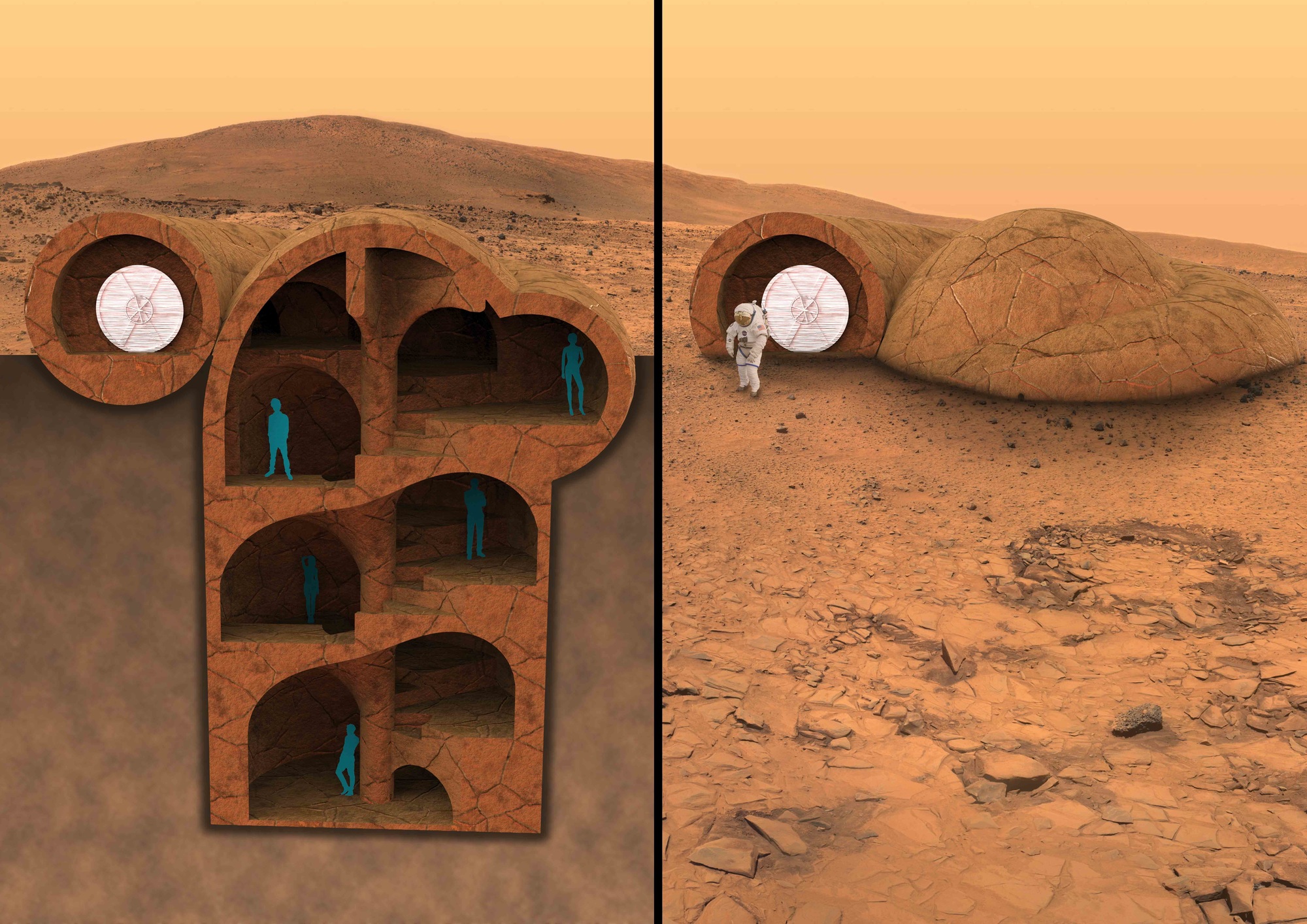
NASA and America Makes recently put forth a challenge to answer that very question. The challenge asked teams to devise habitats for Mars that could be produced using additive manufacturing (AM) using mainly existing elements found in situ. RedWorks has responded to the challenge with a habitat that spirals down into the crust of the planet.
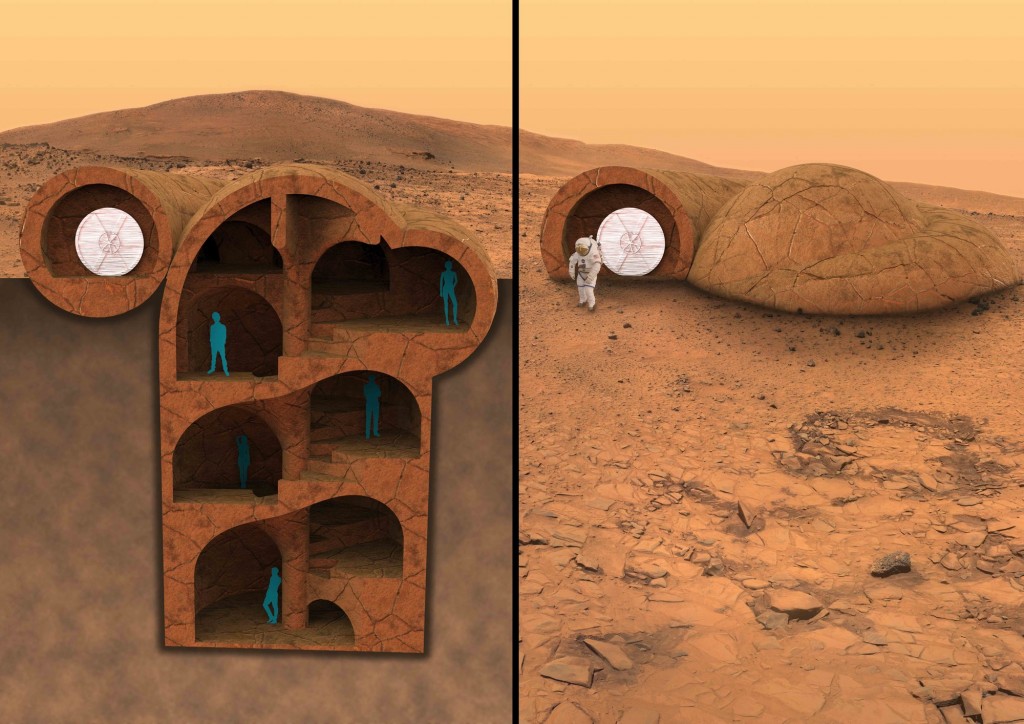 The RedWorks habitat design argues for building down, rather than up for life on Mars. Courtesy of RedWorks.
From the RedWorks site:
Using Additive Manufacturing (better known as 3D printing) RedWorks is blazing the way forward to the first settlements on Mars. Our team studied simple construction principles of ancient cultures, such as pit houses and pueblos, as well as organic structures found in nature like those found in the shell of the nautilus. The team then adapted those principles to work best with the available resources on the surface of Mars.
Part of the idea of burrowing into the ground rather than just erecting surface habitats is to take advantage of any naturally occurring elements that could positively contribute to the construction. This includes caves, lava tubes, craters and so on. Digging down also gives the habitat an extra layer of natural protection against radiation, which will be a significant issue for anyone living on Mars.
The spiral pattern of the habitat is designed to maximize livable space while retaining functionality. Each level that branches off of the spiral center can be designated for specific use, independent of other levels. Additional protection will be offered by enclosing each section behind an airlock.
While RedWorks doesn’t specify exactly how they intend to use 3D printing as part of the construction, it seems likely that they intend to use the material gathered during excavation to produce a cement-like substance that will either be layered directly in place, or used to produce what would amount to adobe bricks.
Below you’ll find a video that examines some of the difficulties presented by living on Mars.
Source: RedWorks


John Newman is a Digital Engineering contributor who focuses on 3D printing. Contact him via [email protected] and read his posts on Rapid Ready Technology.
Follow DE






About Us · Contact Us · Editorial Team · Advertising · Privacy Policy · Subscriber Services · © 2026 Digital Engineering 24/7 · Peerless Media