Helping design and engineering professionals discover, evaluate and specify technologies and processes that shorten the design cycle and enable success.


Alert!
Digital Engineering ceased publication on July 1, 2026. This website remains available as an archive of engineering content.
For inquiries or information, please email [email protected].

Digital Engineering April 2026
In the latest issue of Digital Engineering, we take a look at the latest innovations in design for additive manufacturing, including the use of natural language inputs, social media cosplayers, and AI integration. The issue also includes a feature…

January Special Focus Issue: Design for Additive
In this Special Focus Issue of Digital Engineering, learn about the latest advancements in design for additive manufacturing, including new software tools, additive in automotive, custom medical devices, and more.
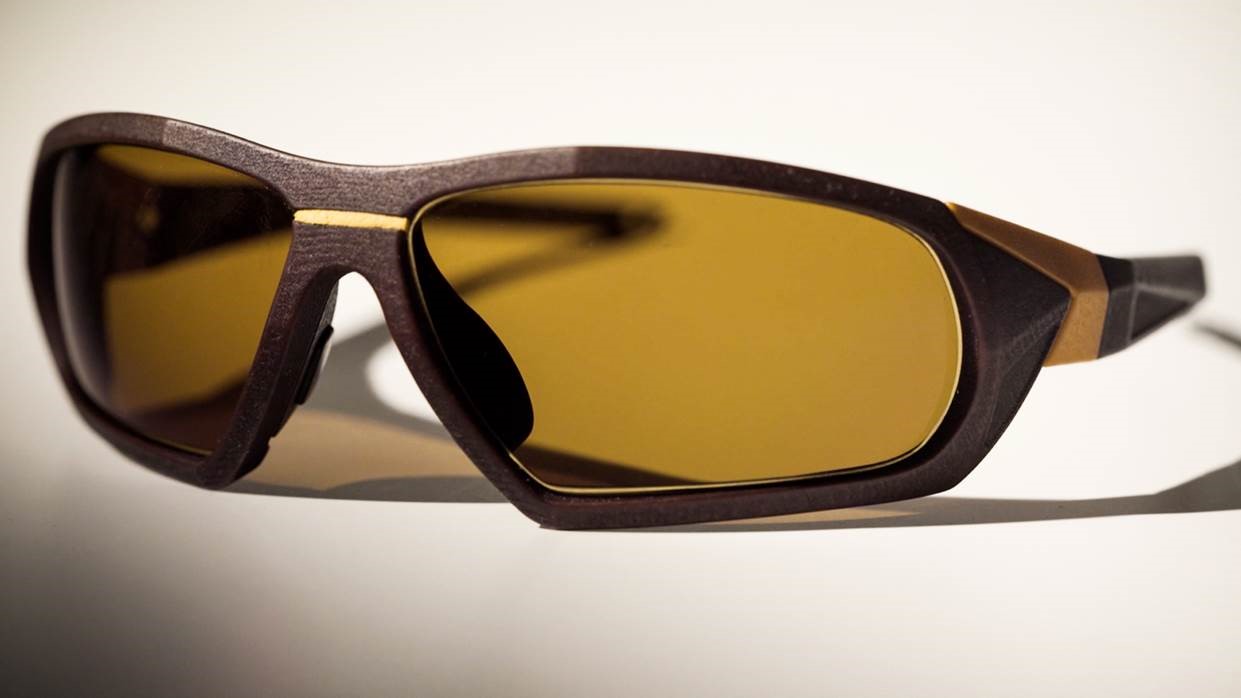
According to Materialise, the custom frame line is the result of a six-month collaborative effort with Hoet and Seiko. "Our anatomical fitting software suite was used to resize the frames despite the high curvature of the lenses and other requirements," said Alireza Parandian, Materialise. "We've worked hard on making the most of 3D printing for the Xchanger collection."
A number of other companies are taking advantage of 3D printings customization capabilities to create form-fitted glasses, including Boulton Eyewear in Amsterdam, Protos and Luxexcel (which actually 3D printed lenses).
The Seiko frames are formed from a special bio-compatible material that the company describes has having a "silk-like molecular structure that is stronger than acetate and lighter than titanium." The modular frame structure is produced using high-precision laser sintering. The frames are made on dedicated machines using Materialise's Additive Manufacturing Control Platform (AMCP), which is tuned for printing eyewear.
Because the frames are made via additive manufacturing, customers can get customized frames with options that include an anti-fog ventilation system, integrated lens change mechanism, and high-curvature lenses for wider viewing angles. There are also three inclination angles and multiple frame sizes, lengths and colors.
The frames are built from multiple components, each available in a variety of different colors (including the lenses). You can see more about how they are built in the video below:
Source: Materialise


Brian Albright is the editorial director of Digital Engineering.
Contact him at [email protected].

Join over 90,000 engineering professionals who get fresh engineering news as soon as it is published.






About Us · Contact Us · Editorial Team · Advertising · Privacy Policy · Subscriber Services · © 2026 Digital Engineering 24/7 · Peerless Media