Helping design and engineering professionals discover, evaluate and specify technologies and processes that shorten the design cycle and enable success.


Alert!
Digital Engineering ceased publication on July 1, 2026. This website remains available as an archive of engineering content.
For inquiries or information, please email [email protected].
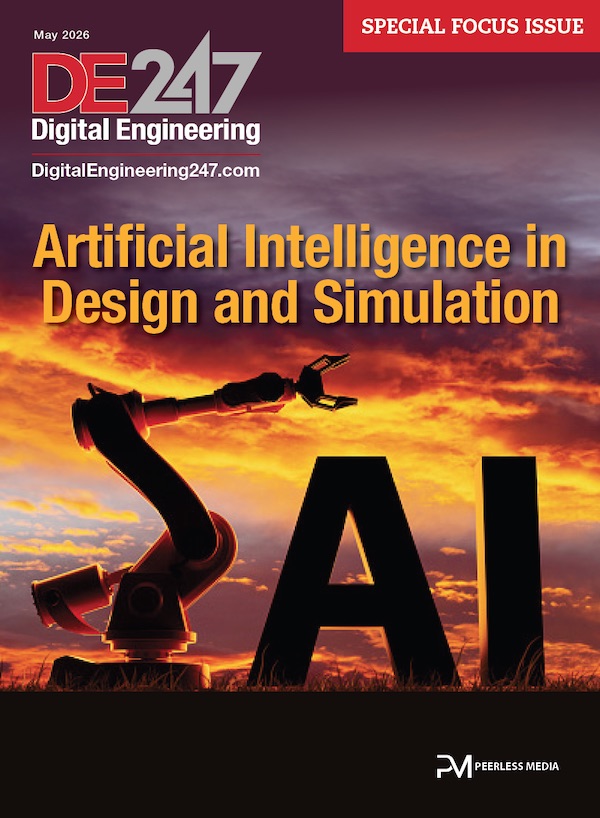
May 2026 Special Focus: Artificial Intelligence in Design and Simulation
In this Special Focus Issue, learn about the latest developments in the integration of artificial intelligence into engineering workflows.

Design & Simulation Software Guide 2025
In this Special Issue, Digital Engineering presents its second annual guide to design and simulation software vendors.
In a nod to engineering organizations’ readiness for cloud, Siemens Digital Software Industries is launching its entire Xcelerator portfolio of engineering software as a Software-as-a-Service (SaaS) offering, kicking off a transition to an entirely new business model.
Citing its acquisitions of cloud-based platforms like MindSphere, Mendix, and Supplyframe, Siemens said the groundwork was laid for a cloud-native foundation upon which to deliver Xcelerator as a Service (XaaS). Offering XaaS in this fashion will provide a mechanism for Siemens to deliver flexible and personalized solutions for users, allowing them to compose and configure a design and engineering software environment that meets their needs. By doing so, individual engineers can create their own workspace that will ensure maximum productivity.
“Traditional software delivery and licensing models can be difficult to access or scale—and it’s clear that if our customers are going to achieve their potential and thrive among the challenges they face, they need to be able to access and use their software differently,” notes Brenda Discher, senior vice president, strategy & marketing, for Siemens Digital Industries Software. “An As-a-Service model enables our customers to access innovation in a more agile and integrated fashion across our entire portfolio.”
While as-a-Service delivery models have gained significant traction in the enterprise software space, engineering organizations have been more reticent to commit to cloud, concerned about the security of their design intellectual property (IP) as well as performance given the compute- and graphics-intensive nature of CAD and simulation programs. Now, companies are more comfortable with cloud, and the technologies have made significant strides in computing, networking, graphics, and security, Discher says.
The core tenets of the XaaS offering are to make the Siemens engineering and design software toolset more accessible, available to customers where and when they need them; to deliver more flexibility in terms of personalizing capabilities for specific roles and needs; and to address scalability, so the toolset can be expanded with new features and to accommodate new usage patterns as needs and requirements change. “Xcelerator and our value-based licensing has revolutionized how our customers license our existing set of technologies,” Discher says. “They have access to on-going value delivered through new and updated capabilities. It makes access to these tools instantaneous and the data they create and interactions more readily available when they are needed.”
Siemens plans to build on Xaas in a number of ways. The company will introduce more XaaS-specific toolsets that leverage the benefits of a cloud-native approach, whether that’s data collaboration with Xcelerator Share or future offerings that take advantage of the cloud’s greater compute and connected capabilities, she says. In addition, the SaaS model enables Siemens to deliver targeted capabilities, allowing for the addition of cloud-based Digital Thread solutions that are purpose-built for specific industries. By enabling access to the broader portfolio, customers will also be able to develop more robust digital twins and threads.
“It makes the physical-virtual connection of the digital twin stronger through deeper integration of IoT capabilities,” Discher explains. “It also makes customizing digital threads to a customer’s specific needs easier due to our integrated low-code platform.”
For a deeper dive on the Xcelerator platform, check out this video.


Simcenter™ software, from Siemens Digital Industries Software, uniquely combines system simulation, 3D CAE and test to help you predict performance across all critical attributes earlier and throughout the entire product lifecycle. By combining…
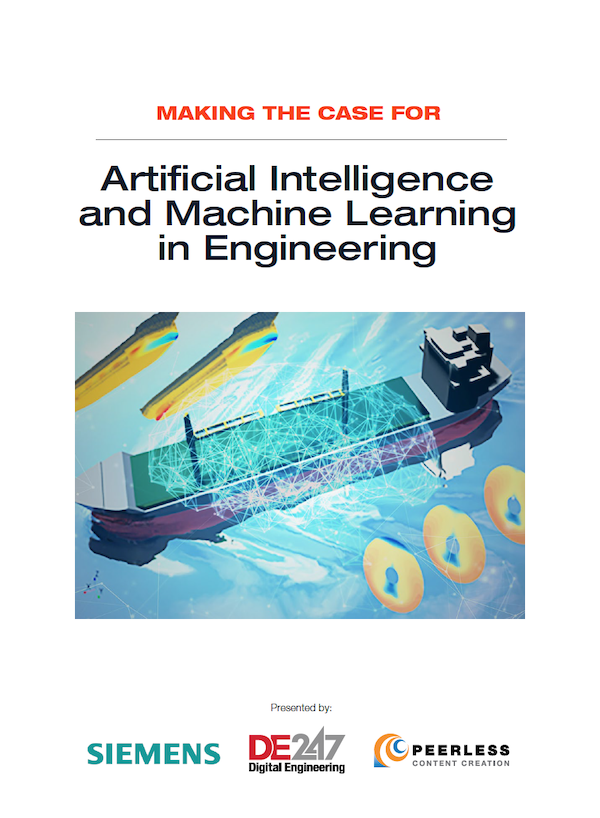
Making the Case for Artificial Intelligence and Machine Learning in Engineering
In this paper, Siemens Digital Industries Software and Digital Engineering will provide an overview of how AI/ML-enabled software can improve design workflows, while also addressing common questions and concerns around implementing this technology in an engineering organization.

Beth Stackpole is a contributing editor to Digital Engineering. Send e-mail about this article to [email protected].
Follow DE
Join over 90,000 engineering professionals who get fresh engineering news as soon as it is published.






About Us · Contact Us · Editorial Team · Advertising · Privacy Policy · Subscriber Services · © 2026 Digital Engineering 24/7 · Peerless Media