Helping design and engineering professionals discover, evaluate and specify technologies and processes that shorten the design cycle and enable success.


Alert!
Digital Engineering ceased publication on July 1, 2026. This website remains available as an archive of engineering content.
For inquiries or information, please email [email protected].

Digital Engineering September 2025
In the September issue of Digital Engineering, we look at trends in engineering education, how engineering schools are handling DfAM, the limitations of ROMs, VR engineering workflows, reports from the Paris Air Show and Hexagon LIVE, and more.
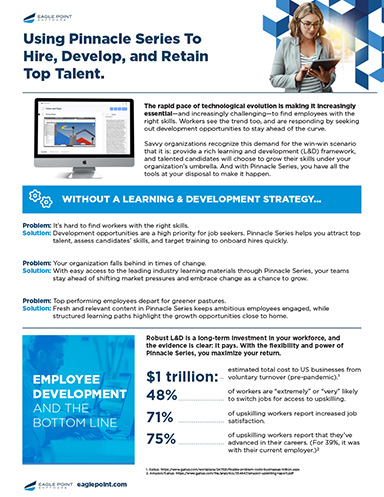
How Pinnacle Series Helps AEC Firms Attract, Train, and Retain Top Talent
Discover how AEC firms use Pinnacle Series to solve hiring challenges, upskill employees, and reduce turnover with personalized learning, skill assessments, and role-based training.
Spring has been a busy travel season for the editors of Digital Engineering, with members of our team attending 3DEXPERIENCE World, the ASSESS Summit, AMUG, the NVIDIA GTC conference, and RAPID + TCT. While two of those events focus primarily on additive manufacturing (AMUG and RAPID), advanced simulation technologies were top of mind at each of them. In particular, there was also a lot of emphasis on how artificial intelligence (AI) can be used to optimize design and simulation activities.

I personally attended the ASSESS event in Atlanta and RAPID in Detroit. ASSESS (a NAFEMS event) marked a changing of the guard as founder Joe Walsh stepped aside and introduced his successor, Nick Appleyard. Walsh discussed the progress the industry has made, both in growing the market for simulation tools and expanding their use to different, nonexpert stakeholders. That is reflected in the use cases presented at the show, and in growth figures shared by Cambashi, which show CAE software growing by nearly 10% year-over-year for almost two decades.
AI and machine learning was a hot topic, with a number of presenters describing how the technology can be used to help further democratize simulation across the design chain.
At RAPID, the focus was more on hardware. In particular, there were a lot of large-format machines on display from the likes of Massivit, BigRep, MarkForged and others. I saw an interesting example of 3D printing in a gel suspension from Rapid Liquid Print, along with new scanning technology from Hexagon.
But there was also plenty of design for additive software on display, as well as several examples of new AI tools to help streamline the process of getting a design to successfully print.
I saw a presentation from Aibuild, which launched new simulation capabilities for generating toolpaths. I also spoke to a startup called Vixiv, which is building an AI platform generating multiple optimized design options based on custom parameters.
There were plenty of similar innovations on display at AMUG, and AI and CAE convergence were also part of the top stories at NVIDIA GTC, where the massive chipmaker announced new partnerships that will help further accelerate complex simulations.
As we enter uncharted waters when it comes to global trade instability, advanced simulation that can be leveraged for collaboration will be increasingly important, as will the use of 3D printing to help bolster reshoring efforts.
You can learn more about how simulation is enabling design innovation in the features included in this issue.


Brian Albright is the editorial director of Digital Engineering.
Contact him at [email protected].






About Us · Contact Us · Editorial Team · Advertising · Privacy Policy · Subscriber Services · © 2026 Digital Engineering 24/7 · Peerless Media