Helping design and engineering professionals discover, evaluate and specify technologies and processes that shorten the design cycle and enable success.


Alert!
Digital Engineering ceased publication on July 1, 2026. This website remains available as an archive of engineering content.
For inquiries or information, please email [email protected].


Digital Engineering April 2026
In the latest issue of Digital Engineering, we take a look at the latest innovations in design for additive manufacturing, including the use of natural language inputs, social media cosplayers, and AI integration. The issue also includes a feature…

January Special Focus Issue: Design for Additive
In this Special Focus Issue of Digital Engineering, learn about the latest advancements in design for additive manufacturing, including new software tools, additive in automotive, custom medical devices, and more.
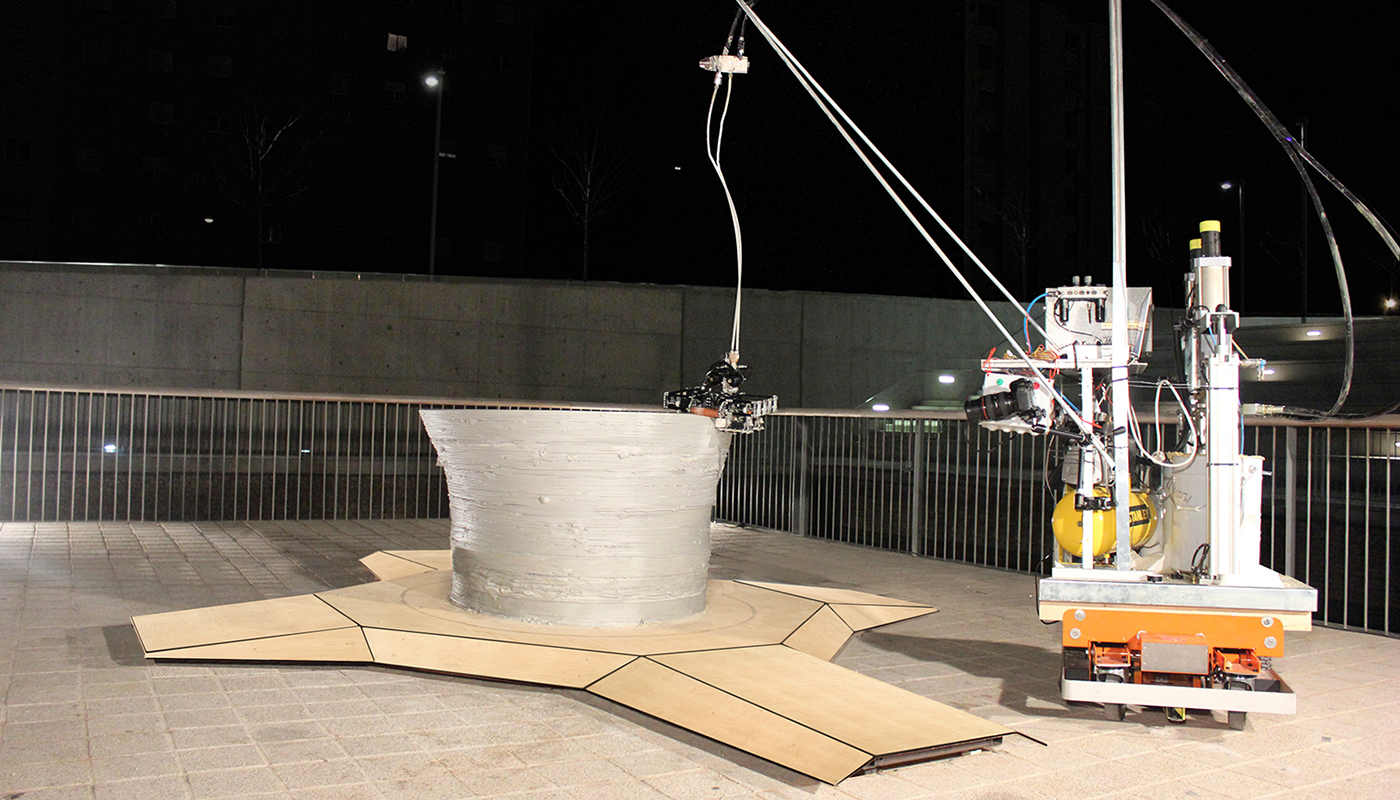 The IAAC 3D printing robots draw material from a "supplier" robot to construct large objects on site. Image: IAAC
3D printers can do a lot of things, but creating large objects still requires large printers. That means using the technology to do things like, for instance, creating low-cost housing materials, requires multiple printers generating smaller components that have to be adjoined later.
The Institute for Advanced Architecture of Catalonia (IAAC) has come up with a novel approach to 3D printing large structures by developing a team of Minibuilder robots that can continuously print larger items on site. The three different robots are attached to a supply of printing material, and each of the 'bots (the largest is just 42 cm wide) has a distinct function.
Here's how it works. Foundation Robots make a "footprint" of the first 20 layers of the structure. The smaller robots are connected via pipes to a supplier robot, which provides the printing material. Gri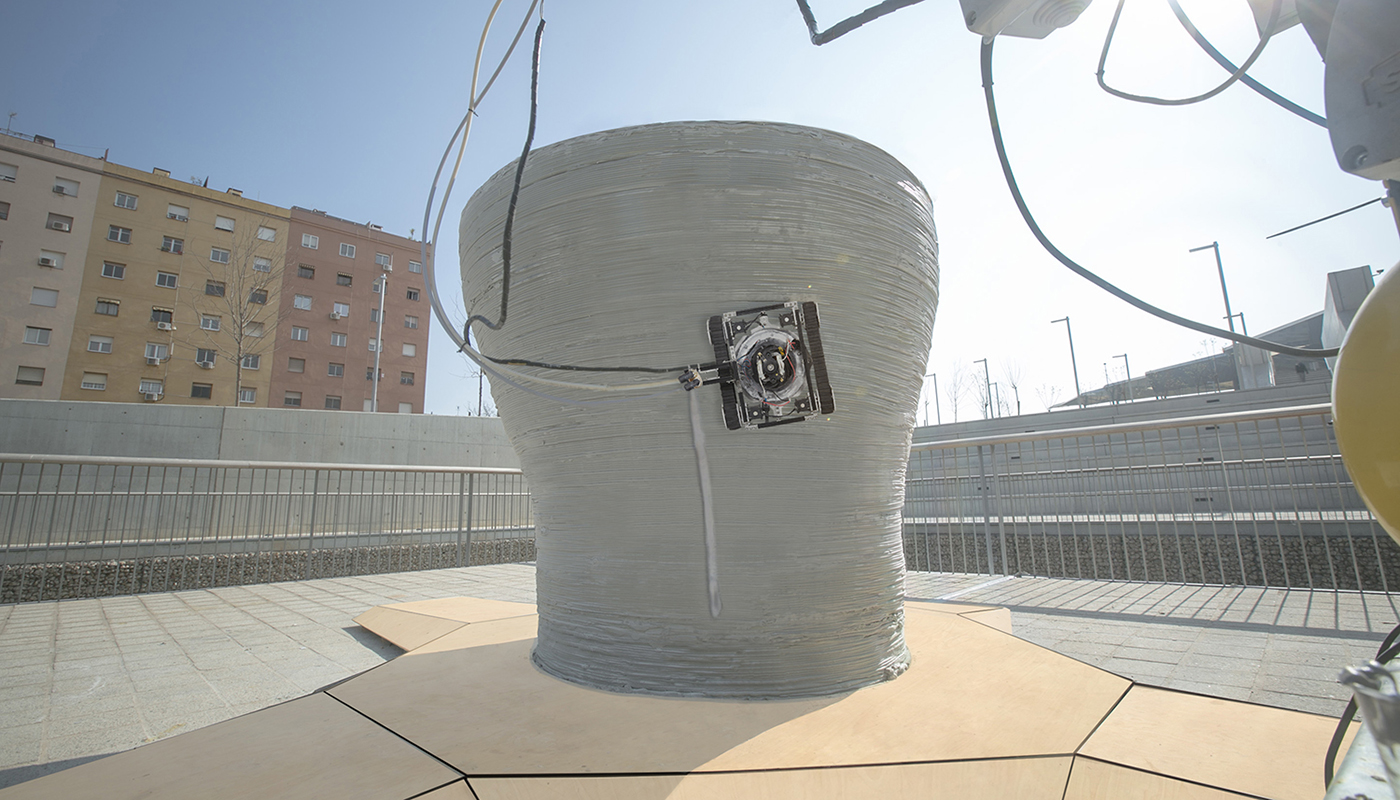 p Robots are clamped onto the structure and print additional layers of material using nozzles that can shift from side to side. Once the walls are completed, the Grip Robots can print horizontal ceilings, along with window/door openings. Vacuum Robots reinforce the structure by printing additional layers over it.
The first Minibuilder structure was an exhibition piece formed outside the Design Museum of Barcelona. Eventually, the IAAC hopes to use the technology to create 3D printed buildings directly on site.
You can see a video of the robots in action below.
Source: IAAC


Brian Albright is the editorial director of Digital Engineering.
Contact him at [email protected].






About Us · Contact Us · Editorial Team · Advertising · Privacy Policy · Subscriber Services · © 2026 Digital Engineering 24/7 · Peerless Media