Helping design and engineering professionals discover, evaluate and specify technologies and processes that shorten the design cycle and enable success.


Alert!
Digital Engineering ceased publication on July 1, 2026. This website remains available as an archive of engineering content.
For inquiries or information, please email [email protected].

Digital Engineering September 2025
In the September issue of Digital Engineering, we look at trends in engineering education, how engineering schools are handling DfAM, the limitations of ROMs, VR engineering workflows, reports from the Paris Air Show and Hexagon LIVE, and more.
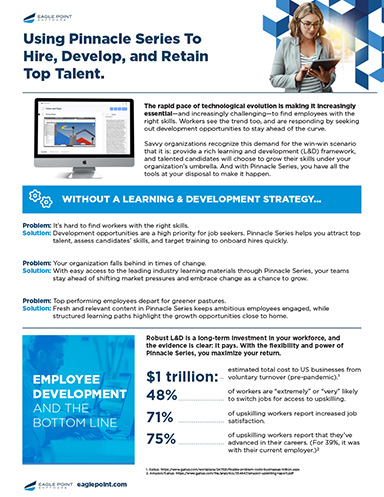
How Pinnacle Series Helps AEC Firms Attract, Train, and Retain Top Talent
Discover how AEC firms use Pinnacle Series to solve hiring challenges, upskill employees, and reduce turnover with personalized learning, skill assessments, and role-based training.
The Thermo Fisher Scientific Junior Innovators Challenge (JIC), a program founded and produced by the Society for Science more than two decades ago, is the nation’s premier middle school STEM research competition. Through the competition, the Society for Science and Thermo Fisher seek to inspire young scientists, engineers and innovators who work towards solving the grand challenges of the future.
Only students who are named in the top 10% of their local science fair are eligible to enter the Thermo Fisher JIC, which leverages the Society for Science’s network of nearly 300 affiliated science fairs as a critical component of the STEM talent pipeline. Thanks to this expansive network, the young people who compete hail from all parts of the U.S., with varying backgrounds and interests. The JIC sees a nearly equal number of male and female competitors who submit research in a variety of scientific disciplines, ranging from biomedical to engineering to physics.
Maya Ajmera is a resident and CEO with the Society for Science and executive publisher, Science News Media Group. We spoke to Maya to learn more about the event. Here’s how our conversation went.
Digital Engineering: Can you provide an overview of the Thermo Fisher Scientific Junior Innovators Challenge (JIC) competition, how it came to be, and the intent of the program?
Maya Ajmera: A panel of scientists, engineers and educators from around the nation judge the approximately 2,000 submitted Thermo Fisher JIC applications and select the Top 300 Junior Innovators. From that pool, 30 finalists are selected to come to Washington, D.C., where they participate in a weeklong competition and are judged on their research projects as well as their demonstration of collaboration and critical thinking skills during team challenges, emphasizing the importance and value of teamwork in STEM fields. The finalists compete for more than $100,000 in awards, including the $25,000 Thermo Fisher Scientific Aspiring Scientists Cultivating Exciting New Discoveries (ASCEND) Award.
DE: Can you tell us about some of the designs that are part of the event and how they came to be?
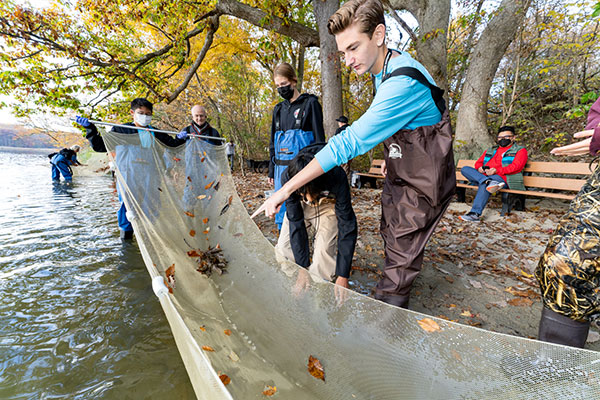
Ajmera: The Thermo Fisher JIC is unique in that each of the 30 finalists participates in team challenges in addition to being judged on their science research projects. The challenges leverage project-based learning and test their mastery of 21st century skills of critical thinking, communication, creativity and collaboration in STEM.
Past challenges had the finalists designing quantum board games, studying blue crabs to build robotic arms using hydraulics and developing devices that could detect early-stage Parkinson’s tremors.
The competition’s challenges seek to teach a key lesson: Science is not conducted by a lone scientist in a lab. To succeed, these young people must be able to collaborate and work together.
DE: Can you provide some examples of what the event has produced or what you expect it to produce?
Ajmera: The Thermo Fisher JIC, first launched in 1999 as the Discovery Channel Young Scientist Challenge (DCYSC), inspires thousands of middle schoolers to continue to study STEM subjects. Some recent alumni include:
DE:: Does Thermo Fisher have a particular stance on adopting an innovation linked to the program? What drove them to sponsor the event and coordinate it?
Ajmera: As the world leader in serving science, Thermo Fisher Scientific is committed to nurturing a STEM workforce that more fully reflects our society. By partnering with organizations like Society for Science, we can help students discover that there is a place for everyone in STEM. The Thermo Fisher Scientific JIC provides an opportunity for the company to support and celebrate students—not only through funding, but through skills-based employee volunteerism and outreach and equity programming—at a critical time in their development.
Early exposure to STEM education makes a difference. Hands-on opportunities like science competitions teach students way more beyond science—from creativity and adaptability to collaboration and communication skills.
Through the Thermo Fisher Scientific JIC, middle schoolers from across the country are engaging in a wide range of STEM disciplines, collaborating and experimenting to find answers to some of the world’s greatest challenges. These STEM experiences are vital to ensuring more U.S. students continue to pursue STEM beyond middle school, ultimately exploring STEM-related career pathways.
DE: Anything else you’d like to tell us about the event that the above questions haven’t given you the opportunity to express?
Ajmera: Many Thermo Fisher colleagues are alumni of the Society for Science-hosted fairs and report that participating in this type of learning experience directly influenced their life and career path. One colleague shared that after participating in a Society for Science-hosted fair, he was inspired to take high school summer classes, which led to a degree in engineering and a startup role building an innovative technology that was later acquired by Thermo Fisher. Today, he is the leader of that product line and takes pride in being part of a company that expands access to STEM learning experiences like the ones that shaped his life.


Jim Romeo is a freelance writer based in Chesapeake, VA. Send e-mail about this article to [email protected].
Follow DE






About Us · Contact Us · Editorial Team · Advertising · Privacy Policy · Subscriber Services · © 2026 Digital Engineering 24/7 · Peerless Media