Helping design and engineering professionals discover, evaluate and specify technologies and processes that shorten the design cycle and enable success.


Alert!
Digital Engineering ceased publication on July 1, 2026. This website remains available as an archive of engineering content.
For inquiries or information, please email [email protected].

Digital Engineering April 2026
In the latest issue of Digital Engineering, we take a look at the latest innovations in design for additive manufacturing, including the use of natural language inputs, social media cosplayers, and AI integration. The issue also includes a feature…

January Special Focus Issue: Design for Additive
In this Special Focus Issue of Digital Engineering, learn about the latest advancements in design for additive manufacturing, including new software tools, additive in automotive, custom medical devices, and more.
Now I have scientific research to back up my claims. A new study from Michigan Technological University (MTU) has declared that the cost and personal manufacturing potential offered by home 3D printers has reached the point where it would be worthwhile for most homes to own one. The study is titled “Life-Cycle Economic Analysis of Distributed Manufacturing with Open-Source 3D Printers.”
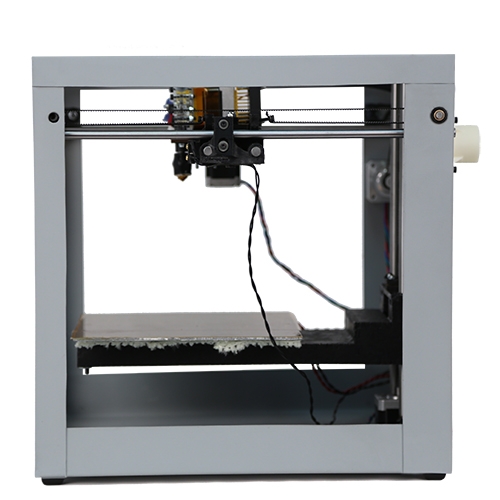
To determine the value of a home AM system, researchers conducted a lifecycle economic analysis comparing the cost of a 3D printer, materials used, and 3D files required, versus the cost of replacing common items found around the home. The study focused on 20 items with free designs found on Thingiverse, such as an iPhone case, shower head, paper towel holder and a garlic press.
The study concluded that buying each of the 20 items separately would cost $312 to $1,944, while the cost of building the items as needed was only $18 in materials. Even if you add in the cost of a 3D printer to that total, with the least expensive systems going for $300 and higher end home systems costing around $1,500, owning a 3D printer has still saved the household money. After adding in the cost to continue buying new material to run the 3D printer, usage over long periods can result in substantial savings.
From the paper:
The results show that even making the extremely conservative assumption that the household would only use the printer to make the selected twenty products a year, the avoided purchase cost savings would range from about $300 to $2000/year. Assuming the 25 hours of necessary printing for the selected products is evenly distributed throughout the year, these savings provide a simple payback time for the RepRap in 4 months to 2 years and provide an ROI between >200% and >40%.
The research also doesn’t take into account the upcoming end of a number of patents that will open up new AM processes to wider commercial ventures. Material extrusion has a number of limitations that aren’t shared by several processes that are currently protected by patent rights. Adding home sintering 3D printers to the mix should only increase the potential for personal manufacturing.
Below you’ll find a video extoling the virtues of personal 3D printing.
Source: Academia.edu


John Newman is a Digital Engineering contributor who focuses on 3D printing. Contact him via [email protected] and read his posts on Rapid Ready Technology.
Follow DE






About Us · Contact Us · Editorial Team · Advertising · Privacy Policy · Subscriber Services · © 2026 Digital Engineering 24/7 · Peerless Media