Helping design and engineering professionals discover, evaluate and specify technologies and processes that shorten the design cycle and enable success.


Alert!
Digital Engineering ceased publication on July 1, 2026. This website remains available as an archive of engineering content.
For inquiries or information, please email [email protected].

Digital Engineering April 2026
In the latest issue of Digital Engineering, we take a look at the latest innovations in design for additive manufacturing, including the use of natural language inputs, social media cosplayers, and AI integration. The issue also includes a feature…

January Special Focus Issue: Design for Additive
In this Special Focus Issue of Digital Engineering, learn about the latest advancements in design for additive manufacturing, including new software tools, additive in automotive, custom medical devices, and more.
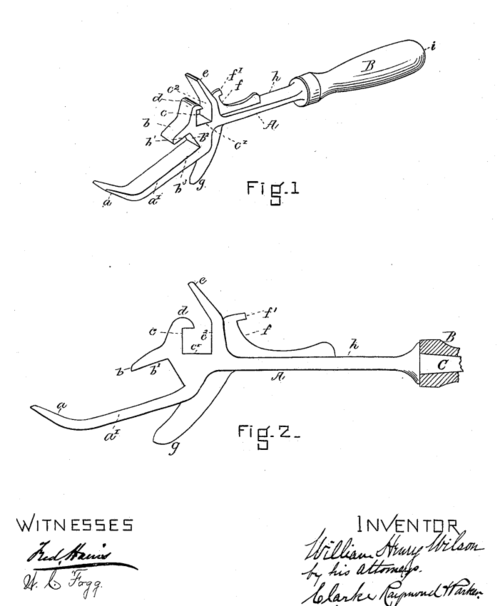
Stifling competition with cease and desist orders certainly wasn’t the original purpose of the patent office. Martin Galese, a New York patent lawyer, hopes he can resurrect some faith in the institution. Instead of searching for patent violations, Galese has begun to comb through the archives in search of patents that have fallen into the public domain and rework those designs as 3D models for modern additive manufacturing (AM) systems.
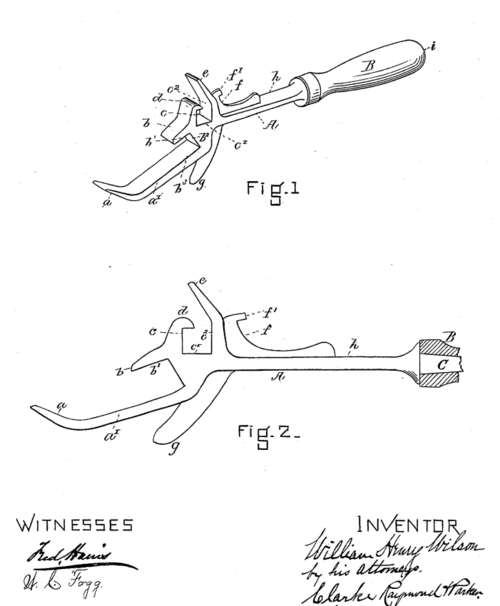
From Galese’s blog:
The basic idea of a patent is that you get a limited period of exclusivity in exchange for public disclosure of your invention. But what good is that public disclosure sitting in the specifications of 8,000,000+ patents?I’m looking for the cool, weird, and the surprisingly useful in the greatest repository of public domain prior art ever created, the U.S. Patent and Trademark Office.
Often referring to the patent office as the original Thingiverse, Galese has already reproduced a self-measuring bottle from 1906, a portable chess board from 1948, an improved bookmark from 1920, and a number of other patented objects. All of these things now exist in the public domain, making them fair game to reproduce with modern technology.
Along with modern 3D models of old patents, Galese also offers up some opinions on how 3D printing and copyright may well interact.
Copyright arose initially as a way of imposing government control over the disruptive technology of printing presses. Patent may well be the tool used to impose control, governmental or quasi-corporate, on 3D printing.And if you support gun control, for example, *and* get excited about the possibilities of home printing in metal or some more durable material, you should start thinking about how you control a device that can be used to build unregistered copies of a device you don’t even know about.
Because there will be some sort of regulation. Pretending otherwise just leaves a tilled garden for noxious weeds of special interests to regulate.
Below you’ll find a video about the legalities surrounding 3D printing.
Sources: New York Times, Patent-Able


John Newman is a Digital Engineering contributor who focuses on 3D printing. Contact him via [email protected] and read his posts on Rapid Ready Technology.
Follow DE






About Us · Contact Us · Editorial Team · Advertising · Privacy Policy · Subscriber Services · © 2026 Digital Engineering 24/7 · Peerless Media